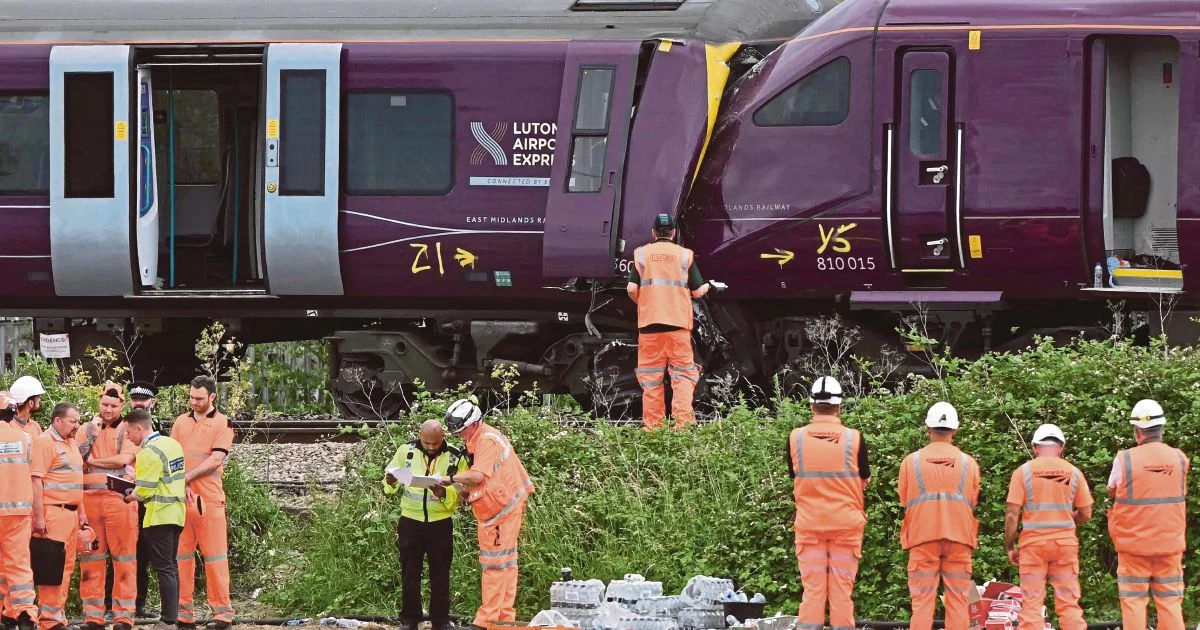
British transport authorities launched an emergency investigation on Saturday following a serious train collision in the vicinity of Bedford, north of London, that claimed the life of one driver and hospitalised a substantial number of passengers. Among the 28 injured, nine sustained injuries of such severity that they required treatment in critical care facilities, prompting a comprehensive response from emergency services across the region.
The collision occurred along one of the United Kingdom's main rail corridors, which carries a significant volume of passenger and freight traffic daily. Preliminary examinations at the accident site have begun, with investigators prioritising the establishment of a precise chronology of events and any factors that may have contributed to the two trains coming into contact. The incident has prompted heightened scrutiny of railway operations and safety protocols in Britain, particularly concerning collision avoidance systems and driver communication procedures.
For Malaysian readers familiar with rail safety standards in Southeast Asia, the UK incident underscores the universal challenge facing rail operators worldwide: maintaining robust safety systems despite technological advancement and increasing traffic volumes. Britain's rail network, like those in Malaysia and other developed economies, operates under stringent regulatory frameworks designed to prevent such catastrophes, yet accidents continue to occur, suggesting that human factors and unforeseen operational circumstances remain significant variables in railway safety calculations.
The response from emergency services appears to have been swift and coordinated, with multiple ambulance services and hospital networks mobilised to manage the large casualty load. The concentration of nine critically injured individuals indicates that some passengers sustained life-threatening injuries, a stark reminder of the destructive potential inherent in train collisions. Such incidents place considerable strain on local medical infrastructure and highlight the importance of disaster preparedness protocols that go beyond routine accident scenarios.
Investigators from the UK's designated transport accident investigation authority have secured the collision site and begun collecting evidence that will inform their analysis. Their inquiry will examine multiple lines of investigation: whether signal systems functioned correctly, whether drivers received appropriate warnings, whether speed restrictions were observed, and whether maintenance issues affecting either train may have played a role. The process typically involves detailed interviews with survivors, examination of train telemetry data, and forensic analysis of the physical remains.
The identity and circumstances surrounding the driver's death add a human dimension to the tragedy that extends beyond casualty statistics. Train drivers occupy a unique position within railway operations, bearing responsibility for the safety of hundreds of passengers while managing complex mechanical systems and responding to signalling instructions. The fatality of a driver in a collision raises particular questions about whether enhanced protective measures or operational protocols might have altered the outcome.
From a regional perspective, this incident carries implications for rail operators throughout Asia-Pacific, including Malaysia's Keretapi Tanah Air Berhad (KTAB), Mass Rapid Transit Corporation (MRT Corp), and Light Rail Transit operators. While technological systems and operational standards vary significantly across jurisdictions, the fundamental physics of train collisions remain universal—two massive moving objects in contact generate enormous destructive forces that can overwhelm existing safety measures, emphasising the critical importance of prevention over mitigation.
The psychological impact on survivors and rail workers cannot be understated. Passengers may experience lasting trauma following such incidents, while rail staff may face heightened anxiety concerning their own safety at work. Employers and operators typically implement support services, counselling, and operational reviews following major incidents, recognising that human factors extend beyond immediate physical injuries.
British rail operators and the regulatory authorities overseeing them will face considerable scrutiny following this collision. Public confidence in rail safety depends on transparent investigations, clear communication of findings, and demonstrable implementation of recommendations. The inquiry's conclusions will likely influence operational practices not only within the UK but internationally, as safety lessons learnt are typically circulated through international rail industry forums and regulatory bodies.
The incident also raises broader questions about infrastructure investment and maintenance standards. Modern rail systems face competing demands: maintaining existing infrastructure while accommodating growth in passenger numbers, implementing technological upgrades, and operating economically. Insufficient investment in any of these areas can create vulnerabilities that lead to accidents. This consideration resonates particularly in Malaysia and Southeast Asia, where rail networks are undergoing significant expansion and modernisation.
As the investigation progresses, authorities will issue preliminary findings and recommendations designed to prevent similar occurrences. Such recommendations often become template improvements adopted by rail operators globally, creating a subtle but significant international effect from localised incidents. The tragedy in Bedford may ultimately contribute to enhanced safety measures benefiting railway passengers throughout the world, though such cold comfort offers little solace to those directly affected by Saturday's collision.
The coming weeks will reveal more details about the sequence of events, contributing factors, and any systemic issues that may require attention. Until then, the focus remains on treating the injured and supporting all those affected by this significant transportation disaster.