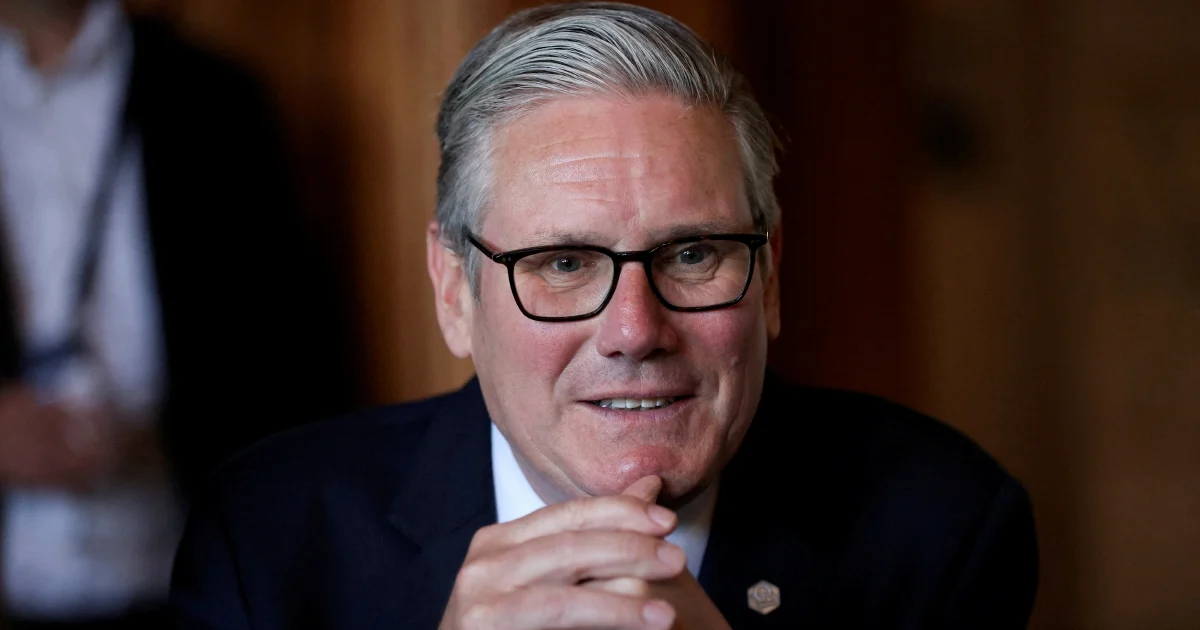
Speculation about the future of British Prime Minister Keir Starmer intensified on Sunday when the Observer newspaper suggested he was preparing to step down from his position, with an announcement expected the following day that would include details of a planned exit strategy. However, officials within the British government moved swiftly to counter the narrative, releasing statements asserting that Starmer continues to prioritize his responsibilities leading the nation and shows no signs of abandoning his post.
The timing of such speculation comes at a particularly sensitive moment for Britain's political establishment. Starmer assumed office following Labour's significant electoral victory, which many observers interpreted as a decisive mandate for change after years of Conservative governance. The contrast between the initial momentum of his administration and current media chatter about his potential departure underscores the volatile nature of contemporary British politics, where political fortunes can shift dramatically within a compressed timeframe.
Observer's reporting, if accurate, would represent a dramatic reversal for a prime minister who has spent recent months presenting himself as a stabilizing force committed to implementing his government's legislative agenda. The newspaper's claim that Starmer had prepared remarks detailing the mechanics and timing of his departure would suggest a level of resignation planning at odds with public statements from Number 10 Downing Street.
The government's rapid response to these reports demonstrates the seriousness with which the administration treats threats to Starmer's political survival. By having a source explicitly state the Prime Minister's continued focus on governing, the government apparatus attempted to delegitimize the Observer's reporting and reassure both parliamentary colleagues and the broader public that leadership remains stable. Such statements are typically deployed when political survival is genuinely in question.
For Malaysian and Southeast Asian readers observing British politics, this situation illustrates the instability that can emerge even in established democracies during periods of transition. The transition from Conservative to Labour administration, while executed through constitutional processes, has evidently encountered unexpected turbulence. This underscores how political change at the national level, particularly in major economic powers like the United Kingdom, can create periods of uncertainty that ripple across trading relationships and diplomatic ties in the Asia-Pacific region.
The nature of the speculation surrounding Starmer's potential departure remains unclear from the initial reporting. In contemporary British politics, prime ministerial resignations typically result from internal party pressure, parliamentary rebellions, or loss of confidence among senior cabinet figures rather than electoral defeat. The fact that such speculation has emerged so soon after Starmer's elevation to the premiership suggests underlying tensions within the Labour movement or broader governing coalition may be more significant than publicly acknowledged.
Observer's assertion that Starmer was prepared to announce not merely his resignation but also a timetable for departure carries particular weight. Such specificity in reporting typically stems from sources with direct access to government deliberations or the Prime Minister's inner circle. The inclusion of detail about a planned timeline distinguishes this from mere speculation and suggests someone with substantive knowledge believed this scenario likely.
Yet the government's counter-narrative cannot be easily dismissed either. Prime Ministers and their teams routinely maintain public composure and deny resignation speculation even when transition planning occurs behind closed doors. The phrase about remaining "focused on getting on with the job of governing" represents standard political language deployed when leadership faces challenge, suggesting careful preparation of the public response.
The divergence between the Observer's report and government denials creates a genuinely ambiguous situation for observers attempting to assess Britain's political stability. Markets, international partners, and domestic constituencies all benefit from clarity about leadership continuity. The uncertainty created by competing narratives about Starmer's intentions therefore carries practical consequences beyond mere political theatre.
For British political observers and international commentators alike, the coming hours would prove decisive in clarifying whether the Observer's report reflected genuine imminent developments or represented either premature speculation or misinformation. The credibility of both the newspaper and the government's denial would be tested against subsequent events. Should Starmer remain firmly in post over the following weeks and months, the Observer's reporting would face serious questions. Conversely, should the Prime Minister announce a departure timetable shortly after issuing denials, the government's credibility would suffer substantial damage.
The episode exemplifies how modern political communication operates through claim and counter-claim, with truth-value often only becoming apparent through subsequent developments. In an era of intense media scrutiny and rapid information dissemination, prime ministers and their administrations operate within increasingly narrow margins for managing narrative and controlling the pace of political change.
%22%2F%3E%3C%2Fpattern%3E%3C%2Fdefs%3E%3Crect%20width%3D%22100%25%22%20height%3D%22100%25%22%20fill%3D%22url(%23ph2m8m0g)%22%2F%3E%3Crect%20width%3D%22100%25%22%20height%3D%22100%25%22%20fill%3D%22url(%23ph2m8m0p)%22%2F%3E%3Ctext%20x%3D%2250%25%22%20y%3D%2250%25%22%20text-anchor%3D%22middle%22%20dominant-baseline%3D%22central%22%20fill%3D%22rgba(255%2C255%2C255%2C0.95)%22%20font-family%3D%22Georgia%2C%20'Times%20New%20Roman'%2C%20serif%22%20font-weight%3D%22700%22%20font-size%3D%22320%22%20letter-spacing%3D%22-0.02em%22%3EIJN%3C%2Ftext%3E%3C%2Fsvg%3E)
%22%2F%3E%3C%2Fpattern%3E%3C%2Fdefs%3E%3Crect%20width%3D%22100%25%22%20height%3D%22100%25%22%20fill%3D%22url(%23ph9nuzg)%22%2F%3E%3Crect%20width%3D%22100%25%22%20height%3D%22100%25%22%20fill%3D%22url(%23ph9nuzp)%22%2F%3E%3Ctext%20x%3D%2250%25%22%20y%3D%2250%25%22%20text-anchor%3D%22middle%22%20dominant-baseline%3D%22central%22%20fill%3D%22rgba(255%2C255%2C255%2C0.95)%22%20font-family%3D%22Georgia%2C%20'Times%20New%20Roman'%2C%20serif%22%20font-weight%3D%22700%22%20font-size%3D%22226%22%20letter-spacing%3D%22-0.02em%22%3EMarcos%3C%2Ftext%3E%3C%2Fsvg%3E)
%22%2F%3E%3C%2Fpattern%3E%3C%2Fdefs%3E%3Crect%20width%3D%22100%25%22%20height%3D%22100%25%22%20fill%3D%22url(%23ph4a1v8g)%22%2F%3E%3Crect%20width%3D%22100%25%22%20height%3D%22100%25%22%20fill%3D%22url(%23ph4a1v8p)%22%2F%3E%3Ctext%20x%3D%2250%25%22%20y%3D%2250%25%22%20text-anchor%3D%22middle%22%20dominant-baseline%3D%22central%22%20fill%3D%22rgba(255%2C255%2C255%2C0.95)%22%20font-family%3D%22Georgia%2C%20'Times%20New%20Roman'%2C%20serif%22%20font-weight%3D%22700%22%20font-size%3D%22272%22%20letter-spacing%3D%22-0.02em%22%3EPerak%3C%2Ftext%3E%3C%2Fsvg%3E)