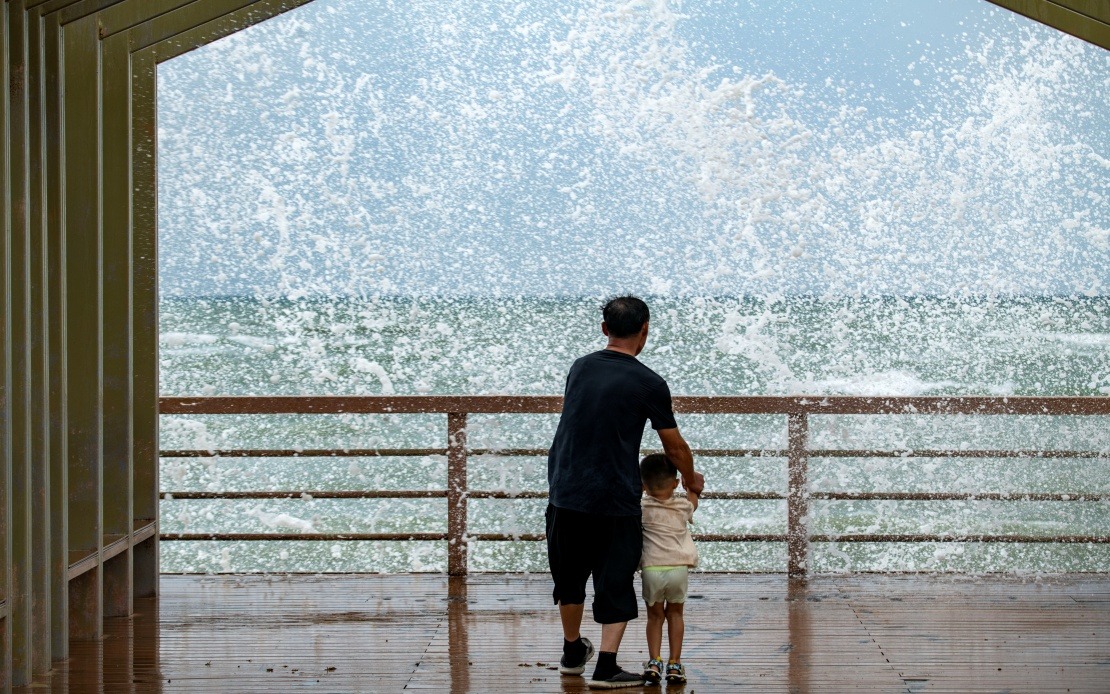
Typhoon Maysak, the 10th cyclonic system to form this year, crashed ashore along the coast of Hainan Province in southern China on Friday evening, triggering widespread transport paralysis and emergency measures across one of the nation's most important tourist and economic zones. The storm made its initial impact at Yelin Township in Lingshui Li Autonomous County at approximately 6.20 pm local time, bringing maximum sustained winds of 23 metres per second near the centre, according to readings from the Hainan provincial meteorological bureau.
The arrival of Typhoon Maysak set off an immediate cascade of operational shutdowns that will ripple through the region for days. Rail authorities took the precautionary step of suspending all train services operating to and from Hainan for both Friday and Saturday, effectively cutting off the island's primary land-based transport connection to the Chinese mainland. Sanya Phoenix International Airport, one of Hainan's busiest aviation hubs serving both domestic and international passengers, ceased all flight operations from 5 pm onwards on the day of landfall, stranding travellers and disrupting cargo movements that depend on reliable air connectivity.
Ferry operations across the Qiongzhou Strait, which forms the critical maritime passage linking Hainan to Guangdong Province on the mainland, were halted from 2 am on the same day. These ferries normally carry both passengers and vehicles in continuous service, and their suspension was expected to persist for between one and two days depending on how weather conditions evolved and when meteorological authorities deemed it safe to resume operations. The loss of ferry services compounds logistical challenges for the region, as it blocks one of the few remaining transportation arteries for goods and people moving between the island and surrounding provinces.
Educational disruptions accompanied the transport shutdowns. Authorities in Sanya and Ledong Li Autonomous County issued closures affecting both schools and child-care facilities, removing thousands of students and young children from harm's way and allowing families to focus entirely on storm preparation and safety. These precautionary measures reflected the severity of the threat that Typhoon Maysak posed to public welfare across the affected districts.
The projected track of Typhoon Maysak suggested the storm would maintain a northwesterly trajectory after making landfall, carrying its destructive potential through multiple municipalities and autonomous county administrative areas. The meteorological authorities predicted the system would traverse Baoting, Wuzhishan, Baisha and Danzhou before eventually moving into the Beibu Gulf, an important body of water that borders Vietnam and serves as a vital economic zone for both Chinese fishing and marine commerce. This forecast path indicated that impacts would not be confined to the immediate landing zone but would spread across a substantial portion of Hainan's population centres and infrastructure network.
For Malaysian and Southeast Asian observers, the disruption caused by Typhoon Maysak carries implications for regional trade flows and logistics networks. Hainan Province functions as a major gateway for cross-border commerce and tourism throughout Southeast Asia, with significant trade ties to Malaysia, Singapore, Thailand and Vietnam. Any sustained interruption to transport services—whether rail, air or maritime—can create bottlenecks that affect supply chains and travel schedules across the broader region. Companies operating regional transport and logistics operations monitor such events closely because delays in Hainan cascade outward to neighbouring markets.
The economic dimensions of the disruption merit consideration. Sanya in particular has emerged as a premier destination for both Chinese and international tourism, hosting thousands of visitors daily during normal conditions. The airport closure and school shutdowns suggest authorities were taking the typhoon threat with utmost seriousness, prioritizing public safety over commercial activity. For tourism operators, airline companies and hospitality providers in the region, such extended stoppages translate into immediate revenue losses and downstream reservation cancellations that may persist even after the storm passes, as customers reschedule trips and airlines rebuild depleted inventory.
Typhoonfund management and disaster preparedness remain ongoing challenges for island regions in the western Pacific. Hainan's experience with Typhoon Maysak underscores how rapidly devastating weather systems can overwhelm even well-developed infrastructure, necessitating preemptive operational shutdowns that seem dramatic in real time but prove essential for protecting lives. The provincial authorities' coordinated response—simultaneous suspension of multiple transport modes, school closures, and weather monitoring—reflects established protocols developed through accumulated experience with typhoons that regularly menace the region.
The broader pattern of typhoon frequency also invites reflection. The designation of Typhoon Maysak as the 10th typhoon of the year at this relatively early stage in the season suggested an active period ahead. This timing and intensity have become routine in the western Pacific basin, a pattern that some researchers link to gradually warming ocean temperatures that can intensify tropical cyclones. For maritime nations like Malaysia and other ASEAN members, understanding and preparing for such patterns remains essential to economic resilience and public safety planning.
As Typhoon Maysak moved inland across Hainan, attention would shift toward assessing damage, facilitating evacuations if needed, and preparing for the resumption of normal transport operations. The interconnected nature of regional trade means that neighbouring countries and trading partners would closely monitor recovery timelines, anticipating when Hainan's ports, airports and rail terminals might return to full operational capacity. For businesses dependent on Hainan as a logistics hub or tourism destination, the typhoon represented both an immediate disruption and a reminder of the environmental risks that maritime regions continuously face.

