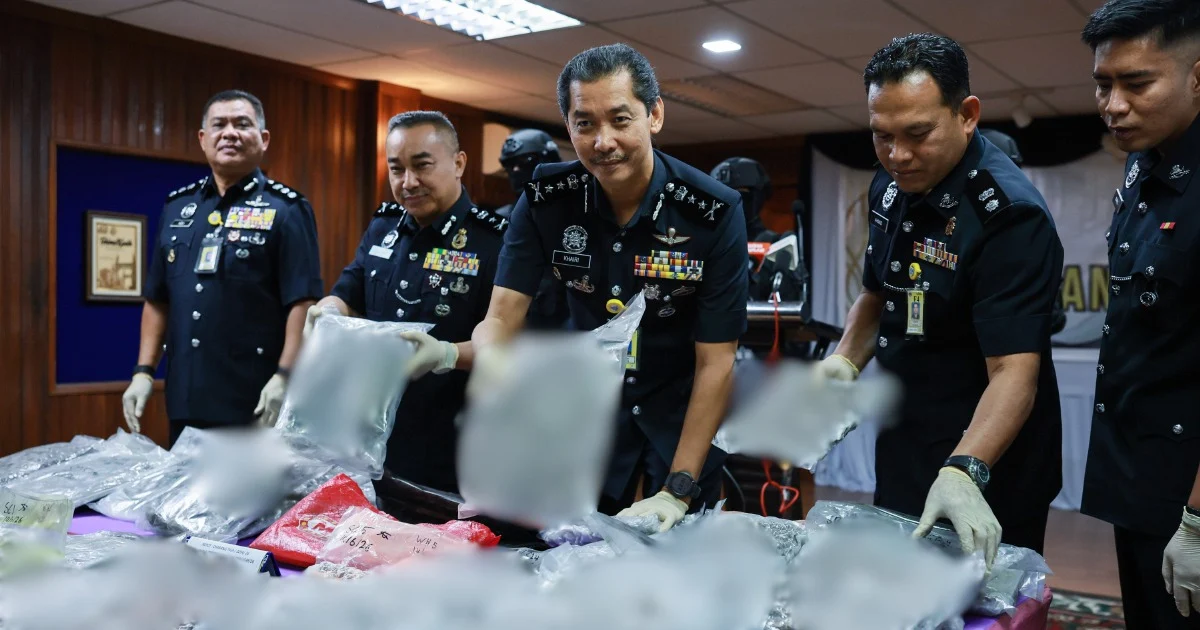
A major drug enforcement operation in Kuala Terengganu has resulted in the arrest of two brothers suspected of maintaining a distribution hub at their family residence. The seizure marks a significant disruption to what investigators believe was a substantial supply network, with confiscated substances totalling RM1.76 million in estimated street value.
The operation, centred on a property in Kampung Duyong Besar, has drawn attention to how residential homes continue to serve as critical nodes in Malaysia's drug trafficking infrastructure. By converting private dwellings into storage and distribution points, organised syndicates effectively obscure their operations from public view whilst maintaining convenient access to supplies. The suspects' alleged strategy of using a family home rather than commercial premises reflects evolving tactics employed by sophisticated criminal networks seeking to minimise detection.
Terengganu has long grappled with drug-related challenges, positioned along trafficking corridors that connect production zones in the northern region with demand centres throughout Peninsular Malaysia. The state's geographic characteristics, including its coastal access and proximity to international maritime routes, have made it attractive to syndicates seeking to establish processing and storage facilities. Law enforcement agencies have intensified surveillance and intelligence-gathering efforts in response to recurring patterns of large-scale narcotics discoveries.
The arrested brothers now face investigations into multiple potential charges, including possession with intent to distribute and trafficking offences. Malaysian law prescribes severe penalties for individuals implicated in the distribution of controlled substances, with sentencing provisions reflecting the seriousness with which authorities treat commercial-scale drug operations. The progression from arrest through investigation to eventual court proceedings will likely span several months as prosecutors build their legal case.
This operation underscores the critical role played by community intelligence in combating organised drug trafficking. Successful enforcement actions frequently depend on information provided by vigilant residents or tip-offs from other sources, enabling police to identify suspicious activities and initiate targeted investigations. The Police Narcotics Division continues to encourage public cooperation, emphasizing that such partnership strengthens preventive capacity across neighbourhoods and municipalities.
The RM1.76 million valuation reflects the wholesale or street-level pricing methodology typically applied during drug seizures, though actual profitability margins for trafficking organisations can vary substantially based on distribution tier and market conditions. Understanding the economic dimensions of the drug trade—including supply chains, pricing structures, and profit incentives—provides law enforcement with insights into network operations and enables more strategic intervention points.
Malaysia has consolidated its position as a regional leader in narcotics enforcement, deploying advanced investigative techniques and international cooperation frameworks to dismantle trafficking syndicates. The National Drug Council, operating under the purview of the Perdana Menteri's office, coordinates comprehensive strategies spanning prevention, treatment, and enforcement. Nevertheless, the persistence of significant seizures demonstrates that trafficking networks continuously adapt their methods to evade interdiction efforts.
The implications of this Terengganu bust extend beyond the immediate criminal liability of the arrested individuals. It illuminates patterns of drug distribution that authorities must address through sustained enforcement pressure, intelligence analysis, and community engagement. The quantity seized suggests a redistribution network of considerable scope, potentially supplying multiple downstream dealers across the state and neighbouring regions.
For Malaysian residents increasingly concerned about drug-related crime affecting their neighbourhoods, operations like these provide tangible evidence of police responsiveness to criminal activity. However, they also reflect the ongoing struggle to dismantle sophisticated supply networks that generate substantial profits despite significant legal consequences and enforcement risks. The brothers' detention and pending legal proceedings will likely yield intelligence that helps authorities identify broader conspiracy participants and associated distribution channels.
The case highlights structural vulnerabilities in residential security that syndicates exploit, prompting broader discussion about neighbourhood safety protocols and the responsibilities of landlords and property owners in preventing their premises from being utilised for illegal purposes. Some jurisdictions have introduced tenant screening measures and periodic property inspections to discourage such misuse, though implementation and effectiveness vary widely. As drug trafficking networks continue evolving, preventive approaches combining community vigilance, intelligent enforcement, and regulatory oversight become increasingly important for disrupting established criminal infrastructure.