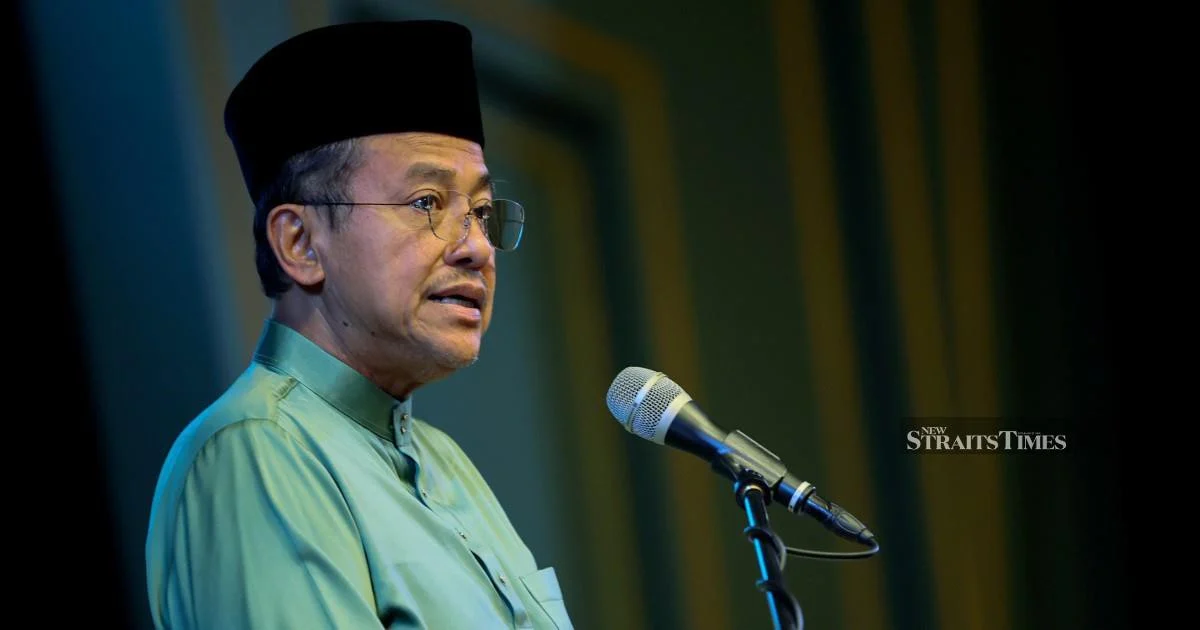
The Perikatan Nasional coalition is preparing to hold a pivotal leadership session to reassess its partnership with Bersatu, one of the bloc's member parties. The meeting, which will take place tomorrow, signals growing attention to internal coalition dynamics at a critical juncture for Malaysia's political opposition. Pas vice-president Datuk Seri Dr Ahmad Samsuri Mokhtar disclosed the agenda during remarks in Temerloh, underscoring the gravity with which senior PN figures view the matter.
Bersatu's status within Perikatan Nasional has become an increasingly complex question within the broader Malaysian political landscape. As a relatively younger component of the coalition, Bersatu has sought to establish its institutional footprint while navigating the delicate balance between its own political identity and its obligations as a coalition member. The upcoming discussion reflects mounting pressure to clarify and potentially recalibrate the party's responsibilities and commitments within the larger PN structure.
The timing of this leadership council session carries particular significance for Malaysian politics. With the nation's political trajectory remaining fluid and the opposition still consolidating its position following recent electoral cycles, decisions about coalition composition and member party roles can have ripple effects across multiple constituencies and demographic groups. For Perikatan Nasional, maintaining coherence among its constituent parties while advancing a unified political agenda represents an ongoing challenge that this meeting aims to address directly.
Peikatan Nasional itself comprises several major political entities, each bringing distinct regional strongholds, voter bases, and policy preferences to the alliance. Bersatu, which emerged as a significant political force in recent years, has carved out particular influence in certain regions while attempting to broaden its appeal nationally. The coalition's leadership recognises that clarifying each member's role helps prevent internal friction and allows the bloc to present a more cohesive alternative to current government structures.
For regional observers and Malaysian political analysts, the coalition's ability to manage internal disputes while maintaining public unity often determines its effectiveness in opposition politics. A leadership council discussion of this nature typically encompasses questions about resource allocation, candidacy agreements in future elections, representation in coalition organs, and the degree to which member parties can pursue independent policy initiatives versus adhering to collective positions.
Bersatu's particular situation reflects broader tensions within opposition coalitions across Southeast Asia. As newer entrants to established political alliances, such parties frequently struggle to secure meaningful influence proportionate to their membership size and voter appeal. The impending PN discussion therefore carries lessons not only for Malaysia's immediate political future but also for understanding how opposition movements manage internal growth and integration.
Pas, as the voice confirming tomorrow's agenda, occupies a position of considerable influence within Perikatan Nasional. Datuk Seri Dr Ahmad Samsuri Mokhtar's willingness to publicly discuss the forthcoming meeting suggests the coalition intends a degree of transparency about its deliberations, whether to manage expectations among members or to demonstrate institutional governance to external stakeholders. This transparency itself carries implications for how PN positions itself against potential criticisms of opacity or undemocratic decision-making.
The discussion of Bersatu's position also intersects with broader questions about the future direction of Malaysia's opposition bloc. As Perikatan Nasional contemplates its member parties' roles, it simultaneously grapples with strategic choices about regional expansion, policy differentiation, and electoral readiness. These conversations rarely focus narrowly on a single party; instead, they typically catalyse broader examinations of coalition structure and purpose.
For ordinary Malaysians and observers monitoring the nation's political landscape, such leadership meetings represent crucial inflection points. Coalition stability affects not only the immediate chances of opposition unity but also influences voter perceptions of political professionalism and institutional maturity. The way PN handles the Bersatu discussion will therefore become a data point in broader assessments of whether the coalition can effectively challenge incumbent political structures.
Temerloh, as the venue for Ahmad Samsuri Mokhtar's announcement, holds its own symbolic weight. The location reinforces Pas's territorial stronghold in Peninsular Malaysia, reminding observers that regional power dynamics remain central to Malaysian coalition politics. The choice to disclose the meeting agenda in this setting simultaneously projects Pas's confidence and emphasises its role as a defining force within Perikatan Nasional.
Looking forward, the outcome of tomorrow's leadership council session will likely shape PN's trajectory through the coming months. Whether the discussion results in strengthened integration of Bersatu into coalition structures, revised partnership terms, or more fundamental restructuring remains to be seen. What seems certain is that the Malaysian political opposition continues iterating on the fundamental challenge of maintaining unity while accommodating diverse party interests—a puzzle without easy solutions but with significant consequences for the nation's democratic competition.