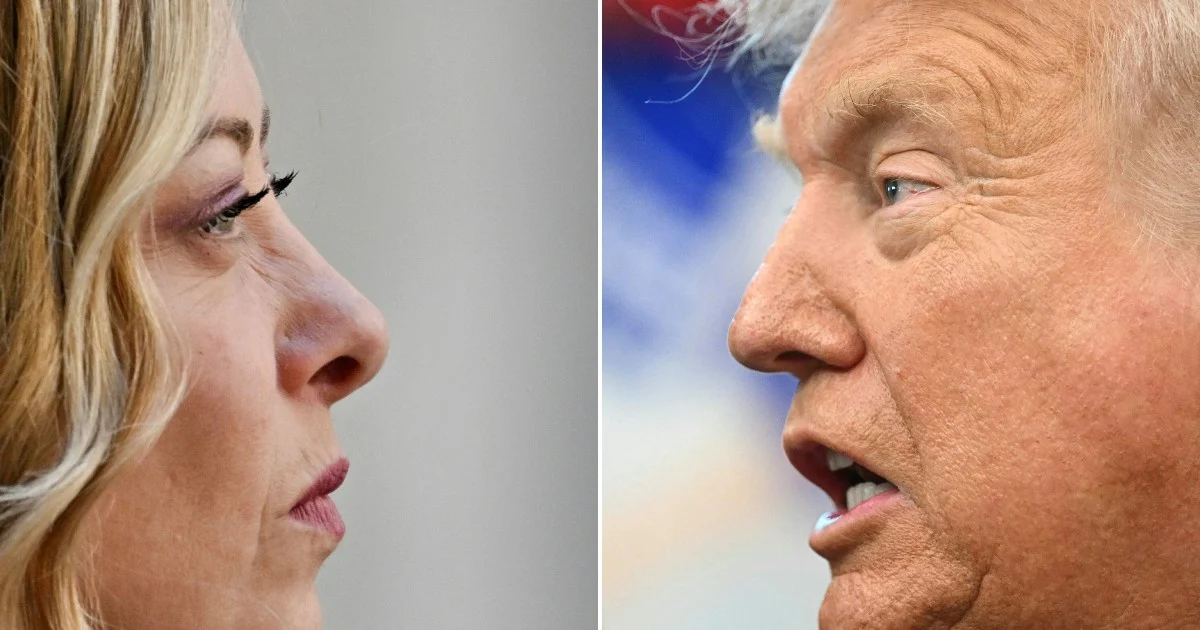
The relationship between the United States and Italy has taken a notably contentious turn, with President Donald Trump publicly levelling criticism at Prime Minister Giorgia Meloni over what he characterizes as her persistent efforts to obtain photographs with him. The accusation, made public on Saturday, represents an unusually blunt diplomatic manoeuvre from a sitting US president towards a fellow leader of a longstanding ally within the Western alliance, signalling strain beneath what was previously presented as a strong partnership.
Trump's grievance centres on what he describes as repeated requests from Meloni for joint photographs, a claim that appears designed to undermine her standing by suggesting opportunism or photo-seeking behaviour inconsistent with the dignity expected at her level. The pointed nature of this complaint suggests a deliberate effort to damage Meloni's political image domestically within Italy, where maintaining an appearance of strength and independence from Washington matters considerably for her political fortunes. By making such accusations public rather than addressing them through private diplomatic channels, Trump has chosen confrontation over the conventional protocols of international relations.
The photograph dispute serves as a façade for more substantial disagreements between Washington and Rome on matters of significant strategic importance. Underlying tensions regarding Iran policy have emerged as a central point of divergence between the two governments. The Trump administration has historically taken an aggressive stance towards Iran, while Italy, as a member of the European Union, has sought to maintain more balanced diplomatic channels and trade relationships with the Islamic Republic. This fundamental difference in approach to one of the Middle East's most complex geopolitical actors creates genuine friction on substantive grounds.
NATO defence spending commitments represent another fulcrum of tension in the Trump-Meloni relationship. The current US administration has repeatedly pressured allied nations to increase their military expenditures, framing these demands as essential for the security of the collective alliance. Italy, like many European members of the alliance, has undertaken gradual increases in defence spending but has not met the levels that Trump appears to consider adequate. This dispute reflects a broader transatlantic disagreement about burden-sharing within NATO and the future role of the alliance.
The public nature of Trump's criticism marks a departure from the traditionally managed diplomatic tensions between Washington and Rome. Historically, disagreements between the United States and European allies have been negotiated behind closed doors, with both sides maintaining public displays of unity. Trump's willingness to conduct this dispute through public channels suggests either a breakdown in diplomatic management or a calculated decision to pressure Meloni directly through media exposure. Such tactics can be counterproductive in international relations, as they potentially entrench positions and make compromise more difficult for both sides.
Meloni's political position within Italy adds another layer of complexity to this dispute. As a right-wing populist leader who came to power with a Eurosceptic coalition, she has carefully balanced maintaining good relations with the United States while asserting Italian independence within European structures. Public criticism from Trump could either strengthen her hand politically by allowing her to portray herself as standing up to Washington pressure, or weaken it by suggesting the US lacks confidence in her leadership. The ambiguity of this outcome likely figures into Trump's calculus.
The Iran dimension of this dispute carries particular significance for Southeast Asian observers and policymakers. The region relies extensively on Middle Eastern oil and gas supplies, and any escalation of tensions between Washington and Tehran directly affects regional energy security and economic stability. Italy's preference for maintaining diplomatic channels with Iran, should it prevail in discussions with the Trump administration, could actually benefit regional security by preventing further polarization in the Middle East. Conversely, if Trump's hardline approach gains traction among Western allies, energy prices and geopolitical instability could increase, with direct consequences for Malaysian and ASEAN economies.
NATO's posture towards Russia also intersects with these tensions in ways that matter for Asia-Pacific security architecture. Italy, like other European NATO members, faces pressure to strengthen Eastern European defence, potentially diverting resources from other strategic priorities. The alliance's collective focus on Europe affects broader questions about Western strategic attention and commitment to the Indo-Pacific region, where several Southeast Asian nations have growing security concerns regarding great power competition.
The photograph complaint, while potentially trivial in appearance, may actually reflect Trump's broader frustration with what he perceives as insufficient alignment from European allies on key foreign policy questions. By framing Meloni's alleged photo-seeking as evidence of either insincerity or inadequate respect, Trump may be attempting to establish dominance in a relationship where he feels Italy is not sufficiently deferential. This pattern of public criticism of allied leaders represents a significant shift from previous American administrations and creates uncertainty about the reliability of US commitment to alliance partnerships.
For Malaysia and other Southeast Asian nations, the Trump-Meloni dispute illustrates how transatlantic disagreements can ripple across global geopolitical alignments. Italy's potential distance from Washington on Iran policy could influence how Western powers approach broader Middle East engagement and regional security frameworks. Moreover, the willingness of the Trump administration to publicly embarrass allied leaders raises questions about the predictability and stability of American alliance commitments, matters of direct relevance to Southeast Asian countries contemplating their own strategic partnerships.
The resolution of this dispute, whether through quiet negotiation or continued public friction, will provide insights into how the Trump administration intends to manage relationships with European allies. Should Meloni choose to respond publicly to Trump's accusations, the escalation could set a concerning precedent for how major Western democracies conduct their diplomatic relations, with implications extending far beyond bilateral US-Italian relations.