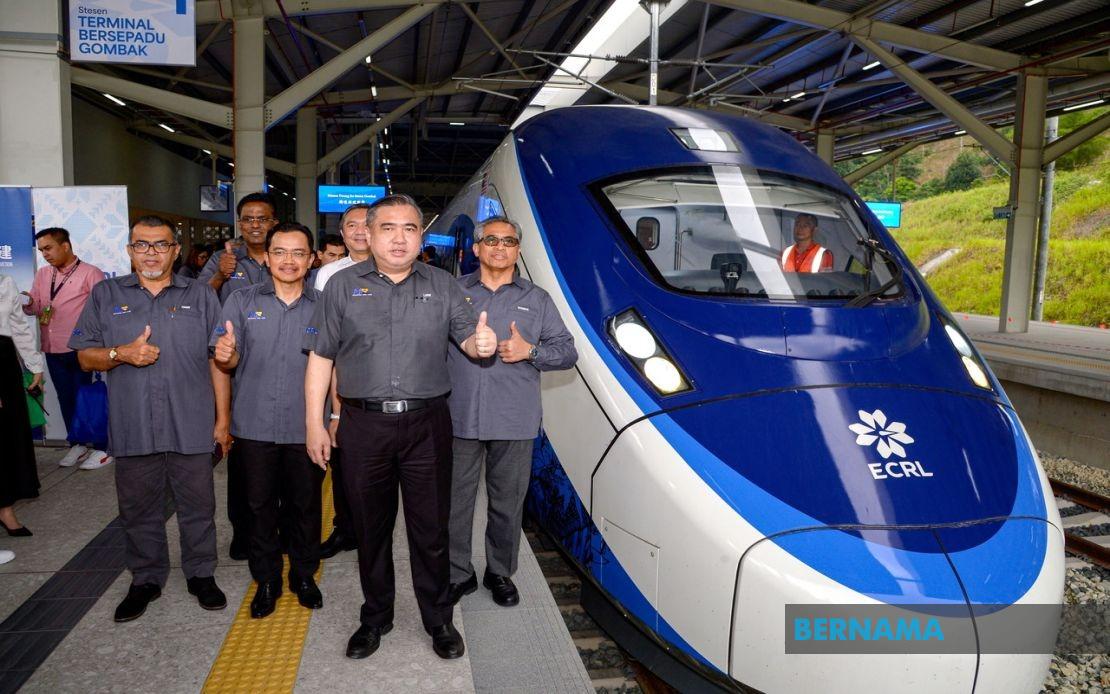
The East Coast Rail Link's first phase, connecting Kelantan's capital to the Gombak Integrated Terminal in the federal territory, is being fast-tracked for a December operational debut rather than its initially scheduled January 2027 commencement. This acceleration effort marks a significant milestone in Malaysia's infrastructure ambitions, particularly for the resource-rich east coast states seeking enhanced connectivity to the Klang Valley's economic hub. Transport Minister Anthony Loke Siew Fook announced the revised timeline while emphasising that the expedited schedule remains contingent upon flawless execution of critical testing protocols and maintains unwavering commitment to passenger safety standards.
The minister's statement underscores the complex interplay between infrastructure ambition and engineering rigour that characterises major rail projects across the region. The acceleration hinges substantially on seamless progression through the System Integration Testing phase, currently underway, followed by the Fault-Free Run operational trials scheduled to commence in September. These comprehensive validation stages involve approximately 8,000 kilometres of supervised test runs, conducted under the Land Public Transport Agency's oversight, to verify that operational safety and reliability specifications align with established standards and statutory requirements. The significance of these testing phases cannot be overstated—they represent the final gatekeeping mechanisms before passenger services commence, and any shortcomings discovered during this period would necessitate remedial work and additional testing cycles.
Loke addressed the apparent tension between acceleration and safety with candid acknowledgment of institutional risk aversion, noting that accelerating timelines does not diminish the rigour of mandatory safety validations. He disclosed that Malaysia Rail Link and primary contractor China Communications Construction Company have been tasked with identifying opportunities to compress the typically two-to-three month testing and certification window without excising critical safety protocols. Notably, the Land Public Transport Agency is exploring facilitation mechanisms to streamline bureaucratic processes that might otherwise extend timelines, suggesting that administrative efficiencies rather than technical shortcuts represent the focus of acceleration efforts.
The confidence underpinning the December target derives partially from pre-delivery validation conducted in manufacturing environments. Loke noted that extensive testing on rolling stock occurred at the contractor's factory in China before shipment to Malaysia, providing preliminary assurance regarding train systems performance. The Comprehensive Inspection Train launch and formal commencement of System Integration Testing at Gombak station symbolised tangible progress, with the introductions of the main ECRL station design concept signalling advancement toward operational readiness across the corridor's infrastructure architecture. These public ceremonies served dual functions—demonstrating genuine progress to stakeholders whilst elevating political commitment through ceremonial endorsement by high-ranking officials including Chief Secretary to the Government Tan Sri Shamsul Azri Abu Bakar and Chinese Ambassador Ouyang Yujing.
Phase 1's achievement of 95.08 per cent completion by July 2024 indicates substantial physical infrastructure realisation, with track laying, station construction, and signalling deployment substantially advanced across the Kota Bharu to Gombak corridor. This progress snapshot provides empirical grounding for the minister's optimism regarding December feasibility, though the final five percent of construction typically encompasses the most technically demanding elements—integration of complex systems, resolution of outstanding deficiencies, and achieving operational coherence across disparate technical domains. The remaining work encompasses power distribution finalisation, telecommunications network integration, and resolution of any construction defects or design refinements identified during inspection processes.
The ECRL project's broader strategic architecture extends beyond Phase 1's December ambitions. Phase 2, connecting Gombak to Port Klang, follows with a December 2027 completion target and January 2028 operational commencement. This phased approach reflects prudent risk management, permitting lessons learned from Phase 1 validation and operational initialisation to inform Phase 2 execution strategies. For Malaysian policymakers and regional stakeholders, Phase 1's success becomes particularly crucial as a proof-of-concept validating the broader ECRL investment logic and demonstrating institutional capacity for executing complex megaprojects involving Chinese contractors and state-of-the-art rail technologies.
From a regional perspective, the ECRL's accelerated timeline carries implications extending beyond Malaysia's borders. The rail corridor represents a significant component of Belt and Road Initiative infrastructure development across Southeast Asia, and successful December launch would demonstrate viability of accelerated implementation approaches whilst maintaining quality standards. This becomes particularly relevant for neighbouring states considering similar rail infrastructure investments or contract renewals with CCCC and affiliated entities. Conversely, any delays or safety-related issues would dampen enthusiasm for comparable projects across the region and potentially invite scrutiny of procurement methodologies and contractor performance management frameworks.
The presence of Chinese diplomatic and corporate representatives at the Gombak launch event—including CCCC president Zhang Bingnan and Ambassador Ouyang Yujing—reinforced the project's bilateral significance and commitment from both Malaysian and Chinese authorities to successful realisation. China Communications Construction Company's reputation and future regional project prospects likely depend substantially on Phase 1 delivery credibility, creating organisational incentives for focused execution without safety compromise. The contractor's pre-delivery factory testing investments and deployment of dedicated resources to Malaysia signal serious intent regarding timeline achievement, though construction sector complexities frequently generate unforeseen challenges that defy even rigorous planning frameworks.
For Kelantan and surrounding east coast constituencies, the December timeline carries considerable political and economic significance. The rail link promises unprecedented connectivity between resource-rich northern and eastern states and Selangor's industrial and commercial ecosystem, potentially catalysing economic reorientation and investment patterns across the peninsula. Tourism flows, particularly to Kelantan's cultural and historical attractions, may experience stimulus through improved accessibility. However, operational success depends not merely on physical infrastructure completion but also on commercial service design, ticketing frameworks, and integration with existing public transport networks in both Kelantan and the Selangor-Kuala Lumpur corridor.
Transport Minister Loke's December target announcement represents a calculated political commitment backed by genuine infrastructure progress metrics. The 95.08 per cent Phase 1 completion rate provides empirical foundation rather than mere aspiration. Nevertheless, the transportation sector's historical tendency toward timeline slippage counsels appropriate scepticism regarding definitive forecasting. The minister's candid acknowledgment of institutional risk aversion and unwavering commitment to safety protocols—articulated through his statement that acceleration efforts extend exclusively to administrative and scheduling optimisation rather than technical validation—suggests measured confidence rather than overconfident projection. Whether December 2024 materialises as the actual operational commencement date or represents a target subsequently adjusted to Q1 2025 will significantly influence public confidence in government infrastructure delivery capacity and contractor performance management capabilities.

