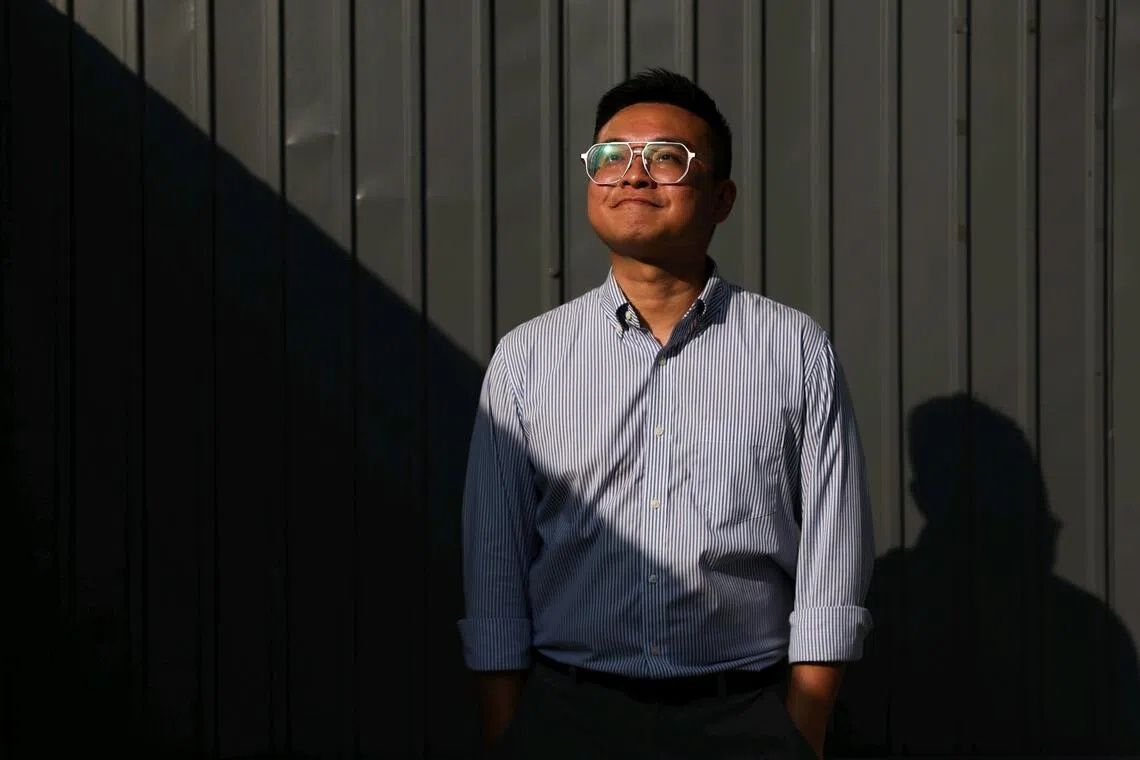
Cornelyus Tan appeared to have everything figured out. A successful marketing professional with a thriving career, he was the kind of person society would expect to stay clear of addiction. Yet for years, he maintained a carefully constructed double life, battling a secret dependence on methamphetamine while projecting competence and achievement to colleagues and acquaintances. That façade crumbled in 2022 when his arrest led to six months at Changi Prison's Drug Rehabilitation Centre, an experience that would fundamentally alter his understanding of addiction itself.
Within those rehabilitation walls, Tan encountered a remarkable cross-section of Singapore's professional class. Teachers, lawyers, bankers, and other white-collar workers filled the facility—individuals whose qualifications and career trajectories seemed to contradict everything society assumes about drug addiction. Their presence highlighted a growing phenomenon that has quietly reshaped Singapore's approach to substance abuse intervention. As Tan himself observed, the common thread binding these accomplished individuals was not professional failure but a shared emotional emptiness. "On paper, we look well. We are all very successful. But at the core of it, we had a common problem – the heart," he reflected, speaking publicly about his journey for the first time.
Statistical evidence now confirms what rehabilitation counsellors have long suspected: addiction is no longer predominantly a problem of the disadvantaged. Data from the Singapore Prison Service reveals a striking trend. In 2025, the Drug Rehabilitation Centre housed 293 inmates with tertiary education or higher qualifications—nearly a 44 per cent increase from 204 in 2021. These individuals now account for approximately one in ten newly admitted inmates, up from 8.8 per cent four years earlier. Their credentials range from polytechnic diplomas to advanced doctorates, spanning nearly every professional discipline imaginable.
While the Central Narcotics Bureau notes that this demographic remains somewhat underrepresented relative to Singapore's overall population educational profile—with 54.5 per cent of residents aged 25 and above now holding tertiary qualifications—the trajectory is unmistakable. The rise itself has become notable enough to provoke public surprise, particularly in high-profile cases involving medical practitioners and other respected professionals. The shift challenges a deeply held social assumption: that education and economic security function as protective factors against substance abuse. Reality, it appears, is considerably more nuanced.
Experts attribute this phenomenon to several interconnected forces reshaping the accessibility and perception of drugs across all social strata. Technology has fundamentally altered how substances reach potential users. Traditionally, individuals obtained illicit drugs through personal networks—family members with addiction histories, neighbourhood dealers, or social circles already embedded in drug cultures. Today's ecosystem operates differently. Telegram channels openly peddle various substances, and social media algorithms serve drug-related content to users regardless of educational background or economic status. As community services director Tham Yuen Han notes, the barrier to access has essentially collapsed. "Now with technology, you don't need those connections, because sometimes it just comes to you on social media," she explains, identifying the shift in how supply chains operate in the digital age.
Beyond logistics, the global expansion of synthetic drug production has increased variety and potency. Methamphetamine, cannabis, Ecstasy, and heroin rank among the most frequently abused substances among tertiary-educated offenders arrested in recent years. These drugs carry particular appeal for certain professionals. For some, substances initially feel functional rather than destructive—productivity enhancers rather than escapist indulgences. Tan's introduction to methamphetamine at a house party in 2014 established this pattern. At 25, an aspiring fashion photographer studying arts, he discovered that the drug produced what he termed a "Superman effect." The crystalline substance delivered an adrenaline surge that seemed to unlock creative thinking and sustained efficiency. Professional accolades followed; a news outlet even profiled him as a promising young talent in 2015. The drug appeared to deliver tangible benefits, making it conceptually different from traditional narratives of addiction.
This perception gap creates particular vulnerability among educated professionals. Confidence in their own capabilities—the very trait that enabled professional success—becomes a liability. Many believe they can manage drug use through disciplined control, treating substances as situational tools rather than genuine threats. Tan eventually quit for several years after observing physical deterioration: pronounced weight loss, excessive sweating, and other visible effects. The interruption suggested to him that he maintained agency over the relationship. But in 2020, facing intense stress in his role as a regional marketing manager at an e-commerce firm, that carefully maintained boundary collapsed. The familiar internal voice returned, whispering seductive justifications. Why not resume? The substance's utility was proven. The circumstances were difficult. Control remained within reach. Similar psychology ensnared a junior college teacher identified here as John, who concealed his methamphetamine addiction for six months while continuing classroom instruction. Initially introduced to the drug at a social gathering in 2015, he framed participation as social connection rather than substance abuse. As his addiction deepened and personal circumstances deteriorated—compounded by an abusive relationship—his classroom attendance suffered. Only when his reporting officer noticed did he scramble for explanations.
Mental health professionals and addiction specialists increasingly emphasize that well-educated individuals experience addiction's emotional architecture identically to others. Samuel Chua, principal counsellor at the Institute of Mental Health's National Addictions Management Service, stresses this fundamental parity. "Well-educated professionals are no different from other drug addicts in their desire to escape pain and distress." Yet acknowledging this vulnerability requires surrendering a flattering self-image. Admitting addiction threatens the professional identity these individuals have spent years constructing. They may harbour genuine confidence that superior intellect or willpower can manage what others cannot. This denial mechanism proves remarkably durable. Tan developed an elaborate system: using methamphetamine intensely, then abstaining for weeks when mood crashes followed the drug's stimulant effects wore off. The cyclical pattern allowed him to maintain surface-level functionality while addiction deepened underneath.
Other contributing factors extend to cultural and social influences. Peer pressure, despite assumptions that education inoculates against it, continues operating within professional circles. Social media amplifies this through influencers and entertainers who glamorise drug use or downplay consequences. Exposure to more permissive drug cultures during overseas travel—whether for business or education—normalizes experimentation among those accustomed to intellectual exploration and cosmopolitan values. The Central Narcotics Bureau identifies these elements as significant drivers alongside technological accessibility. For many educated users, initial drug contact occurs not through criminal networks but through seemingly respectable social contexts: professional networking events, recreational gatherings, or relationships with peers positioned as trustworthy.
The recognition that addiction transcends educational and economic boundaries represents a significant shift in Singapore's public health approach. Traditional assumptions about risk factors prove inadequate when confronting cases like Tan's, whose professional credentials and stable employment provided no insulation against dependency. Gopal Mahey, senior counsellor at the Centre for Psychotherapy, emphasizes this emerging understanding: "There is a growing recognition that drug use is not confined to people who are poorly educated, unemployed or socially disadvantaged." This reframing has profound implications for prevention, intervention, and rehabilitation strategies. Support services must now account for professionals who may initially resist treatment due to shame around what they perceive as inexplicable failure. Counsellors report that educated addicts sometimes struggle more intensely with the identity disruption addiction forces upon them than with physical dependency itself.
Tan's public disclosure of his story marks an important moment in Singapore's conversation about substance abuse. By naming his experience and reflecting on how professional success paradoxically masked internal deterioration, he challenges the comfortable fiction that education and achievement eliminate vulnerability. His experience suggests that contemporary drug addiction reflects not moral weakness but intersection of psychological fragility, technological accessibility, and emotional isolation—factors affecting citizens across all demographic categories. The nearly doubled cohort of educated professionals in rehabilitation centres signals not sudden moral decline among this group but rather the revealing of patterns always present, now amplified by changing circumstances. As Singapore continues grappling with this phenomenon, responses must move beyond assumptions that professional status determines susceptibility to addiction, instead recognizing that meaningful intervention requires meeting people where they actually are: struggling with pain, seeking connection, vulnerable to the promise of chemical solutions regardless of their credentials or bank balance.

