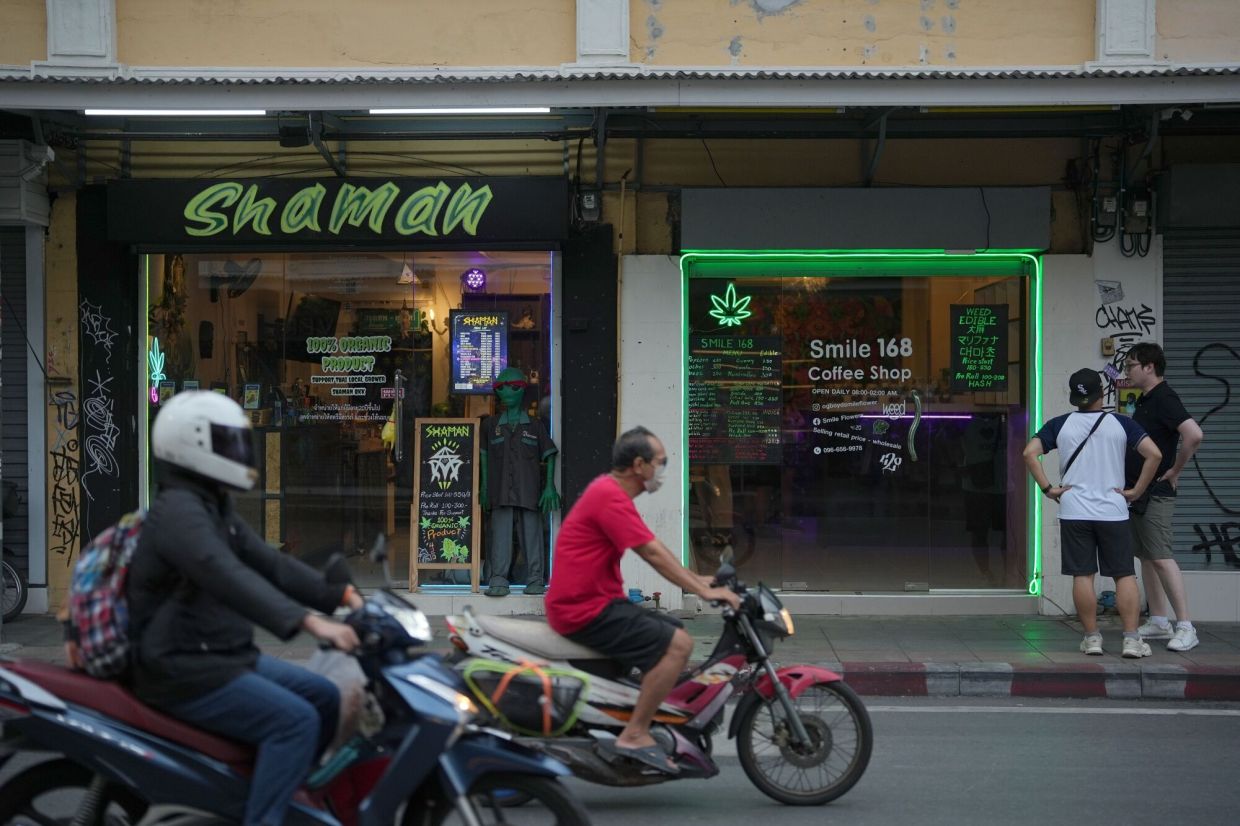
Thailand's government is intensifying its regulatory approach to cannabis, with Public Health Minister Pattana Promphat announcing a comprehensive legislative framework intended to confine the drug's use strictly to medical purposes. The draft Cannabis and Hemp Act, which has already undergone public consultation and is expected to reach Parliament soon, represents an escalation in state oversight following persistent difficulties in preventing illicit international trafficking and the proliferation of unauthorised commercial outlets that circumvent existing rules. The measure signals Thailand's intention to arrest the drift toward recreational cannabis availability that has characterised the country's experience since the plant was decriminalised for medical and research purposes.
The regulatory architecture being constructed extends beyond simple licensing requirements to encompass cultivation oversight for the first time in Thai law. Previous frameworks, built upon the Act on the protection and promotion of herbs and various ministerial directives, addressed only the downstream stages of the cannabis supply chain—sales, transfers, and extraction—leaving a significant gap in monitoring from the moment seeds enter the ground. The new legislation would close this loophole by imposing state supervision over the entire production cycle, from cultivation through to final dispensing. Critically, the bill would also introduce notably severe penalties for violations, signalling the government's determination to enforce compliance across all sectors of the cannabis industry.
The most immediate challenge facing Thai authorities involves managing the substantial shadow market of unregistered and expired cannabis outlets. Since 2023, when the government began issuing licenses, approximately 18,000 outlets have received permission to operate. However, the licensing regime operates on three-year cycles, with roughly one-third of those initial licences expiring by the end of 2023. Only about 1,500 outlets renewed their permits, leaving some 6,000 establishments operating either with expired credentials or without authorisation altogether. This pattern is expected to repeat, with similar numbers of licences expiring in 2026 and 2027, suggesting that without vigorous enforcement, the problem of unlicensed cannabis commerce will compound rather than diminish. Officials acknowledge that these unlicensed venues often serve recreational consumers, operating outside the government's stated policy framework.
To address this enforcement challenge, Thailand's authorities are deploying a multi-layered strategy combining technology, personnel expansion, and stricter operational requirements. The Department of Thai Traditional and Alternative Medicine has established a publicly accessible website listing all properly registered outlets along with their GPS coordinates and licence expiration dates—a transparent mechanism designed to enable rapid identification and enforcement action against any establishment not appearing on the register. The government has simultaneously expanded the pool of authorised inspectors to tens of thousands, incorporating police personnel and local administrative staff to conduct on-site inspections and arrests. These enforcement officers now possess the authority to take immediate action against any unlicensed operator, streamlining what previously might have required bureaucratic coordination.
Tight controls over dispensing practices represent another pillar of the regulatory strategy, with the government mandating that registered outlets must operate as medical facilities under medical supervision. Under amended regulations, every cannabis outlet must employ a doctor on premises to oversee dispensing to patients with legitimate medical needs. This requirement serves multiple purposes: it creates a professional gatekeeping function preventing casual access, it establishes a documented record of individual consumption patterns, and it creates a mechanism for identifying suspicious purchasing behaviour. Officials have specifically noted that if a single individual repeatedly obtains cannabis in quantities suggesting recreational use or resale rather than genuine medical consumption, the pattern triggers investigation and potential legal action.
The challenge of cannabis flowing across borders remains a significant concern for Thai policymakers, particularly because cannabis retains narcotic status in many of Thailand's trading partners and regional neighbours. While cannabis is no longer classified as a narcotic substance within Thailand's borders, this domestic legal status does not extend internationally; Thai citizens or organised networks cannot legally transport Thai cannabis to countries where it remains prohibited, yet attempts to do so persist. To combat this, the Department of Thai Traditional and Alternative Medicine has been collaborating intensively with the Customs Department and Airports of Thailand to inspect shipments and monitor movement through official ports of entry. Notably, the department has shifted from issuing physical licenses, which were vulnerable to forgery and substitution, to an electronic licencing system providing another layer of control. Nevertheless, officials candidly acknowledge that sophisticated smuggling operations moving large volumes may still evade detection.
The legislation itself remains in a state of incomplete parliamentary consideration, having passed the public consultation phase in early July 2026 but failing to reach deliberation in the current legislative session. The bill awaits its turn in Parliament's workload, alongside competing legislative priorities. Once enacted, the Cannabis and Hemp Control Act would establish the foundational legal architecture for Thailand's medical cannabis regime over the coming years. However, a separate question looms regarding whether cannabis might eventually be returned to narcotics classification altogether. Pattana indicated that such a reclassification would likely fall under the purview of narcotics law supervised by the Ministry of Justice, suggesting that any reversal would require action from a different bureaucratic agency and potentially different political coalitions.
The positioning of the Bhumjaithai Party, which has championed cannabis liberalisation in Thai politics, has also evolved. Party officials and government ministers have consistently affirmed that the party's policy supports medical cannabis exclusively, not recreational access. This statement appears designed to distinguish the government's position from uncontrolled commercialisation and to position cannabis regulation as a matter of public health rather than commercial expansion. Nevertheless, the existence of thousands of unlicensed outlets, many apparently serving recreational consumers, suggests a significant gap between official policy and street-level reality. The enforcement action now underway can be understood partly as an effort to bring reality into alignment with stated policy.
For Malaysia and other Southeast Asian nations observing Thai regulatory developments, several considerations emerge. Thailand's experience demonstrates the difficulty of maintaining strict boundaries between medical and recreational cannabis availability once the plant is decriminalised. The proliferation of unlicensed outlets and the apparent ease with which recreational supply chains establish themselves suggests that regulatory design matters enormously, but that enforcement resources, political will, and bureaucratic capacity are ultimately decisive factors. Additionally, Thailand's struggle with cross-border cannabis trafficking highlights a regional problem requiring coordinated international responses. Malaysian authorities, which have maintained strict prohibition of cannabis in all forms, may monitor whether Thailand's regulatory model successfully prevents the emergence of organised trafficking networks that could supply illicit demand in neighbouring countries.

