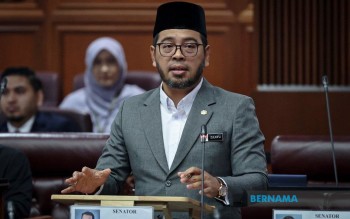
Tabung Haji, Malaysia's Islamic pilgrimage fund, is intensifying its pursuit of outstanding payments from Saudi Arabia-based property developer Al-Rawda Real Estates Development & Project Management Co Ltd, deploying asset-tracing expertise after the company defaulted on both an arbitration award and a subsequent settlement agreement. According to Minister in the Prime Minister's Department (Religious Affairs) Dr Zulkifli Hasan, the developer has managed to settle only 14.9 million Saudi riyal of the 899 million Saudi riyal arbitration award granted to the fund, leaving an outstanding balance of approximately 884 million Saudi riyal—equivalent to roughly RM963 million at current exchange rates.
The dispute represents one of the most significant failures among a cluster of troubled investments that have plagued Tabung Haji's finances. The Royal Commission of Inquiry report released in July identified Al-Rawda as one of 14 problematic ventures linked to billions of ringgit in losses accumulated between 2014 and 2020. The fund's involvement with the Saudi company stemmed from an ambitious but ultimately ill-conceived expansion into hospitality management in the holy cities of Makkah and Madinah, two of Islam's most significant pilgrimage destinations.
Between 2015 and 2017, Tabung Haji entered into what Dr Zulkifli characterised as an "extraordinary and not normal transaction," leasing four premium hotels in Makkah and Madinah from Al-Rawda. The fund advanced approximately RM1.55 billion upfront to secure lease agreements spanning ten to eighteen years—a substantial capital commitment that reflected confidence in both the partner and the hospitality market in these religiously significant cities. Beyond the upfront payments, Tabung Haji further deepened its financial exposure by appointing Al-Rawda as operator of the four properties under a Management and Operation Agreement.
The contractual arrangement included a projected lease rental income stream of 2.49 billion Saudi riyal, which was intended to generate ongoing returns that would justify the initial massive capital outlay. In exchange for this operational arrangement, Tabung Haji accepted a promissory note personally guaranteed by Al-Rawda's owner, Dr Mashhoor Ali Omar Almadoodi. This structure placed considerable reliance on both the creditworthiness of the company and the personal guarantee of its principal—a dependence that would prove catastrophic when the arrangement unravelled.
The collapse of the arrangement became evident in March 2019, when Al-Rawda ceased remitting the agreed rental income to Tabung Haji. Rather than accepting the default, the fund initiated enforcement proceedings in Saudi Arabia, seeking to compel the developer to honour its payment obligations. These enforcement efforts eventually escalated into formal arbitration proceedings, which Al-Rawda itself initiated against Tabung Haji—a countersuit that ultimately backfired when the arbitration tribunal issued its Final Award on April 16, 2023 entirely in favour of the Malaysian fund.
Despite the arbitration victory, converting the judgment into actual cash recovery has proven far more challenging than the legal proceedings themselves. Al-Rawda's apparent financial deterioration meant that the company lacked sufficient liquid assets to satisfy the full 899 million Saudi riyal award. Confronted with an insolvent debtor holding a judgment it could not enforce through conventional collection methods, Tabung Haji pursued a different strategy in November 2024, negotiating a settlement agreement with Al-Rawda designed to recover the outstanding amount through a structured arrangement potentially more realistic given the company's constrained financial position.
The settlement agreement, however, rapidly proved to be another false hope. Al-Rawda managed to remit only the 14.9 million Saudi riyal partial payment before abandoning its settlement obligations entirely. Faced with this breach, Tabung Haji terminated the settlement agreement and shifted tactics once more, now engaging specialised asset-tracing consultants to investigate whether Al-Rawda possesses concealed or underutilised assets that could be identified, targeted, and potentially seized to satisfy the outstanding judgment. This sophisticated enforcement approach reflects recognition that conventional collection channels have been exhausted.
The Al-Rawda case exemplifies the investment governance failures that triggered the Royal Commission of Inquiry examination of Tabung Haji's operations. The RCI report, which was publicly released in July after being presented to the King in August 2022, identified systemic weaknesses in management and operational decision-making during the 2014-2020 period. The hotel lease transactions with Al-Rawda appear to represent precisely the type of under-scrutinised, high-exposure ventures that the RCI investigation concluded had created unacceptable risks for a fund holding the savings of millions of Malaysian Muslim pilgrims.
The RCI submitted 25 recommendations for institutional remediation, and according to Dr Zulkifli's statement to Parliament, Tabung Haji had implemented approximately 75 percent of these recommendations by the end of July. This implementation rate suggests meaningful organisational reform, though the Al-Rawda case demonstrates that historical damages require years of persistent recovery efforts beyond merely implementing structural improvements. The fund faces a protracted process of attempting to extract value from an investment gone profoundly wrong, competing with other creditors of a financially stressed Saudi developer.
The implications of the Al-Rawda situation extend beyond Tabung Haji itself. The case highlights risks that Malaysian institutions face when investing in overseas property and hospitality ventures, particularly in markets where asset transparency and enforcement mechanisms may differ substantially from Malaysian norms. The transaction structure—involving upfront capital transfers to a foreign company, reliance on management agreements operated by that same company, and personal guarantees from individual owners—concentrated multiple layers of risk without apparent diversification or exit mechanisms.
For Tabung Haji's millions of contributors, the Al-Rawda losses represent a cautionary episode in the fund's recovery journey. While the November 2024 settlement attempt demonstrated willingness to pursue pragmatic compromises, the subsequent default underscores the harsh reality that some overseas investments may ultimately yield minimal recovery regardless of legal victories or recovery efforts. The deployment of asset-tracing specialists represents a last-resort measure, and whether this approach succeeds in identifying recoverable assets remains uncertain.
Moving forward, the case serves as a reminder of why the Royal Commission's investigation proved necessary and why its recommendations for strengthened investment governance, due diligence processes, and risk management frameworks carry such critical importance for protecting pilgrim savings. Tabung Haji's ongoing recovery efforts from this and other troubled investments will likely extend over years, requiring sustained institutional commitment even as the fund attempts to restore confidence among the Malaysian Muslim community it serves.

