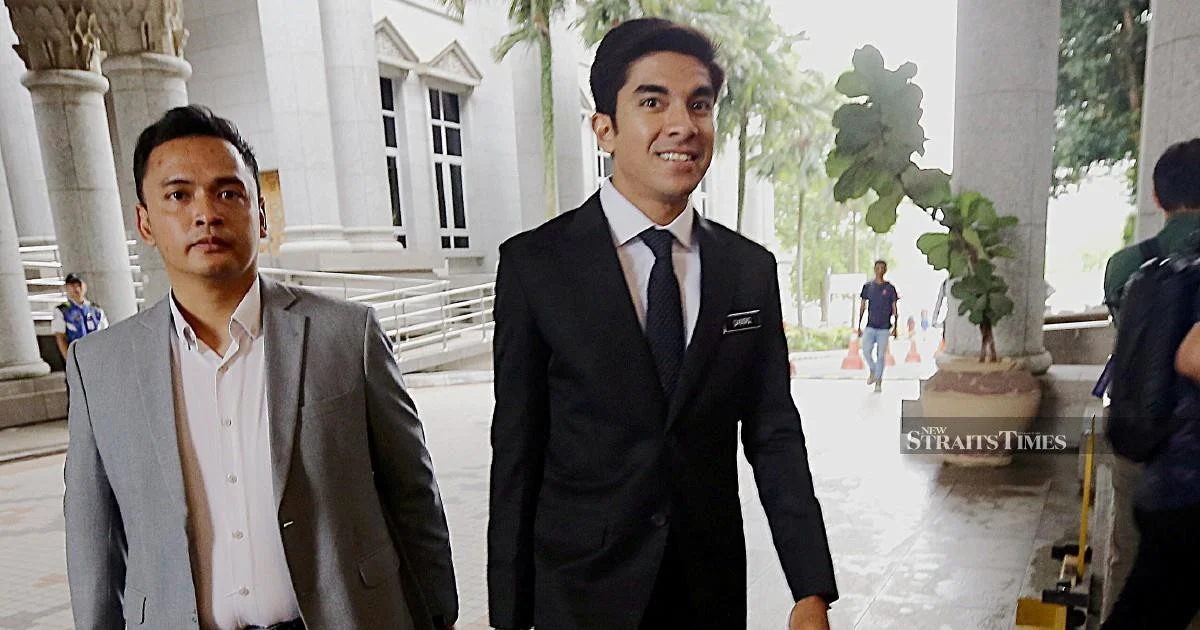
Amir Fiqri Amir Jack, who serves as a special officer to Muar member of parliament Syed Saddiq Syed Abdul Rahman, has been selected to contest the Maharani seat in the forthcoming Johor state election. The appointment marks Muda's expansion of its electoral footprint in the southern state, where the reform-minded party will deploy a slate of four candidates across various constituencies.
Muda's decision to field candidates in Johor represents a strategic broadening of the party's reach beyond its traditional strongholds. Since its founding in 2020, Muda has positioned itself as a progressive alternative to Malaysia's established political machines, appealing particularly to younger voters frustrated with conventional party politics. The party's entry into Johor's electoral contest signals confidence in its ability to compete at state level and reflects growing organisational capacity to mount coordinated campaigns.
Amir Jack's background as a trusted aide to Syed Saddiq places him within a faction of younger, technocratic-minded politicians reshaping Malaysian politics. Syed Saddiq himself has cultivated a reputation as a moderniser, and his parliamentary tenure in Muar has been marked by focus on economic development and institutional reform. The choice to support Amir Jack's candidacy demonstrates the networks of mentorship operating within reform-oriented circles in the country.
The Maharani constituency, a state seat within the larger Johor framework, carries significance as a microcosm of suburban Malaysian politics. The seat encompasses communities with mixed demographic profiles, requiring candidates to articulate appealing platforms on economic opportunity, local services, and quality governance. Muda's selection of Amir Jack suggests the party believes it can make meaningful inroads by positioning itself as distinct from the competing visions offered by Barisan Nasional and Pakatan Harapan in state-level contests.
Muda's four-candidate strategy in Johor reflects careful calibration of party resources and realistic expectations about electoral mathematics in a state long dominated by Umno and its coalition partners. Rather than attempting comprehensive coverage, the party is concentrating its efforts in selected constituencies where organisational presence and voter receptivity appear strongest. This focused approach mirrors strategies adopted by other emerging political forces seeking to establish credibility while managing the considerable financial and operational demands of statewide campaigns.
The political context surrounding Johor's next state election remains fluid, shaped by factional dynamics within Umno, evolving coalitional arrangements within Pakatan Harapan, and the persistent challenge of third-force politics in Malaysian elections. Muda's participation introduces additional unpredictability into electoral calculations, particularly if the party's messaging gains traction among demographics dissatisfied with incumbent alternatives. For constituencies like Maharani, the presence of additional candidates may fragment votes in strategically significant ways.
Syed Saddiq's prominence within Muda and his visible support for Amir Jack's candidacy highlights the personal networks and trust relationships that remain central to Malaysian political recruitment. Though Muda emerged partly as a reaction against traditional patronage politics, the party necessarily operates within the relationship-based ecosystem that characterises Malaysia's political culture. Balancing institutional development with personality-driven politics represents an ongoing challenge for reform movements attempting to establish durability beyond their founding generations.
For Amir Jack personally, the Maharani contest represents a significant professional leap from his role as parliamentary aide into direct electoral competition. Success would position him as an elected representative with independent political standing, whereas defeat would require reassessment of personal prospects and party strategy. The outcome will likely carry implications for how Muda evaluates candidate selection processes and resource allocation in future electoral cycles.
Regionally, Muda's expansion into Johor contests reflects broader patterns of political fragmentation and voter realignment visible across Southeast Asia as established parties face challenges from reform-oriented movements and younger challengers. Malaysia's experience with third-force politics remains distinctive given the country's particular constitutional and demographic architecture, yet demonstrates common pressures facing legacy political systems in the region.
The Maharani race will serve as an important barometer for Muda's electoral viability at state level and its capacity to translate organisational growth into tangible electoral outcomes. Beyond the specific contest, the race exemplifies ongoing negotiations between established political forces and emerging challengers seeking to reshape the terms of political competition in Malaysia.


%22%2F%3E%3C%2Fpattern%3E%3C%2Fdefs%3E%3Crect%20width%3D%22100%25%22%20height%3D%22100%25%22%20fill%3D%22url(%23phpazog)%22%2F%3E%3Crect%20width%3D%22100%25%22%20height%3D%22100%25%22%20fill%3D%22url(%23phpazop)%22%2F%3E%3Ctext%20x%3D%2250%25%22%20y%3D%2250%25%22%20text-anchor%3D%22middle%22%20dominant-baseline%3D%22central%22%20fill%3D%22rgba(255%2C255%2C255%2C0.95)%22%20font-family%3D%22Georgia%2C%20'Times%20New%20Roman'%2C%20serif%22%20font-weight%3D%22700%22%20font-size%3D%22320%22%20letter-spacing%3D%22-0.02em%22%3E32%3C%2Ftext%3E%3C%2Fsvg%3E)