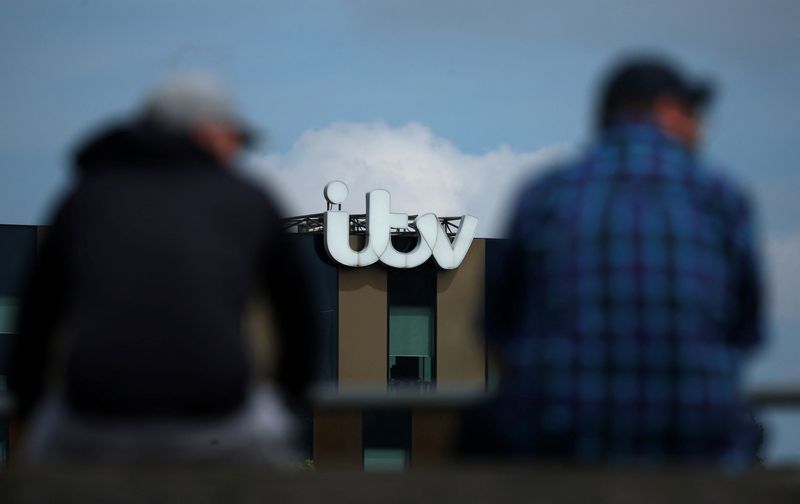
British broadcasting faces a transformative moment as Comcast-owned Sky moves to acquire the broadcast channels and streaming service of ITV, the country's biggest free-to-air commercial broadcaster, in a transaction valued at £1.6 billion ($2.13 billion). The agreement, announced on Monday, marks what Sky Chief Executive Dana Strong describes as a watershed event in British media history—a combination that would have faced insurmountable regulatory barriers just a few years earlier but now reflects the urgent pressures traditional television faces in an increasingly digital, streaming-dominated entertainment universe.
The strategic logic underpinning this tie-up centres on scale and competitive necessity. YouTube and streaming juggernauts including Netflix, Amazon and Disney have fundamentally disrupted the traditional broadcasting business model, leaving established players vulnerable to erosion of both audience share and advertising revenue. By merging ITV's free-to-air reach with Sky's pay-television subscriber base, the combined entity aims to build a domestically competitive powerhouse capable of investing in premium content production while defending market position against well-capitalised global competitors. Strong emphasised that the merger would deliver "outstanding British programming" whilst preserving ITV's status as a public service broadcaster rooted in British cultural life.
Yet the combination raises immediate regulatory complications that will dominate industry scrutiny in the coming months. The merged company would control more than 70 per cent of the United Kingdom television advertising market, a concentration that would normally trigger fierce competition concerns. Analysts expect Sky may need to divest third-party advertising contracts—such as arrangements with Paramount-owned Channel 5—to secure regulatory clearance. The precise conditions imposed by British authorities will signal how the government balances media plurality concerns against its stated priority of fostering investment and growth within the sector. Culture Minister Lisa Nandy has already signalled activism in this space, noting her capacity to intervene in cross-border media transactions, suggesting a more interventionist stance than previous administrations.
ITV's commercial environment has deteriorated markedly in recent years, providing context for the acquisition's appeal to shareholders. The company has struggled through a persistently challenging advertising market, with its share price declining 36 per cent over five years. Trading at 82 pence per share on the day of announcement, the offer represents an acknowledgment that traditional free-to-air television faces structural headwinds unlikely to reverse. The combined ITV-Sky entity will reach over 20 million households, yet even this scale offers no immunity against the secular decline in traditional television viewing, particularly among younger demographics aged 16 to 24 who have migrated decisively towards streaming platforms.
The transaction structure preserves ITV as an independent production company, a creative partition that acknowledges the enduring strength of British television production assets. ITV Studios, the production arm, will continue manufacturing shows for the merged broadcast operation whilst also servicing global platforms—recent successes include Love Island and Coronation Street for the combined entity, plus international productions such as Rivals for Disney and The Reluctant Traveller for Apple TV. This arrangement reflects the reality that premium content production commands global demand independent of traditional broadcast distribution, allowing ITV to monetise intellectual property across multiple distribution channels.
Financially, the arrangement delivers ITV shareholders £1.2 billion in immediate cash alongside an earnout mechanism providing up to £200 million contingent on advertising performance during the 2027 financial year. The deal also reunites Love Productions, producer of the globally successful The Great British Bake Off, with ITV Studios, consolidating production capabilities. The merged company has committed to minimum content spending of £2.1 billion across the 2028-2032 period, a commitment intended to demonstrate the entity's capacity to compete with streaming rivals through investment in original programming.
Comcast's ownership structure adds another dimension to this transaction. The American telecommunications giant acquired Sky in 2018, subsequently seeking to integrate European media assets with its sprawling North American operations. However, intensifying pressure from streaming competitors prompted Comcast to announce in June its intention to separate media properties—including NBCUniversal and Sky—from its core cable and telecommunications business. The ITV acquisition accelerates Sky's evolution from a simple pay-TV distributor towards a vertically integrated media company encompassing production, distribution and advertising capabilities, positioning it for potential future independence whilst remaining under Comcast control.
Historically, such concentration in British broadcasting would face formidable regulatory opposition. Sky itself originated from Rupert Murdoch's vision in 1989, whilst remaining synonymous with the Murdoch family influence for decades, including through James Murdoch's senior leadership positions before the Comcast acquisition. The political economy of media ownership in Britain has traditionally viewed excessive consolidation as antithetical to democratic interests, yet the government's recent emphasis on investment and growth conditions suggests regulatory pragmatism may prevail. Dealmakers across Britain will scrutinise regulatory outcomes closely, interpreting approval or rejection as a signal of the threshold for acceptable consolidation in an era of streaming competition.
The implications for Malaysian and Southeast Asian media companies merit consideration. This transaction demonstrates how established broadcasters in developed markets are consolidating to achieve scale required for competing against American streaming giants—a dynamic increasingly relevant as Netflix, Amazon Prime Video and Disney+ expand across Asia-Pacific. Regional broadcasters and pay-TV operators face analogous pressures, suggesting that consolidation waves could accelerate across Southeast Asia as companies seek competitive positioning. The regulatory trade-offs visible in British deliberations—balancing domestic content investment and plurality concerns against consolidation benefits—will likely echo across Asian regulatory frameworks as similar transactions emerge.
The cultural dimension warrants equal attention. ITV's commitment to remaining a public service broadcaster suggests the merged entity will maintain obligations to invest in news, current affairs and regional programming serving broader public interests beyond commercial profitability. This articulation of public service remit alongside commercial consolidation reflects an attempt to reconcile democratic concerns about media gatekeeping with competitive realities facing traditional broadcasters. Whether such commitments prove durable across multiple regulatory cycles remains uncertain, particularly as streaming economics favour entertainment content over public service programming.
Immediate attention now turns to regulatory assessment. The Competition and Markets Authority and government officials must weigh market concentration risks against genuine competitive pressures from global streaming rivals. This balance will determine not merely whether this particular transaction proceeds, but will establish precedent governing future consolidation across British media. For investors, content creators and audiences across the region, the outcome carries implications extending well beyond Britain's borders, potentially reshaping competition dynamics across international media markets.

