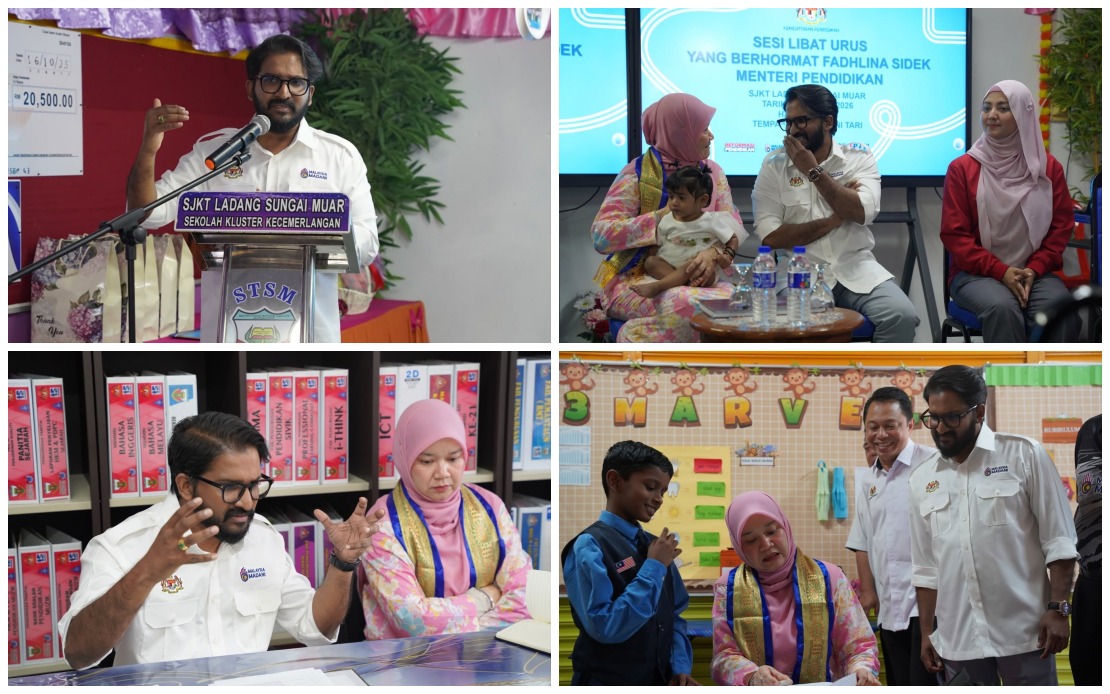
The proposed relocation of Sekolah Jenis Kebangsaan Tamil (SJKT) Ladang Sungai Muar in Segamat has progressed to a critical phase focused on securing land ownership for the new campus, according to Segamat Member of Parliament R. Yuneswaran. The process is being managed jointly with the Segamat Land and Mines Office, marking a tangible step forward after years of advocacy for the move.
Yuneswaran confirmed the development during an engagement session held at the school on July 3, which included a visit from Education Minister Fadhlina Sidek. The minister's direct participation underscores the government's elevation of this issue beyond routine administrative handling and signals broad backing from the education establishment for the project to move forward.
The Segamat MP has made the relocation of SJKT Ladang Sungai Muar a signature policy priority since his election in 2022. His advocacy has centred on three interconnected concerns: the safety hazards posed by the school's current location, its geographic isolation from the surrounding community, and inadequate infrastructure that constrains teaching and learning outcomes. These factors have been cited repeatedly as obstacles to providing students with an environment conducive to quality education.
The shift to the land ownership phase represents movement beyond the planning and feasibility assessment stages that typically dominate early project development. With the Segamat Land and Mines Office now handling acquisition procedures, the timeline for identifying and securing an appropriate site has entered a more concrete operational stage. This suggests that site surveys and preliminary valuations may be underway or completed.
Yuneswaran's public acknowledgement of the Education Ministry's role and support reflects an evolving pattern within the MADANI Government framework, where parliamentary representatives increasingly coordinate with federal ministries on constituency-level infrastructure priorities. This collaborative model allows MPs to champion local grievances while ensuring alignment with broader education policy and budget cycles.
For the Tamil-medium school community in Segamat, the relocation represents potential improvement across multiple dimensions. Beyond the immediate safety advantages of relocating away from hazardous conditions, a new campus could facilitate integration with the broader local community, potentially reducing stigma or isolation that students may experience. Enhanced infrastructure—including modern classrooms, improved sports facilities, and expanded learning spaces—could support academic outcomes and extracurricular development.
The project also sits within the wider context of educational equity across Malaysia's various school systems. Tamil-medium schools, alongside Chinese-medium schools and Malay-medium institutions, serve distinct linguistic and cultural communities while operating within the national education framework. Ensuring that all school types have access to safe, well-resourced facilities remains a persistent challenge, particularly in smaller towns like Segamat where demographic and fiscal constraints can limit development.
The Land and Mines Office's involvement introduces practical procedural elements that will determine timeline realism. Land acquisition in Malaysia involves multiple regulatory approvals, environmental assessments, and sometimes land classification reviews. If the site is agricultural land or designated for other purposes, reclassification may be required. Valuations must align with government procurement standards, and if private land is involved, negotiation and compensation frameworks apply.
Segamat's geographic position in Johor—roughly halfway between Kuala Lumpur and Kota Bharu—means the constituency maintains a mixed rural-urban character. School infrastructure projects in such areas often face budgetary competition against larger urban centres, making sustained political advocacy and ministerial attention essential to moving proposals forward. Yuneswaran's continued monitoring role signals his intention to maintain pressure on implementation timelines.
Education Minister Fadhlina Sidek's presence at the engagement session conveyed institutional commitment and possibly signalled that the relocation has secured budget consideration within the Education Ministry's capital expenditure planning. The public endorsement from a cabinet-level minister also provides political cover for the project, insulating it somewhat from budget cuts or deprioritisation in future fiscal cycles.
The MADANI Government's stated priority on education quality and equity aligns with the relocation project's underlying rationale. Successive education transformation initiatives have emphasised providing safe learning spaces and reducing infrastructure disparities across regions and school types. The SJKT Ladang Sungai Muar case exemplifies how these policy commitments translate into specific parliamentary advocacy and ministerial action.
Moving forward, stakeholder attention will focus on the timeline for completing land ownership formalities and the budget allocation for physical construction. School communities typically experience periods of uncertainty during relocation projects, particularly regarding potential disruption to academic calendars or temporary displacement. Clear communication from the Land and Mines Office, the Education Ministry, and the MP's office will be essential to managing expectations and maintaining stakeholder confidence.
Yuneswaran's undertaking to continue monitoring developments indicates that this relocation effort will remain prominent in his parliamentary activities. For Malaysia's broader education landscape, the SJKT Ladang Sungai Muar project represents a test case for translating identified infrastructure needs into concrete improvements, with implications for how other underserving schools might advance similar demands.

