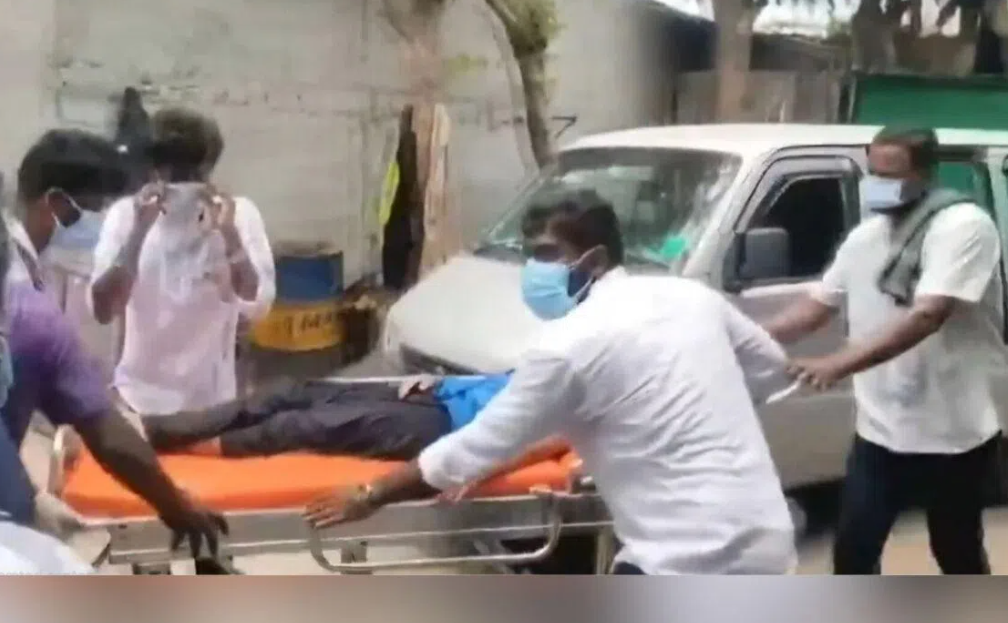
A catastrophic gas leak at a seafood export processing facility in Tamil Nadu's Thiruvallur district claimed at least six lives on Sunday, with dozens of workers requiring emergency hospitalisation following exposure to what authorities believe was ammonia gas. The incident unfolded at the plant near Periyapalayam village, where approximately 120 migrant labourers—predominantly women from Assam, Odisha and Jharkhand—were working when the suspected leak was detected and rapidly engulfed sections of the complex.
Investigators have traced the source of the leak to either the unit's refrigeration system or its processing equipment, both critical components in seafood preservation and handling operations. The gas dispersed quickly through the facility, catching workers and management unprepared despite the hazardous nature of such industrial environments. The speed of the leak's spread across the site suggests a significant breach in containment systems, raising immediate questions about the adequacy of existing safety measures at the installation.
Workers who inhaled the gas experienced acute physiological reactions that escalated rapidly in severity. Victims reported extreme difficulty breathing, vertigo and intense sensory irritation across mucous membranes. More alarmingly, some workers suffered haemorrhaging from the mouth and nose—a symptom that speaks to the intensity and concentration of gas exposure they endured. These manifestations are consistent with severe ammonia inhalation, a chemical hazard known to cause rapid damage to the respiratory system and sensitive tissues.
The human toll extended beyond the immediate fatalities. As news of the emergency spread across the facility, panic erupted among the workforce. Workers scrambled to escape the contaminated areas, with some collapsing en route as they succumbed to the fumes. The chaotic evacuation, while understandable given the acute danger, likely complicated rescue efforts and possibly increased casualties. Emergency personnel faced a complex scene upon arrival, with multiple patients requiring simultaneous triage and transport.
Emergency response teams, police personnel and district-level authorities converged on the plant rapidly and initiated rescue and recovery operations. Affected workers were transported to nearby medical facilities where they received emergency treatment for chemical exposure. Hospital officials reported that several patients remain in critical condition, their prognosis uncertain as medical teams work to counter the systemic effects of ammonia poisoning on respiratory and other vital systems.
Tamil Nadu's Chief Minister C. Joseph Vijay responded to the disaster by directing state officials to mobilise all available medical resources for the affected workers. Beyond immediate healthcare interventions, Vijay ordered the establishment of a three-member inquiry committee tasked with determining the root causes and contributory factors that led to the catastrophic leak. This investigative body has been instructed to conduct a comprehensive inspection of the facility and deliver detailed findings within 24 hours—an extraordinarily tight timeline that reflects the gravity with which state leadership views the incident.
The inquiry committee's mandate encompasses multiple critical areas of examination. Investigators will scrutinise the safety protocols officially in place at the facility, assess whether maintenance procedures were being followed according to prescribed standards, and identify any operational lapses or systemic failures that may have enabled the leak to occur. The investigation will also determine whether the facility complied with state and national industrial safety regulations, a line of inquiry that carries significant legal and regulatory consequences.
Law enforcement has formally registered a case related to the incident, initiating what is likely to become a detailed criminal and civil investigation. Authorities are actively examining whether violations of established industrial safety codes contributed substantially to the disaster. Such violations could result in prosecutions against facility management and potentially lead to substantial penalties or operational restrictions on the plant.
The incident raises uncomfortable questions about worker protections in India's seafood processing sector, particularly for migrant labourers who often lack adequate knowledge of their rights or access to legal recourse. Most of the affected workers hailed from northeastern states—Assam, Odisha and Jharkhand—suggesting patterns of labour migration common across the subcontinent where workers from economically marginalised regions travel to industrial zones in search of employment. These workers frequently occupy positions with minimal bargaining power, making them vulnerable to operating in facilities with inadequate safety infrastructure.
For Malaysia, the incident offers sobering perspective on workplace safety in regional food processing industries. As a major seafood exporter itself, Malaysia's own food manufacturing facilities handle similar refrigeration and processing systems that pose comparable hazards. The Tamil Nadu disaster underscores the critical importance of rigorous safety audits, comprehensive worker training, and robust regulatory oversight in facilities handling hazardous materials and processes. The incident will likely prompt regional inspections and renewed emphasis on compliance with occupational safety standards across Southeast Asian seafood export operations.

%22%2F%3E%3C%2Fpattern%3E%3C%2Fdefs%3E%3Crect%20width%3D%22100%25%22%20height%3D%22100%25%22%20fill%3D%22url(%23ph55nedg)%22%2F%3E%3Crect%20width%3D%22100%25%22%20height%3D%22100%25%22%20fill%3D%22url(%23ph55nedp)%22%2F%3E%3Ctext%20x%3D%2250%25%22%20y%3D%2250%25%22%20text-anchor%3D%22middle%22%20dominant-baseline%3D%22central%22%20fill%3D%22rgba(255%2C255%2C255%2C0.95)%22%20font-family%3D%22Georgia%2C%20'Times%20New%20Roman'%2C%20serif%22%20font-weight%3D%22700%22%20font-size%3D%22170%22%20letter-spacing%3D%22-0.02em%22%3EMalaysia%3C%2Ftext%3E%3C%2Fsvg%3E)
%22%2F%3E%3C%2Fpattern%3E%3C%2Fdefs%3E%3Crect%20width%3D%22100%25%22%20height%3D%22100%25%22%20fill%3D%22url(%23ph41529g)%22%2F%3E%3Crect%20width%3D%22100%25%22%20height%3D%22100%25%22%20fill%3D%22url(%23ph41529p)%22%2F%3E%3Ctext%20x%3D%2250%25%22%20y%3D%2250%25%22%20text-anchor%3D%22middle%22%20dominant-baseline%3D%22central%22%20fill%3D%22rgba(255%2C255%2C255%2C0.95)%22%20font-family%3D%22Georgia%2C%20'Times%20New%20Roman'%2C%20serif%22%20font-weight%3D%22700%22%20font-size%3D%22170%22%20letter-spacing%3D%22-0.02em%22%3EMalaysia%3C%2Ftext%3E%3C%2Fsvg%3E)