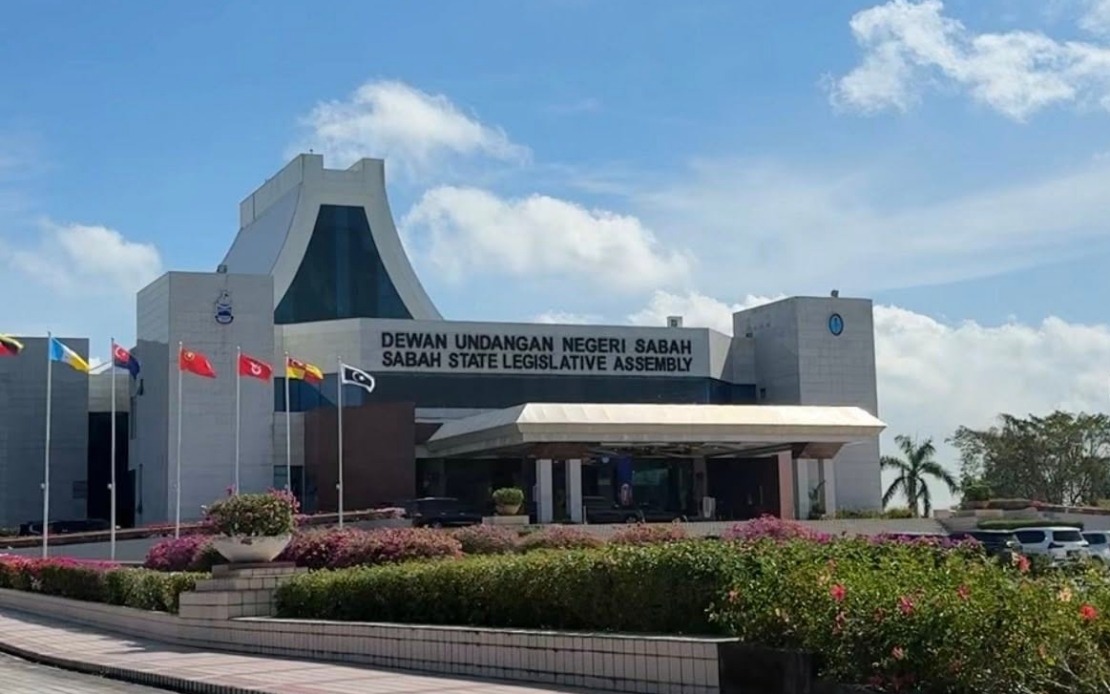
The Sabah Legislative Assembly has passed two significant pieces of legislation that will reshape the legal landscape for Islamic inheritance and customary justice in the state. On July 22, members approved the Muslim Succession Bill 2026 and the Native Courts Bill 2026, both tabled by Sabah Local Government and Housing Minister Datuk Dr Mohd Arifin Arif, who also oversees the state's Islamic Affairs portfolio. The dual passage marks a notable development in Malaysian Islamic jurisprudence and indigenous legal administration, establishing frameworks that reflect contemporary needs whilst maintaining cultural and religious integrity.
The Muslim Succession Bill 2026 represents a watershed moment for Malaysia's Islamic legal system. According to Datuk Dr Mohd Arifin Arif, this is the first legislation in the country explicitly designed to govern the administration of Muslim estates under the jurisdiction of Syariah Courts. The bill emerged from deliberation among five assemblymen before state assembly speaker Datuk Seri M Kadzim Yahya and addresses a significant gap in Malaysia's legal architecture. Previously, Islamic inheritance matters lacked a dedicated, comprehensive statutory framework tailored specifically to the Syariah Court system, potentially leading to inconsistencies in how estates were administered across different jurisdictions.
The legislation rests on four foundational considerations that collectively aim to professionalise and systematise Muslim estate administration. The framework seeks to introduce standardised procedures governing how Muslim individuals' property and assets pass to heirs in accordance with Islamic law. By establishing clear protocols, the bill intends to protect the legitimate interests of all beneficiaries and other parties with claims against an estate, addressing concerns about potential disputes or mismanagement that can arise when succession procedures remain ambiguous or fragmented. The comprehensive approach reflects recognition among policymakers that inheritance disputes constitute a significant source of family conflict and legal uncertainty.
A critical objective of the legislation involves aligning estate administration with Syariah principles whilst simultaneously strengthening oversight mechanisms. The bill aims to streamline how deceased Muslim estates are managed, ensuring that the process reflects Islamic jurisprudence on succession and inheritance. Equally important is the introduction of robust compliance and enforcement provisions designed to prevent assets from being misappropriated, concealed, disposed of improperly, or administered without authorisation. This dual emphasis—balancing doctrinal fidelity with practical safeguards—indicates an attempt to modernise Islamic legal practice without compromising its foundational principles. For Malaysian Muslims, particularly in Sabah, the legislation promises greater security and clarity when navigating the complex process of settling a family member's estate.
The Native Courts Bill 2026, examined by twelve assemblymen before deputy speaker Datuk Richard Wong We Kong, represents an equally significant modernisation of customary justice systems. The existing Native Courts enactment has operated since 1992, meaning it has functioned for more than three decades without comprehensive overhaul. Whilst the earlier legislation provided a workable framework, Datuk Dr Mohd Arifin Arif acknowledged that Sabah's native communities require a legal system that responds to contemporary developments in judicial administration without abandoning the cultural foundations and customary practices that define their identity.
The new enactment restructures the Native Courts hierarchy through the establishment of three tiers: the Native District Court, Native High Court, and Native Court of Appeal. This tiered architecture introduces greater specialisation and appellate capacity within the customary justice system, enabling disputes to be resolved at appropriate levels and providing pathways for review when lower courts' decisions are contested. The hierarchical expansion recognises that customary law disputes, like civil cases generally, benefit from graduated judicial oversight and the possibility of higher review.
A particularly significant innovation concerns judicial appointments within the Native Courts system. The bill introduces a Native Judicial Appointments Advisory Committee tasked with assessing candidates and recommending appointments based on transparency, merit, qualifications, relevant experience, knowledge of customary law, and personal integrity. This represents a departure from previous practice, wherein judicial positions were sometimes allocated based on administrative rank or seniority within government service. The reformed approach prioritises actual capability to discharge judicial responsibilities, implying that future Native Court judges will be selected primarily for their substantive understanding of customary law and their aptitude for adjudication rather than bureaucratic standing.
For Sabah's native communities, this shift carries profound implications. Customary courts represent a vital institution for resolving disputes in accordance with indigenous legal traditions and cultural norms. By ensuring that judges possess genuine expertise in customary law and demonstrated ability to administer justice fairly, the reform addresses longstanding concerns about the quality and legitimacy of customary adjudication. The emphasis on merit-based selection also signals official recognition that effective dispute resolution within native communities requires specialists capable of interpreting and applying sometimes complex customary principles.
These legislative developments occur within Malaysia's broader trajectory of constitutional federalism and state autonomy. Under Malaysia's constitutional scheme, matters of Islamic law and native customs fall substantially within state jurisdiction, allowing Sabah considerable scope to shape these regulatory domains. The passage of these bills demonstrates how individual states can pioneer legal innovations addressing specific communal needs. However, the Muslim Succession Bill's innovative character—being the first of its kind in Malaysia—raises questions about potential coordination with other states and the federal Islamic affairs apparatus. Should other states subsequently adopt similar frameworks, the piecemeal approach could generate variations in how Muslim inheritance is administered across Malaysia, potentially complicating interstate matters or migration scenarios.
From a comparative perspective, these reforms reflect evolving approaches to legal pluralism within Islamic and common-law jurisdictions globally. Many countries with significant Muslim populations have similarly sought to modernise Islamic legal codes whilst maintaining doctrinal coherence. The emphasis on transparency, merit-based appointments, and robust procedural safeguards aligns with contemporary international standards for judicial administration. The Native Courts reform similarly echoes global trends toward revitalising indigenous legal systems as mechanisms for cultural preservation and community empowerment, rather than viewing customary law as archaic or subordinate to state systems.
The practical implementation of both bills will significantly influence their ultimate impact. The Muslim Succession Bill requires that Syariah Courts develop detailed procedures for applying the new framework, train relevant judicial officers, and potentially establish administrative systems for tracking and monitoring estates. Similarly, the Native Courts reform necessitates careful transition planning to reconstitute the court hierarchy, establish the Judicial Appointments Advisory Committee, and potentially identify or train judges meeting the enhanced merit-based criteria. The success of these reforms depends substantially on adequate resourcing, institutional capacity-building, and sustained political commitment to implementation.
For Malaysian policymakers and observers elsewhere in Southeast Asia, these Sabah reforms merit attention as potential models for integrating religious and customary legal frameworks into modern state systems. The legislation demonstrates that modernisation need not entail abandonment of cultural or religious values; rather, it can involve reconfiguring institutions to operate more transparently, equitably, and effectively whilst remaining true to foundational principles. As other Malaysian states and perhaps other Southeast Asian jurisdictions grapple with similar tensions between tradition and contemporary governance standards, Sabah's approach to legislative reform offers instructive lessons about balancing innovation with cultural integrity.

