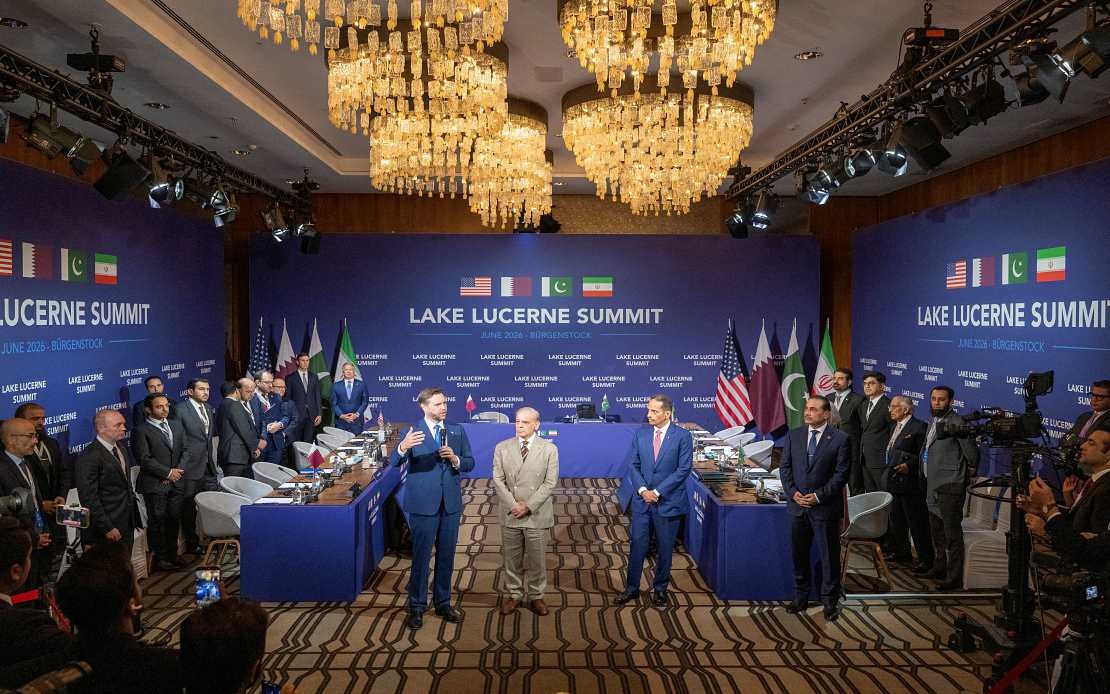
Diplomatic mediation between the United States and Iran has entered a more structured phase following the opening sessions of high-level negotiations at the Lake Lucerne Summit in Switzerland, according to statements from Qatar and Pakistan on Monday. The two nations, acting as intermediaries in the sensitive negotiations, characterised the initial round of talks as productive, with both sides demonstrating a willingness to engage constructively on contentious issues that have strained relations between Washington and Tehran for years.
The breakthrough came in the form of several institutional arrangements designed to keep momentum building through the remainder of the negotiation process. Most notably, the parties agreed to establish a high-level supervisory committee tasked with overseeing the broader political dimensions of the mediation effort. This structure acknowledges that resolving the deep-seated tensions between the US and Iran requires coordination across multiple fronts, from technical specialists working on specific issues to senior officials ensuring that progress at the negotiating table aligns with the strategic interests of both nations.
Technical working groups have been formally constituted to address the most substantive matters dividing the two sides. Three particular areas will command the attention of these specialist teams: the Iranian nuclear programme, the complex web of economic sanctions imposed on Iran, and mechanisms for dispute resolution that will underpin any final accord. This compartmentalised approach allows negotiators to make progress on discrete issues while the high-level committee manages the broader diplomatic architecture and ensures that gains in one area do not unravel commitments made elsewhere.
The negotiators have mapped an ambitious timeline for their efforts, aiming to complete a comprehensive agreement within 60 days. This deadline is notably compressed compared to typical international negotiations of this complexity, signalling that both sides face considerable domestic pressure to demonstrate results and that the momentum generated in Switzerland's initial session is viewed as potentially fleeting. For Southeast Asian observers, the timeframe underscores the urgency with which major powers are attempting to resolve this longstanding dispute.
A significant practical measure announced during the summit addresses maritime security in one of the world's most critical waterways. The parties have established a direct communication channel to manage incidents and misunderstandings that could threaten commercial shipping through the Strait of Hormuz. Given that roughly one-third of the world's seaborne petroleum passes through this narrow chokepoint, any escalation involving the US and Iran carries immediate ramifications for global energy prices and supply chains that extend deep into Asia's economies. The commitment to maintain safe passage for commercial vessels reflects mutual recognition that unchecked tensions could impose enormous costs on all parties.
The memorandum of understanding signed the previous week provided the foundation upon which these latest institutional arrangements have been built. Rather than serving as a final agreement, this initial accord functioned as a framework establishing the boundaries and procedures within which more detailed negotiations would proceed. By formalising the communication channel through reference to this earlier document, the parties are reinforcing their commitment to the structured approach while maintaining diplomatic flexibility.
For Malaysia and other regional states with significant economic stakes in Middle Eastern stability, these developments carry substantial implications. Any sustained improvement in US-Iran relations could ease regional tensions that have periodically disrupted trade flows and elevated insurance premiums for vessels transiting contested waters. Conversely, if negotiations stall or collapse within the 60-day window, the absence of formal communication protocols could increase the risk of unintended escalation.
Qatar's role as lead mediator reflects its established position as a neutral interlocutor capable of maintaining dialogue with both Washington and Tehran. Pakistan's participation signals broader regional investment in achieving stability, given its own complex relationship with Iran and strategic importance to US interests in South Asia. The involvement of both nations lends credibility to the mediation process and suggests that multiple regional actors recognise the benefits of resolution over continued confrontation.
The establishment of lead negotiators reporting regularly to the high-level committee represents an effort to ensure both political accountability and technical expertise inform the negotiation process. Senior officials will maintain awareness of developments in specialised working groups while retaining authority to make strategic adjustments if negotiations veer toward outcomes that contradict fundamental interests. This structure attempts to balance the need for detailed technical progress with the requirement that any final agreement command genuine commitment from senior policymakers in both nations.
The reference to the Strait of Hormuz agreement highlights how negotiations on seemingly separate issues can become interconnected. Establishing secure passage for commercial vessels addresses not only practical maritime concerns but also signals to the international community that both sides are prepared to shoulder responsibilities for global stability rather than pursuing narrow zero-sum advantages. This broader framing may help build international support for whatever final agreement ultimately emerges.
For Malaysian observers tracking global affairs, these talks represent a significant development in the international system's attempt to manage one of its most volatile relationships through structured dialogue and institutional innovation. The next 60 days will test whether both sides can convert diplomatic courtesies into substantive agreement on the technical and political issues that have defied resolution for years.

%22%2F%3E%3C%2Fpattern%3E%3C%2Fdefs%3E%3Crect%20width%3D%22100%25%22%20height%3D%22100%25%22%20fill%3D%22url(%23ph55nedg)%22%2F%3E%3Crect%20width%3D%22100%25%22%20height%3D%22100%25%22%20fill%3D%22url(%23ph55nedp)%22%2F%3E%3Ctext%20x%3D%2250%25%22%20y%3D%2250%25%22%20text-anchor%3D%22middle%22%20dominant-baseline%3D%22central%22%20fill%3D%22rgba(255%2C255%2C255%2C0.95)%22%20font-family%3D%22Georgia%2C%20'Times%20New%20Roman'%2C%20serif%22%20font-weight%3D%22700%22%20font-size%3D%22170%22%20letter-spacing%3D%22-0.02em%22%3EMalaysia%3C%2Ftext%3E%3C%2Fsvg%3E)
%22%2F%3E%3C%2Fpattern%3E%3C%2Fdefs%3E%3Crect%20width%3D%22100%25%22%20height%3D%22100%25%22%20fill%3D%22url(%23ph41529g)%22%2F%3E%3Crect%20width%3D%22100%25%22%20height%3D%22100%25%22%20fill%3D%22url(%23ph41529p)%22%2F%3E%3Ctext%20x%3D%2250%25%22%20y%3D%2250%25%22%20text-anchor%3D%22middle%22%20dominant-baseline%3D%22central%22%20fill%3D%22rgba(255%2C255%2C255%2C0.95)%22%20font-family%3D%22Georgia%2C%20'Times%20New%20Roman'%2C%20serif%22%20font-weight%3D%22700%22%20font-size%3D%22170%22%20letter-spacing%3D%22-0.02em%22%3EMalaysia%3C%2Ftext%3E%3C%2Fsvg%3E)