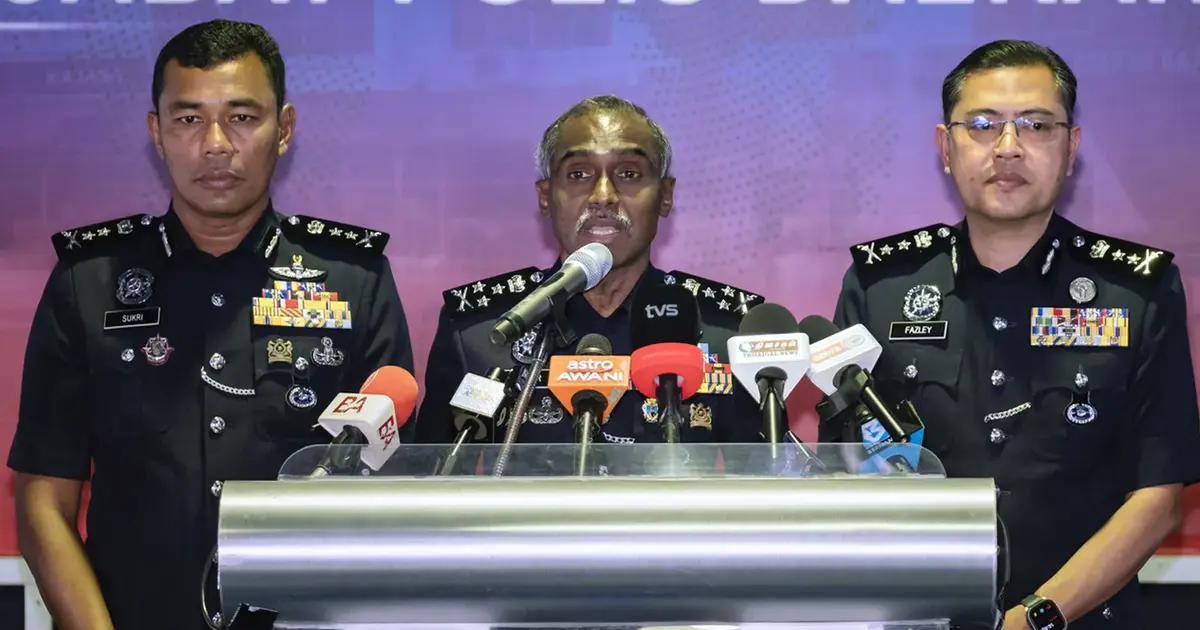
Police have successfully apprehended 39 wanted individuals across Selangor during an intensive four-day enforcement drive, according to Bukit Aman Criminal Investigation Department chief M Kumar. The operation represents a significant crackdown on fugitives and outstanding suspects believed to be operating within the state's sprawling districts.
Of those arrested, 34 individuals face allegations connected to violent offences and crimes against property, spanning categories from armed robbery and burglary to assault and theft. The remaining five detainees have been taken into custody under the Security Offences (Special Measures) Act 2012, commonly known as Sosma, which allows authorities to detain individuals deemed a threat to national security without the standard procedural requirements applying to ordinary criminal suspects.
The timing of this operation underscores the ongoing challenge law enforcement faces in managing a substantial cohort of fugitives and wanted persons across the Klang Valley and surrounding regions. Selangor, as Malaysia's most densely populated state outside the federal territories and a major economic hub, presents particular difficulties for police in tracking and locating individuals evading arrest. The concentration of urban and semi-urban areas, coupled with significant migrant populations and transient communities, creates operational complexities that require sustained and coordinated enforcement efforts.
Such targeted sweeps have become a regular feature of police strategy in tackling organised crime, gang-related violence, and property crime syndicates that disproportionately affect the Selangor region. By mobilising multiple police units across a short, intensive timeframe, authorities can saturate specific geographical areas and apprehend suspects who might otherwise evade detection through routine patrols or piecemeal enforcement actions.
The separate detention of five individuals under Sosma reflects the intersection of criminal investigation with national security concerns. While most arrests stem from conventional crime categories, the invocation of security legislation suggests authorities have identified connections to activities deemed threatening to public order or national stability. Sosma cases typically involve allegations of extremism, involvement with proscribed organisations, or activities supporting terrorism-related causes, though the specific grounds for these five detentions have not been disclosed.
The success of this operation will likely be measured not merely in arrest numbers but in the subsequent prosecution outcomes and any intelligence gathered regarding broader criminal networks. Initial apprehension represents only the first stage in the criminal justice process; the strength and sustainability of charges, along with court procedures, will determine whether this enforcement activity yields lasting impact on crime reduction.
For Selangor residents already concerned about violent crime and residential burglaries, such operations offer reassurance of police commitment to tackling fugitives who pose direct threats. The state has experienced particular challenges with organised theft gangs and inter-gang violence, making fugitive apprehension a priority. However, community safety ultimately depends on sustained investigative work, prosecution success rates, and addressing underlying factors that drive individuals into criminal activity.
From a regional perspective, Selangor's law enforcement challenges mirror those faced across Southeast Asia's urban centres, where rapid urbanisation, economic inequality, and transnational criminal networks create environments conducive to serious crime. The capacity of Malaysian police to execute coordinated multi-day operations demonstrates institutional capability, though questions persist regarding resource allocation, specialised training, and inter-agency coordination at the highest levels.
The operation also reflects evolving police methodology in the digital age. Modern fugitive apprehension increasingly relies on surveillance technology, intelligence analysis, and data-driven targeting rather than conventional street patrols. The concentration of arrests within a four-day window suggests coordinated intelligence work preceded the actual enforcement action, with police identifying multiple suspect locations and executing simultaneous or near-simultaneous arrests to prevent suspects from fleeing ahead of police arrival.
Looking forward, the disposition of these 39 cases will provide insight into the robustness of evidence gathered and the quality of charges levelled. High conviction rates would validate the operational approach and justify continued investment in similar initiatives, while acquittals or case dismissals would suggest investigative shortcomings or procedural issues requiring remediation. The cases involving Sosma detention will likely proceed through separate legal channels, with security considerations potentially restricting public disclosure of evidence and proceedings.
For Malaysian readers particularly those in Selangor, this operation represents a visible manifestation of law enforcement activity but should be contextualised within broader crime trends. A single successful sting, however impressive in numbers, cannot substitute for sustained reduction in crime rates, improved investigation quality, or community policing approaches that address root causes. The real measure of this operation's worth will emerge only in coming months as cases proceed through court systems and whether apprehended individuals represent major criminal actors or peripheral figures in larger criminal ecosystems.
%22%2F%3E%3C%2Fpattern%3E%3C%2Fdefs%3E%3Crect%20width%3D%22100%25%22%20height%3D%22100%25%22%20fill%3D%22url(%23phpazog)%22%2F%3E%3Crect%20width%3D%22100%25%22%20height%3D%22100%25%22%20fill%3D%22url(%23phpazop)%22%2F%3E%3Ctext%20x%3D%2250%25%22%20y%3D%2250%25%22%20text-anchor%3D%22middle%22%20dominant-baseline%3D%22central%22%20fill%3D%22rgba(255%2C255%2C255%2C0.95)%22%20font-family%3D%22Georgia%2C%20'Times%20New%20Roman'%2C%20serif%22%20font-weight%3D%22700%22%20font-size%3D%22320%22%20letter-spacing%3D%22-0.02em%22%3E32%3C%2Ftext%3E%3C%2Fsvg%3E)