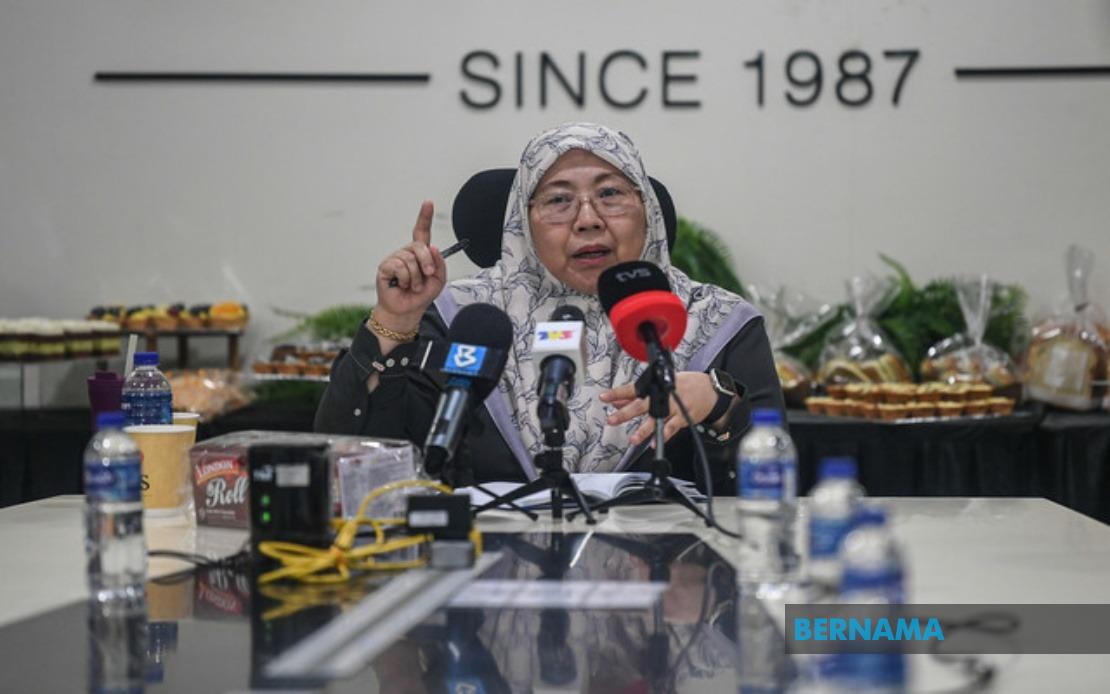
The departure of a significant PKR contingent to rival party MIC this week reflects broader frustrations within the party ranks over appointment opportunities, according to PKR's top leadership. Datuk Dr Fuziah Salleh, the party's secretary-general, characterised the defection of about 200 members led by former Johor PKR State Leadership Council vice-chairman M. Murugan on June 28 as "rather strange," noting that internal party analysis pointed to a singular cause: resentment at being overlooked for positions within the party hierarchy.
The exodus to MIC's Iskandar Puteri division represents a challenge for PKR at a particularly sensitive moment, with Johor preparing for a closely watched state election. In her remarks during a working visit to Skudai, Fuziah acknowledged the stated grievances of the departing members without offering any substantive rebuttal or counteroffer to retain them. The secretary-general's willingness to dismiss the defectors with a casual well-wishing comment—hoping they "will obtain significant positions" in their new home—signals PKR's apparent acceptance that retention efforts may be futile for members whose primary motivation is career advancement within party structures.
This incident underscores a recurring vulnerability in Malaysian political parties: the tension between democratic ideals of broad participation and the reality that party advancement often hinges on access to a limited pool of elected and appointed positions. For members without direct pathways to such roles, the incentive to remain loyal erodes quickly, particularly when rival parties appear to offer better prospects. The loss of 200 members may seem numerically modest against PKR's total membership, yet the defection of a state-level leader suggests deeper dissatisfaction that may extend beyond those who have formally departed.
Fuziah's comments also reveal PKR's strategic calculations heading into the Johor state election, where 56 seats will be contested across 172 candidacies on July 11, with early voting scheduled for July 7. The timing of the defection—just days before the poll—raises questions about party morale and the effectiveness of internal management during a critical campaign phase. Any perception of weakness or internal discord can disadvantage a ruling coalition trying to consolidate support in a state election that historically carries significant implications for national political dynamics.
The secretary-general used the occasion to pivot toward broader coalition concerns, addressing recent statements from PAS president Tan Sri Abdul Hadi Awang that appeared designed to discourage voters from supporting Pakatan Harapan. Fuziah interpreted these remarks as indicative of Barisan Nasional and PAS exploring renewed cooperation—a potential realignment that could fundamentally reshape the electoral landscape in Johor. By framing the PAS position as a warning signal to voters, Fuziah sought to mobilise concern about political instability and shifting alliances during the campaign period.
Fuziah's assessment of Perikatan Nasional's electoral strategy deserves particular attention, as it reveals PKR's understanding of the complex three-way contest unfolding in Johor. She suggested that PN's apparent attempt to attract BN supporters may backfire, particularly given what she characterised as PAS's contradictory positioning within the coalition. The party president's anti-Harapan messaging, from PN's perspective, represents a strategic liability if it alienates BN voters whom PN hoped to court through its own campaign messaging. This dynamic reflects the inherent tension within PN between PAS's Islamic-focused agenda and the coalition's broader appeal to diverse constituencies.
The secretary-general argued that the internal friction within PN ultimately redounds to Harapan's advantage by creating uncertainty among opposition voters about which coalition genuinely commands the political centre ground. In Malaysian electoral contexts, where swing voters increasingly decide close contests, the appearance of unity and coherence within a coalition matters enormously. PN's visible disharmony on core messaging—what Fuziah termed a "blow" to its own allies—theoretically creates openings for Harapan to position itself as the more stable governing option.
Yet Fuziah's optimism requires scrutiny given the actual electoral dynamics in Johor. The state has historically leaned toward Barisan Nasional, and the 2023 general election demonstrated persistent Malay-Muslim voter preference for PN and PAS on religious and identity grounds. Harapan's path to meaningful gains in such constituencies depends on factors beyond coalition communication coherence—including economic grievances, service delivery performance, and local demographic shifts. The PKR leadership's confidence that internal opponent divisions automatically benefit Harapan may underestimate how substantive policy and governance concerns drive voter behaviour.
The PKR membership exodus also invites reflection on the broader health of Malaysian political institutions. When party members depart primarily to pursue personal advancement elsewhere, it suggests that parties function increasingly as vehicles for individual career mobility rather than as institutions embodying distinct ideological visions or programmatic commitments. This transactional understanding of party membership has long characterised Malaysian politics, yet its persistence raises questions about whether coalitions like Harapan can maintain sufficient internal cohesion to govern effectively if they win electoral mandates.
Looking toward the July 11 Johor election, the PKR defections represent both a near-term tactical challenge and a symptom of deeper organisational vulnerabilities. While Fuziah's characterisation of the departures as driven by unfulfilled positional aspirations may be accurate, her nonchalant response masks the underlying message such exodus sends about party satisfaction and retention. Parties that cannot retain members primarily through appeal to mission and governance capacity become dependent on patronage distribution—a dependency that becomes untenable when opportunities are scarce or when rival parties offer competing inducements.
For Malaysian voters observing this multi-party contest in Johor, the departures and counter-positioning by rival coalitions illustrate the complexity of contemporary electoral choice. Rather than a straightforward ideological competition, voters confront competing alliances in flux, with parties and leaders apparently willing to shift positions and partnerships based on electoral calculations. Fuziah's call for voters to "carefully assess the situation" reflects genuine uncertainty about which coalition configuration will ultimately emerge as victorious and whether such victories will translate into stable governance.

