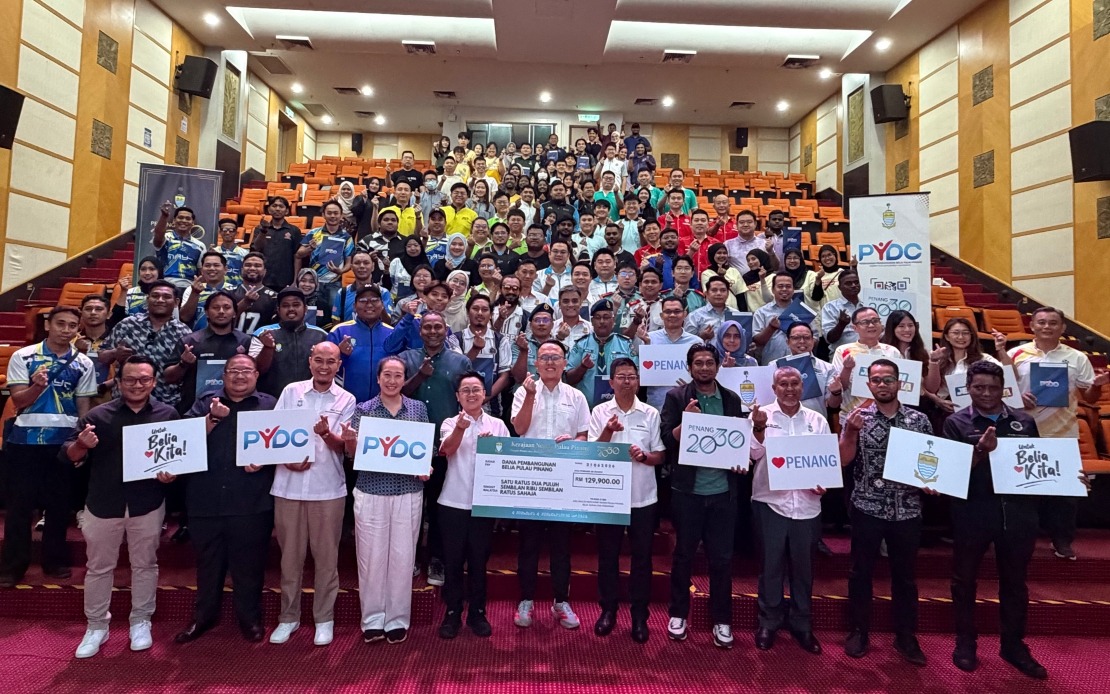
The Penang state government has committed RM129,900 to finance 68 youth development programmes run by 48 organisations across the state this year, underscoring its strategic investment in building the next generation of leaders and engaged citizens. The allocation, announced by Penang Youth, Sports and Health Committee chairman Daniel Gooi Zi Sen, represents a significant portion of the RM200,000 total youth funding approved during a recent State Executive Council Meeting held in George Town.
The initiative reflects Penang's broader approach to youth engagement, moving beyond traditional support mechanisms to create platforms where young people can develop practical competencies. The programmes span multiple dimensions—from technical and vocational skills enhancement through to cultivating marketability in an increasingly competitive employment landscape, fostering volunteerism and community service, and nurturing leadership qualities essential for future governance and civil society participation. By channelling resources toward initiatives addressing these intersecting needs, the state hopes to equip participants with tools for meaningful personal advancement whilst simultaneously addressing regional development challenges.
Gooi emphasised that the funding should be understood not as straightforward financial assistance but rather as a manifestation of institutional confidence in youth associations. This framing is significant for Malaysian readers, as it signals a subtle shift in how government views its relationship with civil society organisations—moving from a patronage model toward one built on mutual accountability and shared responsibility for social outcomes. The funds represent an investment in the capacity and credibility of youth-led organisations to translate ideas and creative initiatives into tangible programmes that benefit broader society.
A critical dimension of the allocation involves the emphasis placed on programme integrity and transparent management. Gooi has directed recipient organisations to maintain rigorous standards in financial stewardship and operational efficiency, signalling that the state will monitor how funds are utilised and what results they generate. This accountability framework reflects growing pressures across Malaysian public administration to demonstrate value for money and measurable impact from government spending, particularly in discretionary areas such as youth development where outcomes can be difficult to quantify.
The selection of 48 associations to deliver these 68 programmes suggests a decentralised approach to youth engagement, likely distributing opportunities across different municipal areas, ethnic communities and demographic segments within Penang. This distribution could help ensure that youth development benefits reach beyond urban centres and well-established organisations, potentially creating space for emerging groups to demonstrate their capacity and contribution. For youth-focused organisations in other Malaysian states, the Penang model provides a working example of how structured allocation and performance expectations can coexist with grant-based support systems.
Gooi's reminder that programme success cannot be measured solely through activity completion rates addresses a persistent challenge in development work across Southeast Asia. The focus on long-term impact on participants and wider community outcomes reflects international best practice in youth engagement, where evidence increasingly shows that the quality and durability of learning outcomes matter more than raw participation numbers. This principle has implications for how Malaysian organisations conceptualise and evaluate their youth work, shifting emphasis from event-driven programming toward sustained relationships and measurable skill acquisition.
The timing of the allocation and its announcement comes as Malaysian states increasingly compete for talent retention, particularly in retaining young graduates and skilled workers amid regional migration pressures. Youth development funding can play a role in this competition, signalling to young people that their home state invests in their growth and creates opportunities for meaningful participation. Penang, as an established economic hub with significant youth populations, faces particular pressure to maintain this investment narrative against competing claims on limited state resources.
From a Southeast Asian perspective, Penang's commitment also reflects regional trends toward greater youth-centric policymaking. Singapore, Thailand and other comparable economies have substantially increased youth development budgets in recent years, recognising that demographic transitions and labour market transformations require targeted investments in younger cohorts. Malaysia's states are following similar trajectories, though funding levels and programme sophistication vary considerably across different jurisdictions, creating a patchwork of opportunity that disadvantages youth in less-resourced states.
The emphasis on volunteerism within the programme portfolio deserves particular attention for Malaysian audiences. Volunteerism represents a critical bridge between individual skill development and active citizenship, yet it often receives limited attention in policy discussions dominated by employment outcomes. By allocating resources specifically to volunteerism-focused programmes, Penang acknowledges that social cohesion and community resilience depend on citizens actively contributing time and energy to collective challenges—a recognition that becomes increasingly important as Malaysia navigates rapid urbanisation and demographic change.
Implementation challenges will determine whether this allocation translates into genuine impact. Past experience with development fund allocations across Malaysia has sometimes revealed gaps between approved budgets and actual programme delivery, stemming from bureaucratic delays, organisational capacity constraints or misalignment between funder expectations and implementer capabilities. Success will require ongoing communication between state officials and recipient organisations, adaptive management when initial activities underperform, and willingness to learn from both successful and unsuccessful initiatives.


%22%2F%3E%3C%2Fpattern%3E%3C%2Fdefs%3E%3Crect%20width%3D%22100%25%22%20height%3D%22100%25%22%20fill%3D%22url(%23ph25js3g)%22%2F%3E%3Crect%20width%3D%22100%25%22%20height%3D%22100%25%22%20fill%3D%22url(%23ph25js3p)%22%2F%3E%3Ctext%20x%3D%2250%25%22%20y%3D%2250%25%22%20text-anchor%3D%22middle%22%20dominant-baseline%3D%22central%22%20fill%3D%22rgba(255%2C255%2C255%2C0.95)%22%20font-family%3D%22Georgia%2C%20'Times%20New%20Roman'%2C%20serif%22%20font-weight%3D%22700%22%20font-size%3D%22151%22%20letter-spacing%3D%22-0.02em%22%3EPerikatan%3C%2Ftext%3E%3C%2Fsvg%3E)