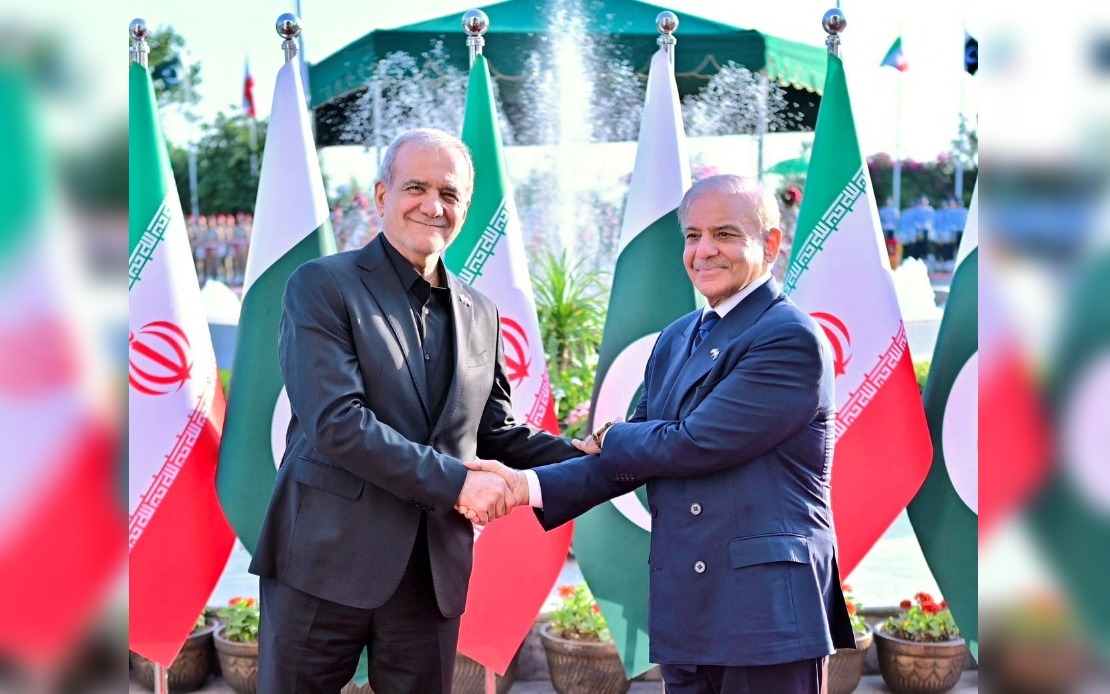
Pakistan and Iran have renewed their commitment to restoring a major freight rail corridor that once linked the three nations of South Asia, the Middle East and Turkey in an ambitious cross-continental trade network. Officials from both countries met in Islamabad this week to chart a pathway toward reviving the Islamabad-Tehran-Istanbul service, a project that holds significant implications for regional economic integration and the viability of land-based trade routes that could bypass maritime chokepoints.
The discussion between Pakistan's Railway Minister Muhammad Hanif Abbasi and visiting Iranian Interior Minister Eskandar Momeni underscored the strategic importance both nations place on reopening corridors that have remained largely dormant. A Pakistani government statement confirmed that both sides view the restoration of what is known as the ITI corridor as essential to unlocking trade potential across three continents, with particular emphasis on strengthening commercial ties between Pakistan, Iran and Türkiye while simultaneously creating a viable gateway for goods flowing to and from Central Asian nations, Russia and beyond.
The ITI cargo service represents one of several infrastructure projects aimed at reducing Asia's dependence on traditional maritime shipping lanes. When the train service last operated at full capacity, it demonstrated the feasibility of moving containerised freight overland, a development that holds appeal for landlocked countries in Central Asia and for nations seeking alternative routes during periods of regional instability. The corridor's revival would particularly benefit Pakistani and Iranian exporters who have long sought efficient pathways to European markets without relying exclusively on ports in the Persian Gulf or the Arabian Sea.
However, the recent history of the ITI corridor reflects the practical challenges that plague infrastructure megaprojects in the region. The service resumed operations in December 2021 after lying dormant for a decade, a restart that appeared to signal renewed commitment from all three participating nations. Yet within a single year, technical breakdowns and operational complications forced a suspension in 2022, exposing the vulnerability of transcontinental rail logistics to both bureaucratic obstacles and mechanical failures that can interrupt service when spare parts and expertise are scarce.
Pakistan's portion of the infrastructure development programme now focuses on upgrading the Main Line-3 railway corridor, which traverses the provinces of Sindh and Balochistan and serves as the country's primary rail gateway to Iran. This modernisation initiative represents a substantial investment in Pakistan's transport infrastructure, with construction scheduled to commence within the current fiscal year and completion targeted for December 2029. The extended timeline reflects the scale of engineering work required to bring decades-old rail infrastructure to contemporary standards capable of supporting regular international freight operations.
The Iranian side has similarly committed to infrastructure improvements, with Momeni indicating that modernisation of the Zahedan–Mirjaveh railway line is nearing completion and could be finalised within weeks. This development is crucial because the Zahedan–Mirjaveh section forms a critical link in the broader corridor, and delays at this juncture would create bottlenecks regardless of improvements elsewhere. Iran's progress on this segment demonstrates willingness to coordinate timelines with Pakistan's longer modernisation schedule, though synchronising massive infrastructure projects across borders often generates coordination challenges.
The Pakistani minister specifically highlighted the necessity for Pakistan to complete standard-gauge rail infrastructure on the Mirjaveh to Taftan stretch in Balochistan, a relatively modest segment that nonetheless represents a potential chokepoint where gauge incompatibility could disrupt seamless cross-border operations. The emphasis on standard-gauge conversion reflects international best practices for rail corridors intended to handle high volumes of transcontinental traffic, as gauge variations historically required time-consuming and costly transshipment operations. This technical standardisation is essential if the corridor is to compete effectively with maritime routes on the basis of speed and cost efficiency.
For Malaysian and broader Southeast Asian stakeholders, the ITI corridor's resurrection carries implications that extend beyond the immediate participants. A functioning overland route connecting the Indian subcontinent through Iran to Turkey and onward to Europe would create alternative logistics pathways that could eventually integrate with existing Asian rail networks, potentially offering Malaysian exporters additional channels for reaching European and Central Asian markets. The success or failure of this initiative will inform broader regional thinking about the viability of Belt and Road-style infrastructure projects that depend on sustained cooperation between nations with divergent political interests.
The geopolitical context surrounding these discussions should not be overlooked. Pakistan and Iran, despite occasional tensions, share substantial incentives to develop economic interdependence, as trade flows tend to create constituencies within both nations that favour stability. The presence of an Iranian interior minister in Islamabad to discuss railway matters signals high-level political commitment, yet political volatility in either country could again interrupt operations, as demonstrated by the 2022 suspension. Any Malaysian businesses contemplating the use of this corridor would need to assess political risk carefully.
The revival of the ITI corridor also reflects broader strategic competition over how Asia's trade will flow in coming decades. China's Belt and Road Initiative has emphasised rail connectivity, and the ITI corridor represents an attempt by Pakistan, Iran and Turkey to create alternatives that are not necessarily dominated by Chinese financing or construction standards. For Malaysia and other regional economies, the emergence of multiple corridor options could foster competition that ultimately benefits users through improved service standards and pricing.
Despite the infrastructure challenges and political complexities, the commitment expressed during this week's meeting suggests that all three nations recognise the long-term economic value of the corridor. The 2029 completion target for Pakistan's Main Line-3 upgrade provides a definitive milestone, and Iranian progress on the Zahedan–Mirjaveh segment indicates that both sides are moving beyond mere rhetoric. Should these projects maintain their timelines and subsequent operations prove reliable, the ITI corridor could become a transformative link in Asia's economic landscape, offering landlocked nations genuine alternatives to traditional maritime trade routes and reducing the concentration of commerce through vulnerable choke points in global shipping networks.
The discussions in Islamabad this week represent one step in a longer process, but they confirm that Pakistan, Iran and Turkey continue to view transcontinental rail connectivity as strategically essential despite past setbacks.

