Johor's workforce development momentum is accelerating, with figures released by Human Resources Minister Datuk Seri R. Ramanan revealing that 13,425 employers across the state had enrolled in the Human Resource Development Corporation ecosystem by the end of last year. This significant participation base demonstrates growing recognition among businesses of the value proposition offered through structured training initiatives, extending tangible benefits to approximately 479,905 workers who gained access to upskilling and professional development programmes.
The financial footprint of this engagement reveals the substantial resources flowing through Malaysia's human capital infrastructure. Accumulated levy collections reached RM208.21 million, with the vast majority—RM183.96 million—being redistributed directly to employers as subsidies for employee training delivery. This circular mechanism ensures that financial contributions from the business community translate into measurable workforce capability enhancements rather than accumulating as unutilised reserves, creating a direct incentive structure for participation.
Beyond levy management, HRD Corp's financial disbursements underscored the comprehensive nature of support mechanisms available to Johor's workforce. The corporation distributed RM191.5 million in financial assistance across the state, reaching 232,072 beneficiaries through grants and subsidy programmes designed to lower barriers to skills acquisition. This layered funding approach—combining employer-directed allocations with individual assistance programmes—addresses both organisational and personal capacity constraints that might otherwise limit training uptake.
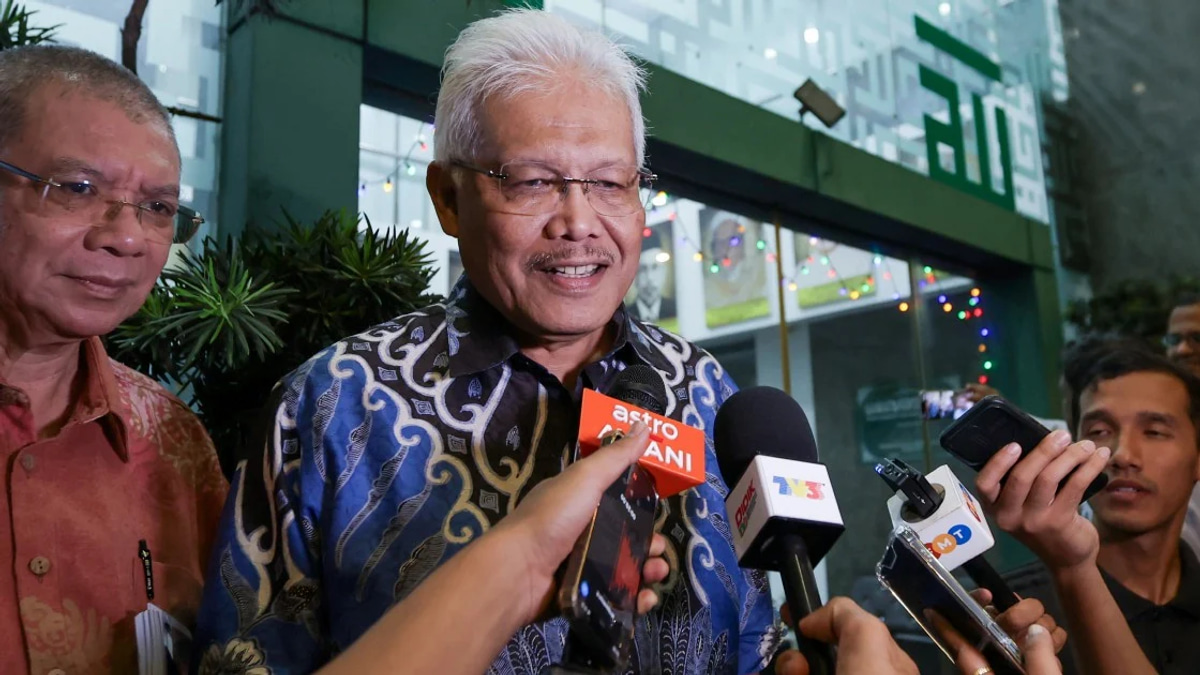
Ramanan articulated a perspective that extends beyond aggregate figures and budgetary metrics. Speaking at the Johor edition of HRD Corp's 'Pocket Talk' roadshow held at Starhill Golf & Country Club in Kempas, the minister emphasised that authentic success should be measured through sustained improvement in worker competitiveness and career trajectory rather than expenditure volume alone. This philosophical framing suggests a shift towards outcome-oriented assessment of human capital investments, a distinction increasingly important as Malaysia seeks to deepen its value proposition in global talent competition.
The 'Pocket Talk' initiative itself represents an evolving approach to government engagement with stakeholders. Designed around the theme 'From Policy to the People', the roadshow functions as a decentralised outreach mechanism through which the Ministry of Human Resources and HRD Corp disseminate information regarding available training funds, subsidy opportunities, and capability development pathways directly at community level. This grassroots deployment model aims to reduce information asymmetries and transactional friction that may prevent smaller enterprises or informal sector participants from accessing government support.
Johor's development priorities have created particular urgency around workforce capability enhancement. Ramanan identified nurturing local talent as essential infrastructure supporting the state's expanding strategic investment pipeline, pointing specifically to demand emanating from the Johor-Singapore Special Economic Zone. The JS-SEZ framework creates an ecosystem where demand for highly skilled workers substantially exceeds domestic supply, creating both opportunity and challenge. Training investments funded through HRD Corp mechanisms contribute to bridging this capability gap, potentially enabling more Johor residents to capture roles within this high-value economic corridor rather than ceding these positions to external talent.
The special economic zone context particularly relevant to Malaysian and Southeast Asian readers. Cross-border economic integration initiatives like the JS-SEZ function as magnets for human capital requirements that typically exceed traditional labour market supply, particularly for technical and specialist roles. When home-country training systems cannot respond with sufficient speed or relevance, the resulting talent gaps become filled through external recruitment, which distributes wealth and opportunity flows externally. Johor's HRD Corp engagement thus carries strategic significance beyond conventional workforce development, contributing to domestic capability that supports regional economic repositioning.
The scale of Johor's participation in the HRD Corp ecosystem merits comparative context. At 13,425 registered employers, this represents substantial penetration within the state's business landscape, though precise coverage rates depend on definitional boundaries around employer universe. The workforce reach of approximately 480,000 workers suggests participation encompasses enterprises across diverse size categories and sectors, from established manufacturing and service operations to smaller trading and artisanal businesses. This breadth indicates that training accessibility has expanded beyond traditional large-employer populations where such programmes historically concentrated.
Gig economy dimensions featured prominently in Ramanan's remarks, with the minister highlighting HRD Corp's commitment to extending skills enhancement opportunities to non-traditional workers outside conventional employment arrangements. This acknowledgment reflects Malaysia's evolving labour market composition, where platform-based and freelance work arrangements increasingly characterise economic participation. Skills investment for gig workers remains technically complex given the episodic nature of engagement and variable employer relationships, yet inclusion of these segments within capability development frameworks addresses an expanding gap in traditional human resource development systems designed around permanent employment paradigms.
The long-term competitive implications of sustained training investment extend across multiple dimensions. For individual workers, capability enhancement supports wage trajectory improvement and career resilience amid technological disruption. For employers, access to subsidised training reduces human capital investment burdens while improving workforce productivity and retention. For the state economy, cumulative capability improvements support advancement toward higher-value economic activities and improved resilience against competitive challenges from regional competitors. These interconnected benefits explain why human capital development receives elevated priority within Johor's development frameworks, particularly as the state positions itself as a destination for sophisticated manufacturing and services investment.
The roadshow format itself carries pedagogical significance. Delivering government training information through structured community engagement rather than centralised bureaucratic channels addresses a persistent challenge in Malaysian public administration—connecting available support programmes with intended beneficiaries effectively. Smaller enterprises and individual workers frequently remain unaware of subsidy opportunities, training availability, or application procedures. Decentralised delivery mechanisms reduce search costs and clarify programme relevance to specific audience segments, potentially expanding actual utilisation of capacity that remains formally available but practically inaccessible due to information constraints.