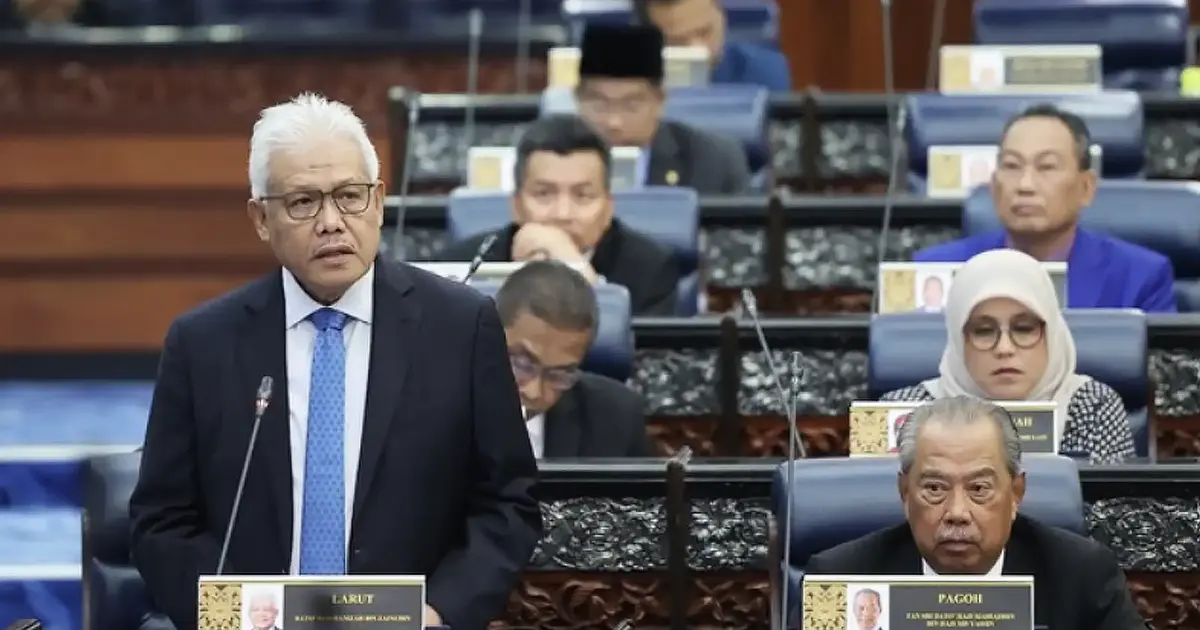
Dewan Rakyat Speaker Johari Abdul has disclosed that former Prime Minister Muhyiddin Yassin approached him with a request to relocate his parliamentary seating arrangement, marking an unusual administrative matter involving one of Malaysia's most senior political figures. The revelation surfaced as the Speaker simultaneously confirmed receipt of official documentation establishing Hamzah Zainudin, the Member of Parliament for Larut, in the formal position of opposition leader.
The seat change request from Muhyiddin represents an intriguing development in Malaysia's current political landscape, where parliamentary protocols and seating arrangements carry symbolic weight alongside their practical function. While Speaker Johari Abdul did not elaborate extensively on the motivation behind Muhyiddin's request or the specific outcome of the application, such requests are technically within the purview of parliamentary administration and the Speaker's office to evaluate and process. The circumstances surrounding the petition remain somewhat opaque, though observers have noted that seating arrangements in the Dewan Rakyat often reflect shifting political allegiances or strategic positioning within the chamber.
Muhyiddin's request occurs within a broader context of political reconfiguration in Malaysia, where coalition alignments have undergone significant transformation over recent years. The former Prime Minister, who previously led the Perikatan Nasional coalition before its dissolution, currently occupies a position of relative political isolation compared to his previous prominence. His decision to seek a different seat may reflect attempts to reposition himself within Parliament's complex social and political geography, or it could signal evolving relationships with his current political grouping.
Simultaneously, the Speaker's formal recognition of Hamzah Zainudin as opposition leader establishes crucial clarity regarding parliamentary leadership roles. The Larut MP's appointment follows through on established procedures by which opposition leadership is formally documented and acknowledged, ensuring that parliamentary business can proceed with clear delineation of major political factions. This recognition carries substantive implications for parliamentary question time, committee assignments, and the formal voice granted to the opposition in legislative deliberations.
Hamzah Zainudin's elevation to opposition leader represents a significant development for the Larut constituency's representative and signals particular factional dominance within Malaysia's current opposition framework. The receipt of formal documentation confirming his position suggests that proper constitutional and parliamentary procedures have been followed, with the Speaker's office maintaining its crucial role as guardian of parliamentary protocol and procedure. This formal recognition provides opposition members with enhanced standing to raise matters of public concern and scrutinise government policy.
The timing of these parliamentary administrative matters coincides with Malaysia's ongoing political evolution following the 2023 general election. The country's political configuration has shifted considerably since that contest, with various coalition formations and realignments creating a complex parliamentary landscape that requires careful navigation of procedural matters. Speaker Johari Abdul's role in managing these administrative aspects underscores the significant responsibility shouldered by parliamentary officers in maintaining institutional integrity and ensuring that all members, regardless of political affiliation, receive equal treatment under parliamentary rules.
Muhyiddin's seat change request, while seemingly technical in nature, may carry broader implications for Malaysian parliamentary politics. Seating arrangements in the Dewan Rakyat have historically served as barometers of political relationships and factional positioning, with members often occupying seats that reflect their coalition or ideological alignment. A change in Muhyiddin's physical location within the chamber could signal shifting relationships or a desire to distance himself from certain political groupings, though definitive interpretation requires further clarity from the relevant parties.
The Malaysian Parliament operates within established procedural frameworks that govern matters ranging from seating arrangements to the formal recognition of opposition leadership. These institutional mechanisms ensure that the legislature functions as a coherent body despite the often contentious nature of political disagreement. The Speaker's office serves as custodian of these procedures, making determinations that affect the daily operations of parliamentary business and the ability of members to represent their constituencies effectively.
For Malaysian and Southeast Asian observers of political developments, these parliamentary developments underscore the importance of institutional procedures and the roles played by legislative officers in managing political transitions. While individual seat changes might appear marginal, they often reflect deeper shifts in political alignments and strategic positioning among senior political actors. The recognition of formal opposition leadership, conversely, represents a straightforward application of democratic parliamentary practice, ensuring that checks and balances function as designed within Malaysia's constitutional framework.
The confluence of these events—Muhyiddin's request and Hamzah's formal recognition—illustrates the multifaceted nature of parliamentary administration beyond high-profile legislative debates and government policy. Speaker Johari Abdul's responsibilities encompass both the ceremonial and substantive aspects of maintaining parliamentary order, a role that gains heightened importance during periods of political flux. As Malaysia continues navigating its political evolution, such procedural matters will remain integral to the functioning of democratic institutions, requiring careful attention to constitutional propriety and established parliamentary conventions.

%22%2F%3E%3C%2Fpattern%3E%3C%2Fdefs%3E%3Crect%20width%3D%22100%25%22%20height%3D%22100%25%22%20fill%3D%22url(%23ph3u4gug)%22%2F%3E%3Crect%20width%3D%22100%25%22%20height%3D%22100%25%22%20fill%3D%22url(%23ph3u4gup)%22%2F%3E%3Ctext%20x%3D%2250%25%22%20y%3D%2250%25%22%20text-anchor%3D%22middle%22%20dominant-baseline%3D%22central%22%20fill%3D%22rgba(255%2C255%2C255%2C0.95)%22%20font-family%3D%22Georgia%2C%20'Times%20New%20Roman'%2C%20serif%22%20font-weight%3D%22700%22%20font-size%3D%22151%22%20letter-spacing%3D%22-0.02em%22%3ESoutheast%3C%2Ftext%3E%3C%2Fsvg%3E)
%22%2F%3E%3C%2Fpattern%3E%3C%2Fdefs%3E%3Crect%20width%3D%22100%25%22%20height%3D%22100%25%22%20fill%3D%22url(%23ph2dmw0g)%22%2F%3E%3Crect%20width%3D%22100%25%22%20height%3D%22100%25%22%20fill%3D%22url(%23ph2dmw0p)%22%2F%3E%3Ctext%20x%3D%2250%25%22%20y%3D%2250%25%22%20text-anchor%3D%22middle%22%20dominant-baseline%3D%22central%22%20fill%3D%22rgba(255%2C255%2C255%2C0.95)%22%20font-family%3D%22Georgia%2C%20'Times%20New%20Roman'%2C%20serif%22%20font-weight%3D%22700%22%20font-size%3D%22136%22%20letter-spacing%3D%22-0.02em%22%3EBangladesh%3C%2Ftext%3E%3C%2Fsvg%3E)