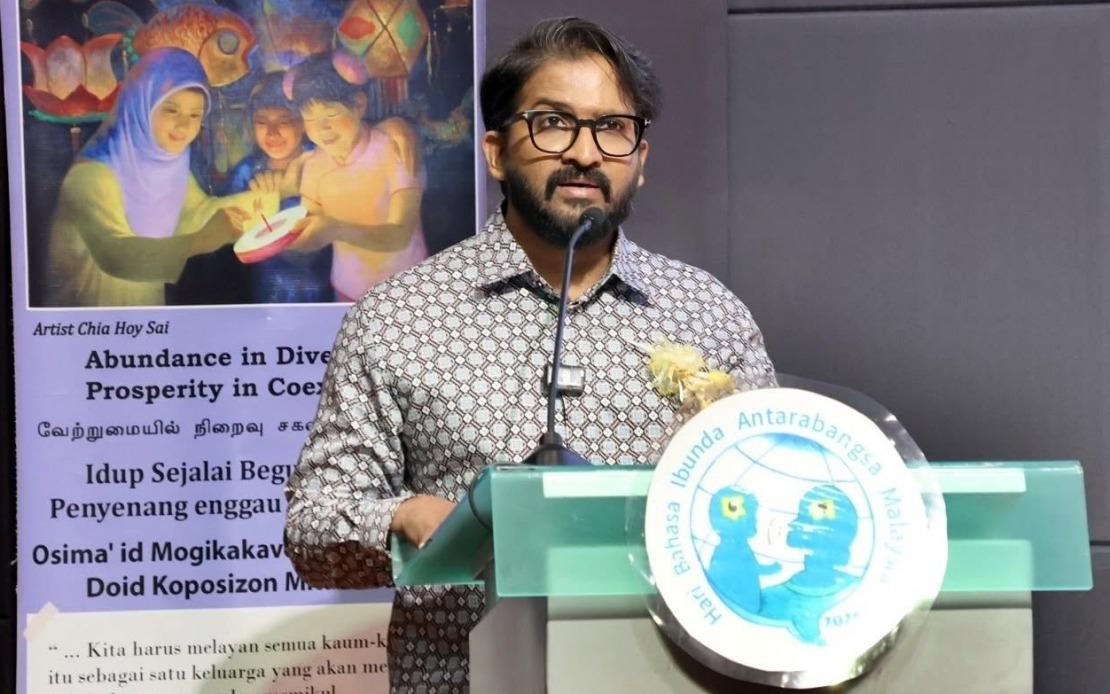
Deputy National Unity Minister R. Yuneswaran has called for renewed focus on mother-tongue education as a practical pathway to reducing tensions surrounding race, religion and royalty issues that persistently inflame Malaysian social media. Speaking on June 21, Yuneswaran attributed the frequency of such divisive discourse to insufficient mutual understanding of one another's histories, languages and cultural identities, suggesting that linguistic competence serves as a foundation for deeper social cohesion.
The deputy minister's intervention addresses a persistent challenge facing Malaysia's multicultural society. The country's diverse population has long grappled with how to balance competing linguistic, cultural and religious identities while maintaining national unity. Yuneswaran's argument repositions mother-tongue learning not as an obstacle to national integration but as a complementary strength that enriches individual identity and fosters cross-cultural respect. This framing is significant in Malaysian public discourse, where language policy has historically been presented as zero-sum, with concerns that emphasising non-Malay languages might weaken commitment to Bahasa Malaysia.
Yuneswaran emphasised that language transcends mere communication, carrying within it the accumulated wisdom, values and heritage of communities. In Malaysia's context, where 130 distinct languages coexist, this observation underscores the intellectual and cultural capital embedded in each linguistic tradition. When young people lose proficiency in their ancestral languages, the deputy minister implies, they forfeit access to nuanced understanding of their own communities' histories and perspectives. This knowledge gap can manifest in oversimplified, polarised interpretations of communal differences—precisely the kind of thinking that fuels 3R controversies online.
Drawing from his own personal experience as an Indian Malaysian educated in both Chinese and national school streams, Yuneswaran presented living proof that multilingual competence strengthens rather than weakens social integration. His trajectory demonstrates that mastery of one's mother tongue need not compromise fluency in the national language or other languages. This anecdotal evidence carries particular weight in Malaysia, where educational and political debates often feature competing claims about which language should take priority. By showcasing his own linguistic versatility, Yuneswaran modelled the possibility of genuine pluralism rather than enforced assimilation.
The deputy minister's comments align with Malaysia's 13th Malaysia Plan, which assigns the National Unity Ministry the critical task of advancing nation-building through frameworks centred on mutual understanding and intercultural learning. This policy positioning suggests that government is moving beyond simplistic appeals to unity toward more substantive engagement with the mechanisms by which communities develop respect for one another. Language learning emerges here as instrumental infrastructure for achieving deeper social cohesion, rather than merely ceremonial gestures.
Yuneswaran's argument carries particular resonance for Southeast Asian readers, as the region's nations similarly navigate tensions between local languages, regional lingua francas and global English-medium communication. Malaysia's experience—with its Malay-dominant national narrative alongside thriving Chinese, Tamil, English and indigenous language communities—offers a microcosm of challenges facing the broader region. Countries like Indonesia, Thailand and the Philippines face analogous questions about preserving linguistic diversity while fostering national identity and cross-border cooperation.
The emphasis on mother-tongue proficiency as a bulwark against online polarisation reflects an emerging recognition that digital discourse often lacks the contextual richness and cultural embedding that sustained conversations in heritage languages provide. When Malaysians engage 3R topics in simplified English or Malay, nuances grounded in specific cultural or religious traditions may be lost, leaving room for misinterpretation and inflammatory rhetoric. Conversely, when communities communicate within linguistic frameworks that carry historical depth and accumulated communal meaning, the stakes of respectful dialogue become more apparent.
Yuneswaran's framing also implicitly critiques what might be termed "linguistic assimilationism"—the historical assumption that national unity requires linguistic consolidation around a single language. Instead, he presented Malaysia's linguistic diversity as a strategic asset, provided it is coupled with genuine commitment to mutual learning. This repositioning matters because it reverses the narrative of threat that has often surrounded minority languages in Malaysia, replacing it with an account of complementary strengths.
However, translating this principle into policy presents genuine challenges. Mother-tongue education requires institutional support—trained teachers, curriculum materials, and integration into formal schooling systems alongside Malay and English. Current education structures in Malaysia do not universally prioritise mother-tongue learning for all students, and resources for minority-language instruction remain unevenly distributed. Yuneswaran's call implicitly raises questions about whether government is prepared to invest substantially in expanding mother-tongue programmes, particularly in urban areas where language transmission has weakened.
The timing of Yuneswaran's statement reflects broader Malaysian concerns about social media's role in amplifying divisive content. With 3R disputes erupting with regularity on platforms like Facebook, TikTok and WhatsApp, policymakers increasingly seek root causes and preventative interventions. Attributing part of the problem to linguistic and cultural distance suggests solutions requiring sustained, long-term commitment to education and intercommunal dialogue rather than short-term regulatory fixes or content moderation alone.
Yuneswaran's invocation of understanding, respect and openness as pillars of national unity echoes longstanding Malaysian rhetorical commitments to 1Malaysia and subsequent national solidarity narratives. What distinguishes this formulation is its practical anchoring in language learning, transforming abstract appeals to unity into concrete educational programmes. For Malaysian readers, the deputy minister's intervention poses an implicit question: whether society is genuinely willing to resource and prioritise the preservation and teaching of mother tongues as part of building a more cohesive nation.
Looking forward, Yuneswaran's call suggests that the National Unity Ministry may be reconsidering how government conceptualises the relationship between linguistic diversity and social harmony. Rather than viewing languages as competing claims on national resources and identity, this approach positions them as complementary elements of a richer national culture. Whether this philosophical reorientation translates into substantive policy changes—expanded mother-tongue education, curriculum reform, or resource allocation—will determine whether the deputy minister's rhetoric translates into meaningful shifts in how young Malaysians engage across communal boundaries.
%22%2F%3E%3C%2Fpattern%3E%3C%2Fdefs%3E%3Crect%20width%3D%22100%25%22%20height%3D%22100%25%22%20fill%3D%22url(%23ph40xibg)%22%2F%3E%3Crect%20width%3D%22100%25%22%20height%3D%22100%25%22%20fill%3D%22url(%23ph40xibp)%22%2F%3E%3Ctext%20x%3D%2250%25%22%20y%3D%2250%25%22%20text-anchor%3D%22middle%22%20dominant-baseline%3D%22central%22%20fill%3D%22rgba(255%2C255%2C255%2C0.95)%22%20font-family%3D%22Georgia%2C%20'Times%20New%20Roman'%2C%20serif%22%20font-weight%3D%22700%22%20font-size%3D%22272%22%20letter-spacing%3D%22-0.02em%22%3EMITRA%3C%2Ftext%3E%3C%2Fsvg%3E)