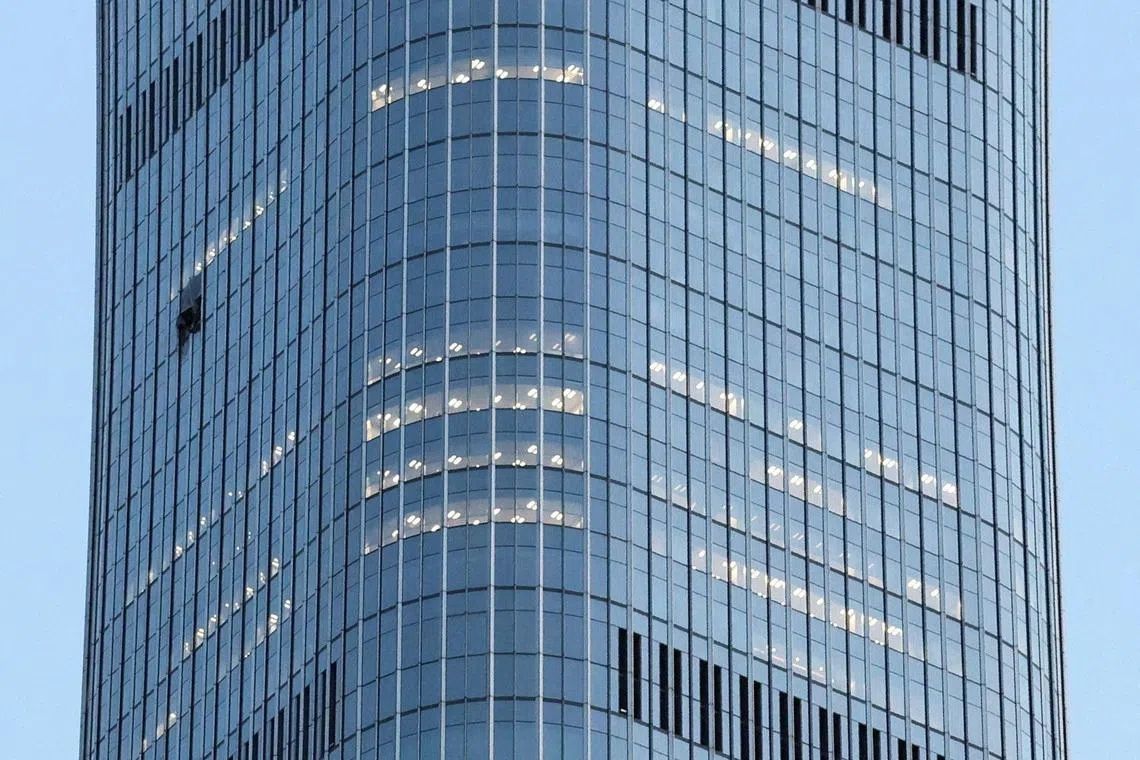
A 66-year-old pilot who died after flying a light aircraft directly into Beijing's tallest building left behind diary entries expressing a desire to end his life, according to a statement released by Chinese government authorities on Thursday. The June 26 incident saw the aircraft strike the 528-metre CITIC Tower in Beijing's Central Business District, an act that authorities have now characterised as stemming from personal psychological distress rather than any systematic security breach. The crash resulted in injuries to 13 people and sparked immediate official concern about how such an event could occur in one of the world's most closely controlled airspaces.
Liu, the pilot surnamed in official reports, had obtained his sport pilot license in 2021 and his private pilot license as recently as 2024. The Chaoyang district government confirmed that Liu was a divorced freelancer living alone in Beijing, describing him as having endured prolonged insomnia and anxiety. His personal diary, examined by authorities after the incident, contained multiple notations about wanting to end his life—details that officials now use to explain the trajectory of events on that Friday afternoon. The characterisation of his mental state appears designed to close the public narrative around the crash, though it simultaneously raises uncomfortable questions about how someone with documented suicidal ideation successfully obtained aviation credentials.
The crash location itself carries significant political weight. The CITIC Tower stands approximately seven kilometres from Zhongnanhai, the heavily guarded government compound housing China's most senior leadership including President Xi Jinping. This proximity, combined with the incident's occurrence just days before the ruling Communist Party's 105th anniversary celebrations, transformed what might otherwise be treated as an isolated accident into a potential security embarrassment. The timing and location proved consequential enough that Chinese authorities moved quickly to shape the narrative and suppress related discussion on social media platforms.
On the afternoon in question, Liu departed from a general aviation airport in the suburban Pinggu district and completed both a supervised flight and a solo flight. It was during this final unaccompanied journey that Liu deviated from his designated flight corridor and lost radio contact with airport authorities before the collision occurred. He was piloting a two-seat propeller-driven light aircraft registered as B-12PP. The sequence of events suggests Liu may have deliberately altered his course, though official statements stop short of confirming premeditation.
The breach of Beijing's airspace structure raises technical and administrative puzzles that authorities have not adequately addressed. China enforces some of the world's most stringent aviation regulations, requiring all flights—including general aviation operations—to receive advance approval. Operators typically must submit detailed flight plans to flight-control authorities by 3pm on the day preceding takeoff. Urban flying remains generally prohibited under Chinese civil aviation law. The fact that Liu's aircraft penetrated restricted zones adjacent to a permanent no-fly area and crossed highly controlled airspace used by commercial traffic at Beijing Capital Airport suggests either procedural breakdown or deliberate circumvention.
Authentic medical certification requirements present another dimension to the security failure. Qualified aviation professionals indicate that obtaining a private pilot license in China mandates passing a physical medical examination and meeting other certification standards. How Liu cleared such evaluations while apparently documenting suicidal thoughts raises uncomfortable implications about either the screening process's effectiveness or the consistency of its application. The gap between his approved medical status and his actual psychological condition indicates potential weakness in aviation authority vetting procedures.
Chinese state authorities moved swiftly to manage public perception following the crash. AFP journalists who arrived at the scene observed a sizeable hole in the tower's upper-floor windows and witnessed debris and fire at the building's base. However, photographs and videos circulating on Chinese social media were rapidly removed, and police stationed at the scene prevented journalists and bystanders from documenting the incident. This information control strategy, while consistent with Chinese government practice during sensitive incidents, also prevented independent verification of official accounts and fed public speculation about undisclosed details.
The suppression of public discussion proved incomplete. Internet users posted questions beneath the official Chaoyang district statement querying how security protocols permitted the breach, before those comments too were deleted. The government's explanatory strategy—attributing the crash entirely to Liu's personal mental state—does not satisfactorily account for the apparent gaps in physical security and procedural safeguards that permitted his aircraft to reach its target. This disconnect between the official narrative and lingering technical questions has likely deepened public scepticism in Beijing's business community.
For Malaysian and regional aviation observers, the incident illustrates that even nations with exceptionally strict airspace controls remain vulnerable to determined individual action. Southeast Asian nations, which generally maintain less comprehensive flight-monitoring infrastructure than China, may find the episode instructive regarding the limitations of purely regulatory approaches to aviation security. The case also underscores tensions between mental health support systems and security protocols—Liu's documented psychological distress apparently failed to trigger intervention mechanisms despite his proximity to sensitive national infrastructure.
The incident occurred during a particularly sensitive political period, with the Communist Party preparing to commemorate its founding. The proximity to Tiananmen Square and the Great Hall of the People, combined with the crash's capacity to generate unfavourable international coverage, elevated official urgency in providing an explanation. By attributing the crash to personal psychological factors, authorities effectively closed the investigation and shifted responsibility away from systemic security failures, though this interpretation raises uncomfortable questions about whether similar breaches might recur.
The broader implications extend beyond Beijing's immediate security apparatus. Chinese civil aviation authorities face pressure to demonstrate that their historically tight controls remain effective despite this breach. The incident also highlights persistent challenges in balancing aviation access for legitimate general aviation with comprehensive security measures. For regional governments monitoring the situation, the case demonstrates that even the most tightly controlled airspaces cannot entirely eliminate risks posed by individuals with both aviation training and severe psychological distress.
Looking forward, the incident may prompt Chinese authorities to implement additional layers of psychological screening for pilot certifications and reconsider the integration of mental health monitoring into ongoing license renewal procedures. The tragedy of Liu's death, combined with the injuries sustained by others, serves as a grim reminder that mental health crises and aviation access represent a genuinely concerning intersection. Whether the crash ultimately drives substantive procedural reform or remains a contained incident quickly moved past remains to be seen.

