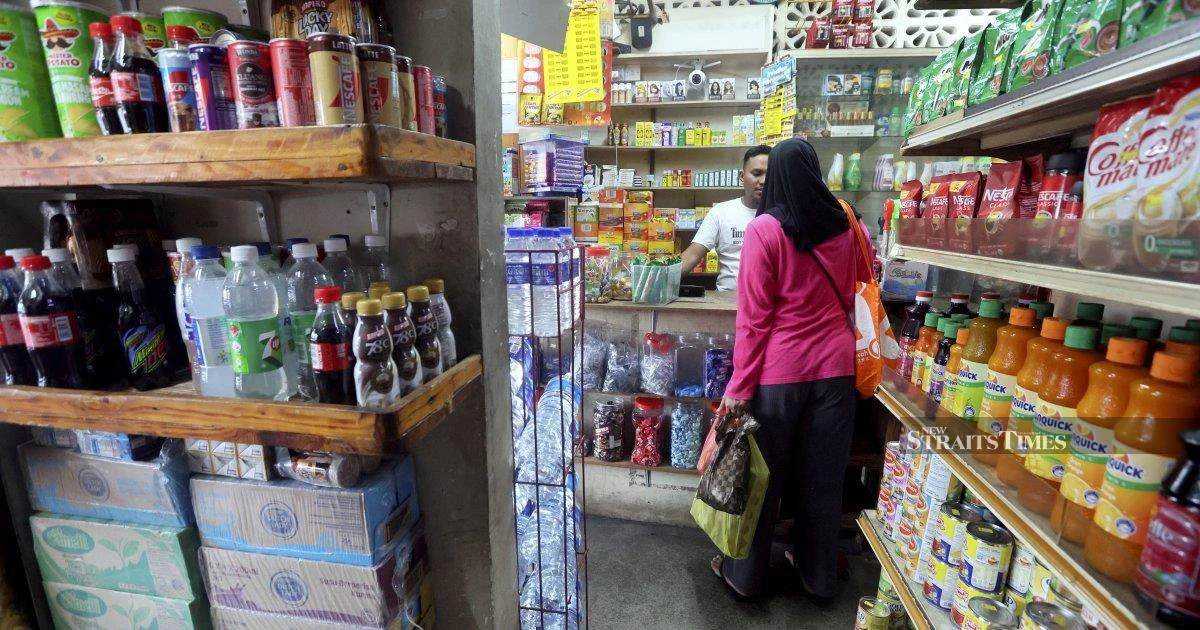
Malaysia's immediate inflation outlook sits on relatively stable ground, with price pressures appearing manageable despite the country's fundamental exposure to international commodity market gyrations and currency movement risks. While current conditions suggest price growth should remain within tolerable bands in the near term, the nation's reliance on imported goods and raw material inputs leaves it structurally susceptible to external shocks that could rapidly unsettle the consumer price landscape.
The Malaysian economy operates as an open system deeply intertwined with global markets, making it inherently vulnerable to the types of supply chain disruptions and commodity price swings that characterised the post-pandemic period. Energy prices, particularly oil and natural gas, feature prominently in this equation given Malaysia's regional role as an energy exporter and domestic reliance on petroleum derivatives for transportation and manufacturing. Beyond energy markets, the country's food and manufactured goods import bills remain sensitive to shifts in global agricultural and industrial commodity valuations. These structural realities mean that even domestically-focused monetary and fiscal policies have limited ability to insulate consumers entirely from international economic forces.
Currency movements represent a second critical vulnerability channel through which external pressures penetrate Malaysia's price stability framework. The ringgit's performance relative to major currencies, particularly the US dollar, directly influences the domestic currency cost of imported merchandise, foodstuffs, and machinery. Episodes of ringgit weakness, whether driven by US Federal Reserve policy shifts, regional geopolitical tensions, or changes in Malaysia's own growth trajectory, translate into higher landed costs for overseas purchases. Given that domestic production alone cannot satisfy all consumption and investment needs, import prices effectively become an inflation transmission mechanism largely beyond the central bank's direct control.
The distinction between Malaysia's manageable near-term outlook and its longer-term structural vulnerabilities warrants careful attention from policymakers and business planners. Over quarters or perhaps one to two years ahead, current anchored inflation expectations, cooling commodity cycles from their recent peaks, and relative ringgit stability suggest price growth should remain within the Bank Negara Malaysia's acceptable tolerance bands. However, this breathing room should not obscure underlying fragilities that could resurface if international conditions deteriorate.
Southeast Asian economies face a peculiar inflation challenge that differs markedly from fully developed Western nations. Malaysia, alongside neighbours like Thailand and Indonesia, typically cannot rely on domestic demand substitution when import costs rise sharply. Manufacturing sectors depend on global supply networks, agricultural production faces unpredictable international price benchmarks, and consumer expectations remain partially anchored to tradable goods valuations. This structural reality means that inflation episodes, when they arrive, can prove persistent and difficult to reverse through standard monetary policy tools alone.
Recent global trends deserve closer examination given their implications for Malaysia. Normalisation in shipping costs has reversed much of the pandemic-era surge that pushed import prices to extraordinary levels. However, geopolitical tensions in key shipping lanes, particularly the Middle East and potential disruptions around Taiwan, introduce new tail risks to supply chain stability. Simultaneously, the energy transition reshaping global commodity markets may create new price volatility patterns as renewable sources displace traditional fuels, potentially benefiting some exporters while challenging others.
The ringgit factor deserves particular emphasis when considering Malaysia's inflation risks. Currency weakness has historically preceded domestic price pressures in emerging markets, as import-dependent economies struggled to absorb higher foreign exchange costs without passing them through to final consumers. Malaysia's ringgit has experienced considerable volatility over recent years, reflecting capital flow dynamics, regional interest rate differentials, and changing perceptions of Malaysian growth prospects. Were the ringgit to face sustained pressure from capital outflows or external shocks, inflation could surprise to the upside relatively quickly, constraining the central bank's policy flexibility.
For Malaysian businesses, this bifurcated inflation landscape creates both planning challenges and potential opportunities. Companies with flexible supply chains and pricing power can navigate the current stability, but those wedded to fixed-cost structures and long-term price commitments face risks should international conditions shift abruptly. Exporters benefiting from cost competitiveness should recognise that currency swings can rapidly alter competitive positioning. Import-substituting sectors might find temporary respite in current conditions, but structural vulnerabilities suggest protection through productivity improvements rather than permanent tariff barriers.
Central bank communication and credibility play outsized roles in Malaysia's inflation management precisely because external factors lie beyond traditional monetary policy reach. When the Bank Negara Malaysia consistently signals commitment to price stability and backs words with measured policy adjustments, it helps anchor inflation expectations even when commodity or currency shocks occur. This expectational anchoring allows temporary external price pressures to dissipate rather than become embedded in wage bargaining and long-term pricing behaviour. Conversely, should credibility erode, even modest external shocks could trigger second-round inflationary effects as businesses and workers preemptively adjust prices upward in anticipation of future central bank accommodation.
Regional integration within ASEAN, while offering trade benefits, also means Malaysia remains exposed to inflation developments across the region. Supply chain interconnections mean that price pressures emerging from Thailand, Indonesia, or Vietnam can ripple through to Malaysian consumers via imported finished goods and intermediate inputs. Regional cooperation on inflation management, including information sharing and policy coordination, may offer modest benefits, though ultimately each country must manage its own policy independently.
Looking ahead, Malaysia's inflation trajectory will likely remain determined by the interplay between domestic demand conditions and international shocks rather than structural monetary constraints. The near-term stability reflects a fortunate coincidence of moderating commodity cycles, anchored expectations, and reasonable currency conditions. However, sustained planning must account for the possibility that this equilibrium proves temporary, requiring policy agility and business adaptability to navigate whatever external pressures emerge.
%22%2F%3E%3C%2Fpattern%3E%3C%2Fdefs%3E%3Crect%20width%3D%22100%25%22%20height%3D%22100%25%22%20fill%3D%22url(%23ph1qbo1g)%22%2F%3E%3Crect%20width%3D%22100%25%22%20height%3D%22100%25%22%20fill%3D%22url(%23ph1qbo1p)%22%2F%3E%3Ctext%20x%3D%2250%25%22%20y%3D%2250%25%22%20text-anchor%3D%22middle%22%20dominant-baseline%3D%22central%22%20fill%3D%22rgba(255%2C255%2C255%2C0.95)%22%20font-family%3D%22Georgia%2C%20'Times%20New%20Roman'%2C%20serif%22%20font-weight%3D%22700%22%20font-size%3D%22136%22%20letter-spacing%3D%22-0.02em%22%3ETerengganu%3C%2Ftext%3E%3C%2Fsvg%3E)