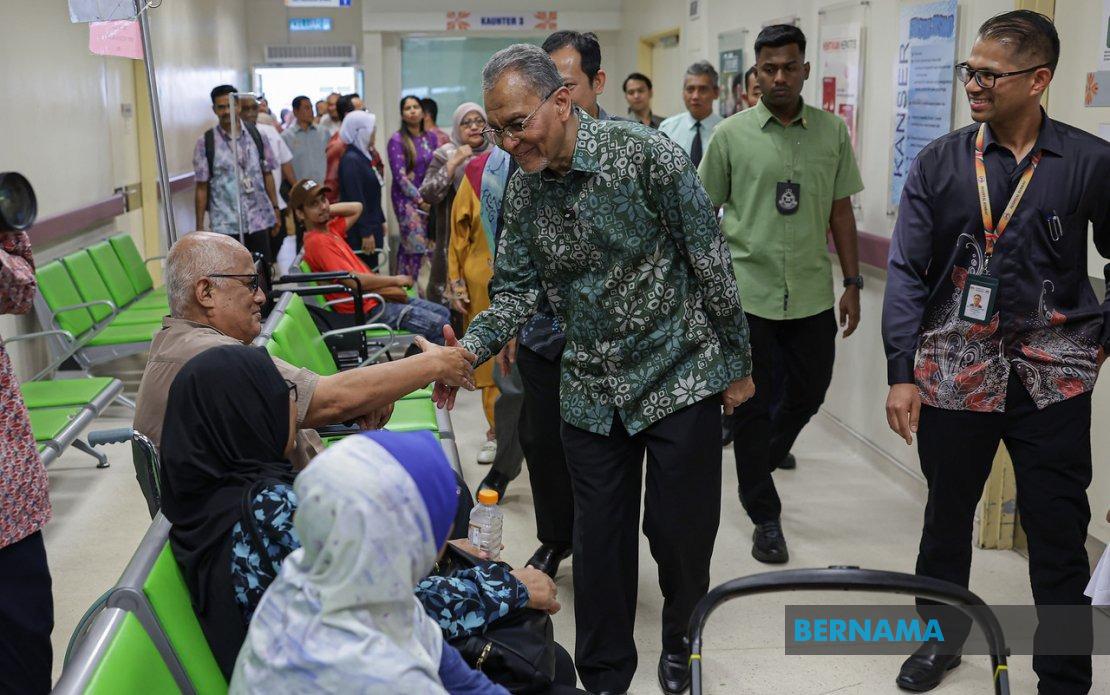
The Ministry of Health has set its sights on completing a draft workplace mental health policy within the next few months, marking a significant step towards addressing occupational wellbeing across Malaysian enterprises. Health Minister Datuk Seri Dr Dzulkefly Ahmad outlined the September to October timeline during remarks at the MOH's 2026 Merdeka Celebration programme for Negeri Sembilan at Hospital Rembau, indicating that the ministry is accelerating its push to institutionalise mental health support in the workplace.
The policy development process will hinge on extensive consultations across multiple stakeholders, reflecting a whole-of-government approach to occupational mental health. The Ministry of Human Resources (KESUMA), the Department of Occupational Safety and Health (DOSH), the Malaysian Employers Federation (MEF), and the Malaysian Trades Union Congress (MTUC) will all play central roles in shaping the framework. This broad coalition represents both employer and worker interests, as well as regulatory bodies responsible for workplace standards, suggesting the final policy will attempt to balance competing priorities in Malaysia's diverse business environment.
For Malaysian readers, the initiative carries particular relevance given rising awareness of burnout and mental health challenges in the region's competitive job market. The policy's scope extends well beyond simple counselling provision, addressing systemic workplace factors that contribute to psychological distress. Work-life balance emerges as a core consideration, acknowledging that mental wellbeing cannot be divorced from how organisations structure their demands on employees. Support mechanisms for staff will be woven throughout the framework, recognising that mental health resilience requires both preventive measures and responsive interventions when difficulties arise.
The minister emphasised that creating a conducive, safe and harmonious working environment represents the ultimate goal, framed explicitly within Malaysia's commitment to the United Nations Sustainable Development Goals. This international alignment signals that workplace mental health is no longer viewed as a peripheral HR concern but as integral to national development objectives. For Southeast Asian context, Malaysia's proactive stance may influence regional peers still grappling with how to systematise mental health support in professional settings where stigma and awareness gaps remain entrenched.
The policy's emphasis on reducing burnout and excessive workload directly addresses documented concerns within Malaysian workplaces, where long working hours and high-stress roles have become increasingly normalised. By building capacity within organisations to foster mentally healthy environments, the ministry hopes to shift away from reactive crisis management toward preventive culture change. This distinction matters substantially: organisations that invest upfront in wellbeing infrastructure typically experience improved retention, productivity, and employee engagement—factors with clear economic consequences for business competitiveness.
Parallel to the mental health initiative, the Health Minister announced complementary reforms to Malaysia's hospital system through the cluster hospital concept. This approach leverages specialist expertise more efficiently by routing complex cases through designated lead hospitals whilst simultaneously deploying their specialists to serve non-specialist facilities. The strategy acknowledges geographic and resource constraints affecting rural and underserved areas, where recruiting permanent specialist staff remains perpetually challenging. Rather than attempting to establish comprehensive specialist services everywhere—an economically unsustainable approach—the clustering model concentrates expertise whilst extending its reach.
The phased upgrade of non-specialist hospitals to offer selected specialist services represents a pragmatic middle ground in healthcare infrastructure planning. Paediatrics, obstetrics and gynaecology, ophthalmology, and ENT services have been identified as priority disciplines for expansion into secondary facilities, likely reflecting demand patterns and population health profiles across different regions. This targeted approach avoids the trap of one-size-fits-all solutions, instead tailoring specialist availability to local needs and demographic circumstances.
Crucially, Dr Dzulkefly indicated that these improvements need not require expensive new construction or major capital works. Strengthening existing capacity, reorganising service delivery, and enhancing specialist disciplines within current infrastructure represent the primary levers. For Malaysian states and Federal Territories with constrained budgets, this flexibility proves especially valuable, as modernisation becomes achievable without waiting for major building projects to secure funding and clear planning hurdles. The focus on strengthening primary healthcare simultaneously ensures that the system's foundation—first-contact care in communities—is not overshadowed by specialist-level ambitions.
The convergence of workplace mental health policy development and hospital system restructuring reflects an integrated vision of health security in Malaysia. Mental wellbeing at work directly influences utilisation patterns in healthcare systems; workers experiencing severe burnout or untreated depression impose significant costs on medical services. By addressing occupational mental health proactively, the ministry implicitly reduces downstream demand pressure on already stretched healthcare facilities. Simultaneously, improving hospital capacity ensures that those requiring specialist care can access it without undue delay or geographic barriers.
The timeframe for finalising the workplace mental health policy deliberately grants sufficient duration for meaningful stakeholder engagement rather than rushing to tokenistic consultation. Experience with comparable policies in other jurisdictions suggests that buy-in from employers and unions during development substantially increases likelihood of genuine implementation post-launch. The ministry's willingness to invest time in the process signals confidence that the resulting framework will possess sufficient legitimacy and practicality to drive real workplace transformation across Malaysia's private and public sectors.

