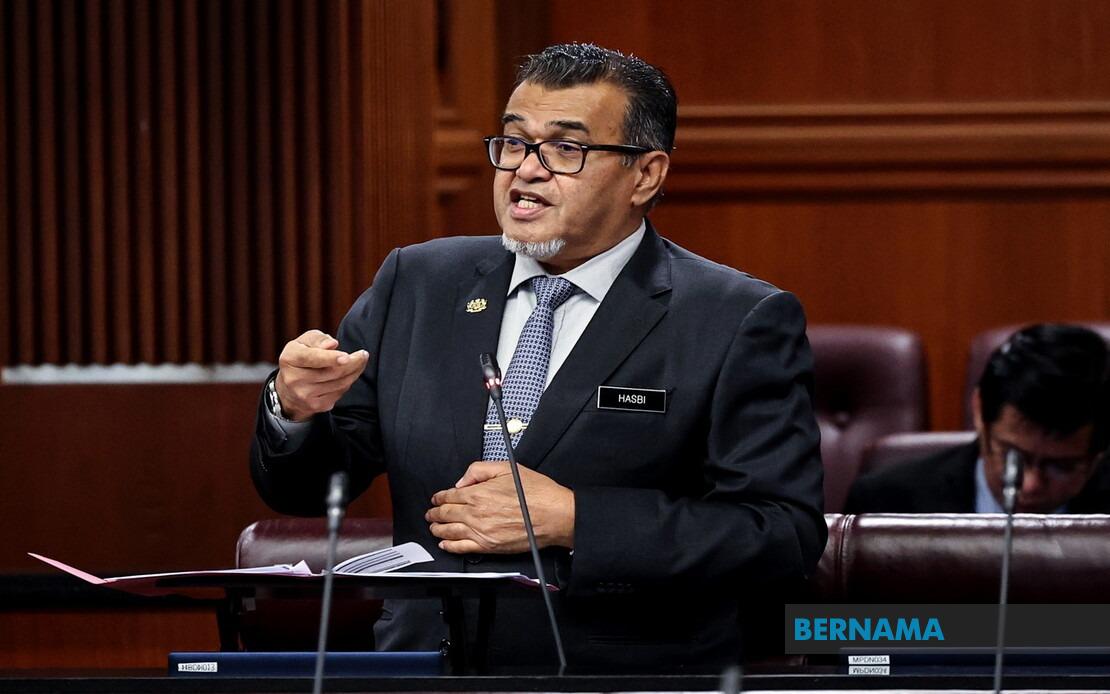
The Malaysian government is moving swiftly to close legislative loopholes that have allowed criminals to target railway infrastructure with relative impunity, Deputy Transport Minister Datuk Hasbi Habibollah told Parliament on July 2. The administration is preparing comprehensive amendments to existing statutes designed to impose substantially tougher penalties for a range of offences affecting rail assets, from trespassing and vandalism to the systematic theft of valuable cables. These revisions are expected to be presented to lawmakers in the coming months, marking a significant escalation in the government's response to mounting security concerns across the national rail network.
The impetus for legislative reform stems from the alarming scale of railway cable theft, which has emerged as a persistent problem affecting both Keretapi Tanah Melayu Berhad operations and the broader rail infrastructure. Over a three-year period, authorities documented 393 separate incidents involving the theft of approximately 19,756 metres of cable, translating to losses exceeding RM16.3 million. These figures underline the financial burden that criminal activity places on an essential public service already struggling with maintenance demands and operational costs. Cable theft not only represents direct economic loss but also creates dangerous conditions by exposing live electrical systems and compromising safety equipment critical to smooth rail operations.
Currently, the legislative framework governing railway security is demonstrably inadequate to deter organised criminal activity. Under existing law, trespassing on railway property incurs penalties ranging merely from RM500 to RM1,000, a sum insufficient to discourage individuals recruited into theft operations or to compensate for resultant damages. Hasbi acknowledged during parliamentary questioning that the punitive framework had become antiquated relative to the seriousness of contemporary offences. The proposed amendments will fundamentally recalibrate sentencing provisions, particularly introducing severe penalties for those engaged in cable theft connected to security infrastructure. By elevating punishments to levels that genuinely reflect the gravity and consequences of such crimes, the government aims to introduce a credible deterrent effect into the risk-benefit calculations of potential offenders.
Addressing railway crime requires dismantling the commercial ecosystem that sustains the theft cycle. Recognising this reality, authorities are intensifying strategic collaboration with the Royal Malaysian Police to disrupt supply chains linking stolen goods to end markets. A critical component of this enforcement approach involves engaging scrap metal operators and dealers—the ultimate purchasers of stolen railway cable—to establish protocols preventing them from acquiring materials known or suspected to be contraband. By eliminating the market demand driving theft, law enforcement authorities aim to remove the primary economic incentive propelling criminals to target railway assets. This market-disruption strategy acknowledges that criminal networks persist only where profit opportunities exist; severing connections between theft and resale represents a fundamental attack on organised crime's operational foundation.
Technological modernisation forms the complementary pillar of the government's comprehensive security strategy. The Railway Assets Corporation has invested RM14 million in deploying 1,146 smart closed-circuit television systems incorporating artificial intelligence capabilities across high-risk locations throughout the network. These advanced surveillance installations represent a substantial upgrade from conventional monitoring systems, offering real-time threat detection, automated alerts, and sophisticated analytics enabling authorities to identify suspicious patterns and deploy resources with precision. Artificial intelligence functionality permits continuous monitoring of vast territorial expanses that would be impractical to supervise through traditional human observation, multiplying the effective reach of security personnel while reducing response times to detected incidents.
Complementing fixed surveillance infrastructure, authorities have introduced unmanned aerial systems to monitor challenging terrain and remote sections of the railway network that conventional ground patrols cannot efficiently cover. Drone-based aerial reconnaissance enables authorities to detect unauthorised activity in areas historically vulnerable to criminal exploitation due to geographic isolation or difficult accessibility. This technology extends the surveillance perimeter beyond what ground-based resources alone could achieve, creating comprehensive monitoring coverage across critical segments of the rail system. The integration of airborne surveillance with fixed camera systems and ground patrols produces a layered security architecture substantially more difficult for organised theft operations to evade.
Personnel deployment enhancements further strengthen the enforcement presence across the railway network. Keretapi Tanah Melayu Berhad obtained authorisation to acquire twenty scrambler motorcycles for the Auxiliary Police force, enabling rapid-response patrols through terrain where conventional vehicles prove unwieldy or insufficient. The motorcycle-based patrol capacity dramatically improves response times to reported incidents while simultaneously increasing the visible security presence in hotspot areas prone to criminal activity. Enhanced mobility permits patrol units to cover greater distances efficiently and access locations difficult to reach via standard transportation, extending protective coverage throughout the system. This combination of improved surveillance, intelligence-led deployment, and rapid-response capability creates a substantially more formidable security environment for would-be offenders.
For Malaysia's broader transport sector and regional observers, these developments carry significant implications. Railway infrastructure undergoes continuous pressure from theft and vandalism; addressing these vulnerabilities demonstrates government commitment to protecting public assets and maintaining service reliability. The legislative reforms and technological investments signalled by Hasbi represent recognition that railway security demands multifaceted responses combining legal deterrence, intelligence-led enforcement, community engagement, and technological capability. The outcome of these initiatives will likely influence security strategies across other transport sectors and potentially provide lessons for regional governments confronting similar infrastructure protection challenges.
The timing of these security enhancements carries particular significance given Southeast Asia's broader context of increasing railway modernisation and expansion. As nations throughout the region invest in rail infrastructure development, establishing robust security frameworks becomes essential to protecting these substantial capital investments and ensuring reliable public services. Malaysia's approach—combining legislative teeth with technological sophistication and intelligence-led enforcement—exemplifies a comprehensive methodology that addresses both criminal motivation and operational capability. Should these measures successfully reduce theft incidents and criminal activity, they could establish a model potentially attractive to other governments seeking to secure their own rail networks against comparable threats.

