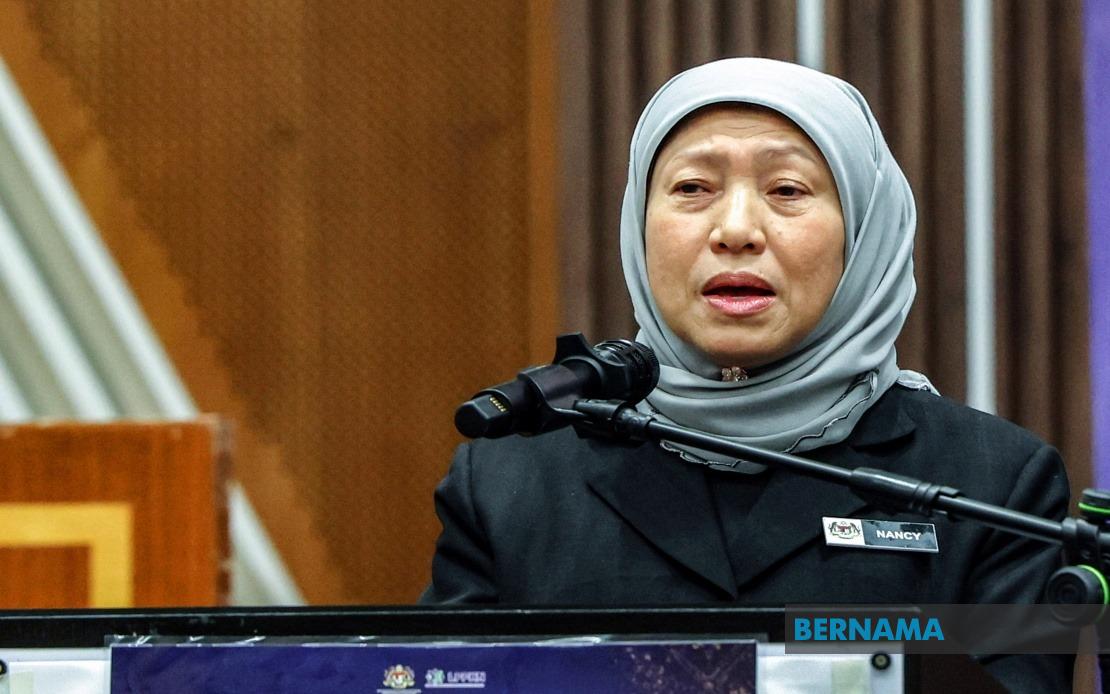
The Ministry of Women, Family and Community Development (KPWKM) is embarking this month on an extensive 18-month research initiative designed to reimagine masculinity in Malaysia. Minister Datuk Seri Nancy Shukri announced the launch of the National Gentleman Study, which frames men's empowerment not as dominance or economic supremacy alone, but as emotional maturity, mental fortitude and the capacity to build equitable partnerships within families and communities. This conceptual shift represents a departure from traditional narratives, positioning the ideal man as one who shares responsibility, respects women as equals and leads through wisdom rather than control.
The research initiative emerges from a concerning landscape of male vulnerability that has largely remained invisible in public discourse. National data reveals a sobering reality: Malaysian men take their own lives at nearly three times the rate of women, yet mental health support and masculine identity conversations remain underdeveloped in policy circles. The 2023 National Health and Morbidity Survey documented that 4.6 per cent of Malaysians aged 16 and above live with depression, yet gendered patterns in how men experience and express psychological distress remain poorly understood. Nancy Shukri's framing of men's empowerment as encompassing emotional resilience and mental well-being acknowledges that traditional masculine expectations—stoicism, economic provision, emotional restraint—may be contributing to this tragic disparity.
Economic pressures constitute another driving force behind the initiative. Household debt in Malaysia has climbed to 84.3 per cent of gross domestic product according to Bank Negara Malaysia, creating unprecedented financial stress on households and the individuals responsible for supporting them. This economic burden cascades into family instability, as demonstrated by the 4.1 per cent increase in divorce cases to 60,457 in 2024. Financial stress emerges consistently as a primary factor in relationship breakdown, alongside failure to meet maintenance obligations and prolonged domestic conflict. For many Malaysian men, the gap between societal expectations and economic reality creates a form of cognitive and emotional dissonance that manifests in family dysfunction and, in extreme cases, violence.
The connection between male empowerment and family violence represents perhaps the most urgent dimension of this study. Royal Malaysia Police statistics reveal that 95 per cent of domestic violence perpetrators documented between January and December 2025 were men, a statistic that demands interrogation rather than normalisation. Rather than framing this as evidence of inherent male pathology, the research framework positions it as symptomatic of inadequate emotional regulation, financial desperation and lack of constructive outlets for managing crisis. The study implicitly asks how men might be equipped—through education, support systems and cultural messaging—to handle adversity without inflicting harm on vulnerable family members.
The National Gentleman Study will operate through a Public-Private-People Partnership (4P) approach, engaging government agencies, commercial entities and community organisations in a collaborative evidence-gathering process. This methodology recognises that men's empowerment cannot be achieved through government decree alone; it requires stakeholder buy-in across sectors. The consultative forum serves as the initial platform for collecting experiences, identifying barriers and building consensus around what men's empowerment should entail in a Malaysian context. Such inclusive participation is particularly valuable given Malaysia's multicultural and multi-religious composition, where definitions of ideal masculinity vary significantly across communities.
For Malaysia and the broader Southeast Asian region, this initiative signals a maturation in how gender policy is conceptualised. Rather than positioning men's empowerment and women's empowerment as zero-sum, the framework articulates them as complementary endeavours. When men are equipped with emotional literacy, mental health support and equitable partnership models, family systems become more stable and children develop healthier understandings of gender relations. The research findings will inform future policymaking and programme development, potentially generating blueprints that other regional nations might adapt to their contexts.
The timing of this study reflects growing regional awareness of male mental health crises and family instability as interconnected phenomena. In Singapore, Thailand and Indonesia, governments and civil society organisations increasingly recognise that ignoring men's psychological and social struggles perpetuates cycles of family violence and community dysfunction. Malaysia's systematic approach through dedicated research provides an opportunity to generate evidence-based interventions rather than relying on anecdotal understanding or imported frameworks ill-suited to local realities.
The definition of a gentleman articulated by Minister Nancy Shukri—one who leads with wisdom, shares burdens and honours women as partners rather than subordinates—represents a deliberate ideological intervention in Malaysian culture. It challenges the persistence of patriarchal norms while acknowledging that many men themselves feel constrained by rigid expectations. By reframing gentlemanly conduct as inclusive rather than exclusive, the initiative potentially appeals to men across socioeconomic and educational spectra, creating space for transformation without demanding emasculation.
The 18-month timeline allows for meaningful data collection, analysis and stakeholder consultation before recommendations reach policymakers. Early findings may inform immediate interventions—such as enhanced mental health services, family counselling programmes or workplace mental health initiatives—while longer-term recommendations shape educational curricula and community development strategies. Given Malaysia's experience with rapid social change and diverse demographic needs, the research should yield insights into how men of different ages, economic circumstances and cultural backgrounds experience empowerment and responsibility differently.
This initiative also implicitly acknowledges that gender-based policy cannot remain siloed. The Ministry's approach integrates findings on mental health, economic stress, family dynamics and violence prevention into a coherent framework. Future policymakers will need coordination across health, education, labour and social welfare sectors to implement recommendations effectively. The study thus serves not only as research but as a catalyst for institutional reform.
The National Gentleman Study represents an experiment in redefining Malaysian manhood through evidence-based policy. By grounding the initiative in data about suicide, debt, divorce and violence, while articulating an aspirational vision of partnership and emotional maturity, the research creates space for honest conversations about how current models of masculinity serve or fail Malaysian men and their families. The study's findings will matter far beyond government circles; they will influence how Malaysian society cultivates the next generation of men and the expectations placed upon them.

