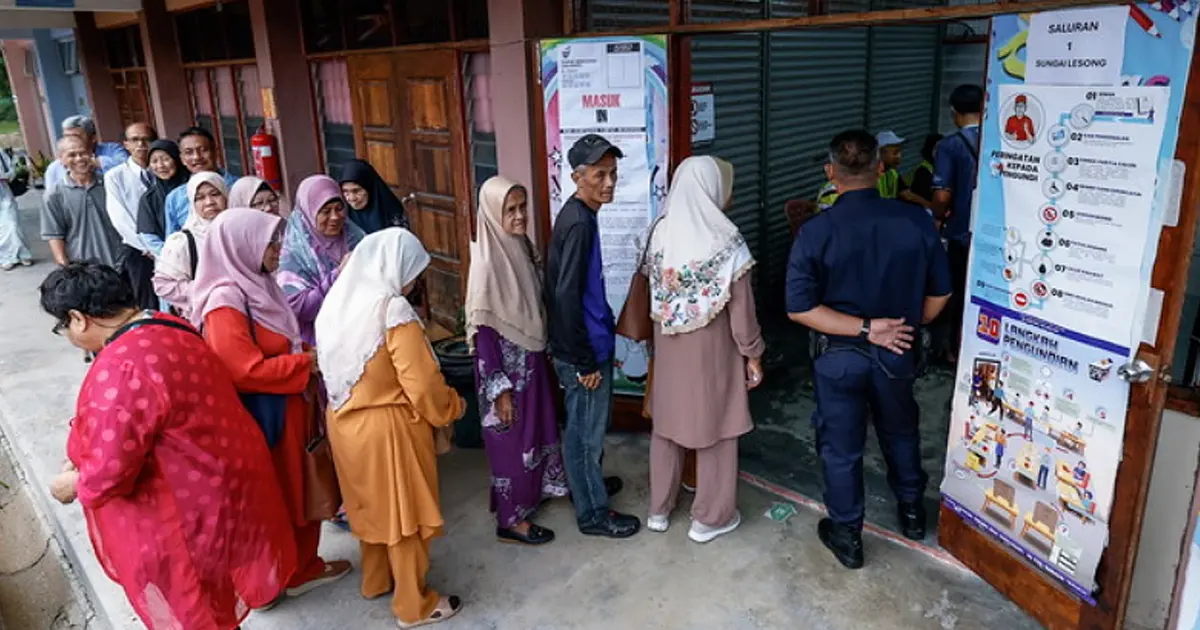
Malay voters in Malaysia face mounting 'emotional fatigue' from the relentless focus on 3R issues, according to political analysis from Universiti Malaya, a sobering assessment that highlights a potential disconnect between political discourse and voter priorities as the nation navigates competing domestic pressures.
Awang Azman Pawi, the academic observer, suggests that while identity-based and communal concerns have long animated Malaysian politics, the saturation of messaging around these themes threatens to exhaust the emotional and intellectual bandwidth of the electorate. This observation carries particular weight given Malaysia's history of communal sensitivity and the prominent role such issues have traditionally played in determining electoral outcomes.
The concept of 'emotional fatigue' extends beyond mere political disengagement. It describes a condition where voters become psychologically worn down by sustained exposure to contentious messaging, potentially leading to apathy, erratic voting behaviour, or a fundamental realignment of political priorities. For Malay-majority constituencies, which have historically been receptive to appeals grounded in communal identity and religious values, this phenomenon signals a meaningful shift in the political landscape.
Awang Azman's analysis implies a crucial pivot in how political parties must approach electoral strategy. Rather than relying exclusively on mobilisation around 3R themes—whether they relate to religious matters, race-based policies, or related communal concerns—parties increasingly need to demonstrate concrete competence in delivering tangible improvements to daily life. This represents a potential weakening of the traditional political currency that has dominated Malaysian campaigns for decades.
The cost of living emerges from this analysis as a bellwether issue, transcending the categorical divisions that 3R messaging implies. Inflation, housing affordability, food prices, and transport costs affect Malay voters precisely as they affect all Malaysians—universally and unavoidably. A family struggling with grocery bills experiences that burden regardless of their position on communal or identity-based questions, creating a political reality that may eventually override cultural messaging if left unaddressed.
Parties that fail to acknowledge this shift risk finding themselves talking past their intended audiences. When voters have grappled with months of rising petrol prices, increased utility costs, and stagnant wages, repeated invocations of 3R themes may register not as mobilising rhetoric but as evasion of the substantive challenges confronting ordinary households. This dynamic particularly threatens parties that have historically relied on such appeals without establishing parallel records of economic delivery.
The analyst's framing suggests that electoral success increasingly depends on what Awang Azman terms 'performance'—the measurable capacity of political actors to solve problems, improve services, and enhance citizens' material circumstances. This represents a maturing electorate that maintains its cultural commitments while simultaneously demanding practical governance. The two are not mutually exclusive, but the balance appears to be shifting toward the latter.
For Malaysian political parties across the spectrum, the implication is clear: voters will judge them by results. Addressing inflation, stabilising utility costs, improving healthcare access, and tackling unemployment require concrete policy frameworks and implementation capacity, not rhetoric alone. A party articulating a compelling vision of communal identity but delivering deteriorating public services will find that emotional resonance cannot indefinitely compensate for governance failures.
The regional context adds weight to this analysis. Across Southeast Asia, political movements built primarily on identity politics have increasingly struggled when unable to deliver economic improvement, a pattern visible from Thailand to the Philippines. Malaysian voters, despite their distinctive communal makeup, demonstrate characteristics shared across the region: a willingness to engage with emotionally resonant appeals, but ultimately a preference for governments that improve their economic positions and reduce financial precarity.
Awang Azman's intervention also highlights a potential generational dimension. Younger Malay voters, facing unprecedented challenges with property ownership, employment prospects, and educational cost escalation, may experience diminishing returns from identity-based messaging compared to their parents' generation. This cohort's political calculations are increasingly anchored in personal economic security rather than abstract communal concerns, suggesting significant electoral volatility ahead.
The challenge for incumbent and opposition parties alike involves recalibration. Rather than abandoning the communities and values that form their political foundation, parties must convincingly demonstrate that they can simultaneously champion their constituencies' interests while delivering measurable improvements in the economic conditions affecting those same voters. Failing to strike this balance risks the very emotional fatigue that Awang Azman identifies—and with it, political vulnerability previously unimaginable in the Malaysian context.

%22%2F%3E%3C%2Fpattern%3E%3C%2Fdefs%3E%3Crect%20width%3D%22100%25%22%20height%3D%22100%25%22%20fill%3D%22url(%23ph55nedg)%22%2F%3E%3Crect%20width%3D%22100%25%22%20height%3D%22100%25%22%20fill%3D%22url(%23ph55nedp)%22%2F%3E%3Ctext%20x%3D%2250%25%22%20y%3D%2250%25%22%20text-anchor%3D%22middle%22%20dominant-baseline%3D%22central%22%20fill%3D%22rgba(255%2C255%2C255%2C0.95)%22%20font-family%3D%22Georgia%2C%20'Times%20New%20Roman'%2C%20serif%22%20font-weight%3D%22700%22%20font-size%3D%22170%22%20letter-spacing%3D%22-0.02em%22%3EMalaysia%3C%2Ftext%3E%3C%2Fsvg%3E)
%22%2F%3E%3C%2Fpattern%3E%3C%2Fdefs%3E%3Crect%20width%3D%22100%25%22%20height%3D%22100%25%22%20fill%3D%22url(%23ph41529g)%22%2F%3E%3Crect%20width%3D%22100%25%22%20height%3D%22100%25%22%20fill%3D%22url(%23ph41529p)%22%2F%3E%3Ctext%20x%3D%2250%25%22%20y%3D%2250%25%22%20text-anchor%3D%22middle%22%20dominant-baseline%3D%22central%22%20fill%3D%22rgba(255%2C255%2C255%2C0.95)%22%20font-family%3D%22Georgia%2C%20'Times%20New%20Roman'%2C%20serif%22%20font-weight%3D%22700%22%20font-size%3D%22170%22%20letter-spacing%3D%22-0.02em%22%3EMalaysia%3C%2Ftext%3E%3C%2Fsvg%3E)