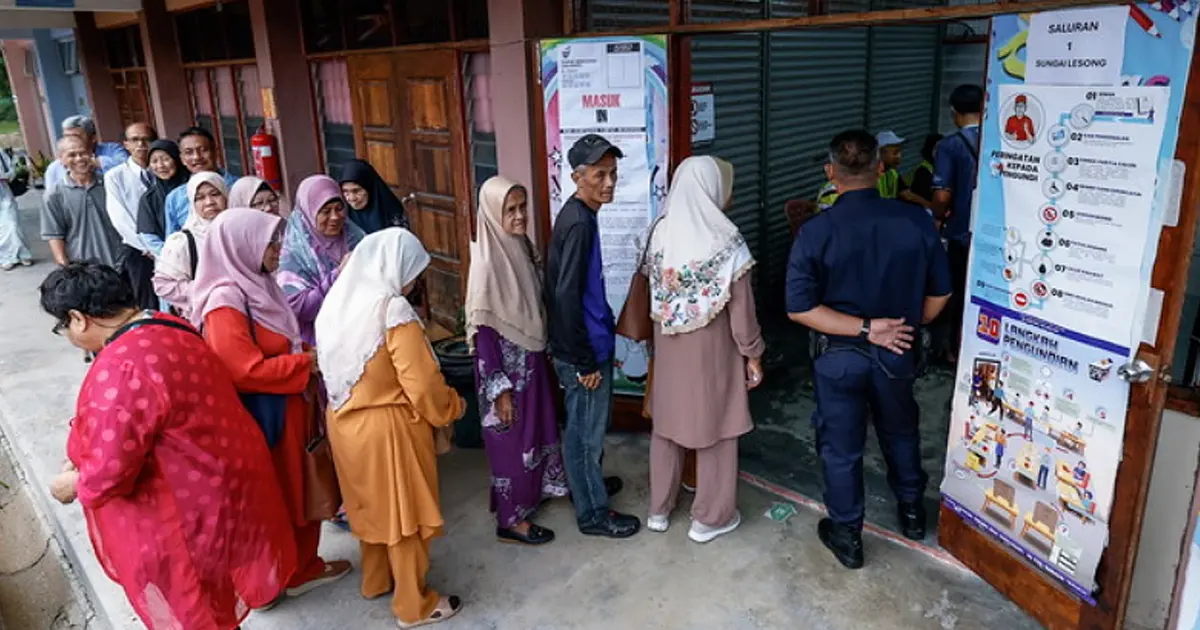
The persistent discourse surrounding the 3R issues—a contentious social and political framework that has dominated Malaysian public discourse—risks creating a state of psychological exhaustion among Malay voters, according to Awang Azman Pawi, a political analyst from Universiti Malaya. His assessment reflects growing concern within academic circles that the intensity and repetition of these debates may inadvertently alienate the very constituency they are meant to engage.
Awang Azman's warning arrives at a critical juncture in Malaysian politics, where competing narratives about identity, religion, and rights have consumed considerable media attention and political messaging. However, the scholar's intervention suggests a crucial recalibration may be necessary. Rather than viewing the 3R framework through a lens of perpetual contestation, political parties increasingly recognize that sustained engagement on these themes without demonstrating tangible solutions could produce diminishing electoral returns.
The concept of emotional fatigue in electoral politics is particularly significant for Malaysia's diverse demographic landscape. When voters—especially Malay Muslim communities who represent a substantial portion of the electorate—experience repetitive messaging on contentious cultural and religious matters, the psychological toll can manifest as disengagement or reduced turnout. This phenomenon is not unique to Malaysia; political scientists globally have documented how message saturation on divisive identity issues can paradoxically weaken rather than strengthen support bases.
Crucially, Awang Azman's analysis underscores a fundamental truth about electoral success in competitive democracies: parties that command durable political coalitions must ultimately demonstrate competence in governance and economic management. The comparative weight voters assign to abstract identity debates versus concrete improvements in daily living standards has shifted measurably in recent years. This shift reflects Malaysia's evolving socioeconomic challenges and the genuine hardship experienced by households across income brackets.
The cost of living crisis has emerged as the paramount concern for Malaysian households. Inflation pressures, stagnating real wages, increased utility bills, and climbing prices for essential goods have created material anxieties that supersede or reshape engagement with identity-based political discourse. Voters increasingly evaluate political parties through a pragmatic lens: can this party ameliorate my economic situation? Do they possess the policy competence and administrative machinery to deliver meaningful relief? These instrumental considerations often override ideological or cultural positioning.
For Malay voters specifically, the tension between cultural and religious preoccupations versus economic survival pressures has become particularly acute. While these constituencies have historically demonstrated strong engagement with 3R rhetoric, the deteriorating purchasing power of ordinary Malay households means that political parties cannot rely indefinitely on cultural messaging alone. The electorate is experiencing a form of cognitive bifurcation—they remain sensitive to identity issues while simultaneously demanding that their elected representatives address bread-and-butter concerns with urgency and transparency.
Awang Azman's observation carries important implications for political strategy in the medium term. Parties seeking to consolidate Malay voter support must develop messaging frameworks that acknowledge cultural and religious concerns without making them the exclusive focus of political communication. This requires sophisticated political leadership capable of articulating how economic policies serve broader community interests and values. It also demands that governance successes be framed and communicated effectively to demonstrate that party competence translates into household-level improvements.
The Malaysian political ecosystem has historically weaponized the 3R framework, with competing parties staking exclusive claims to representing Malay and Muslim interests. This competitive dynamic has ensured persistent salience of these issues across electoral cycles. However, Awang Azman's intervention suggests that the sustainability of this strategy may be reaching its limits. Continued emphasis on cultural grievances without corresponding policy deliverables risks validating voter skepticism about political sincerity and effectiveness.
Regionally, Malaysia's experience offers instructive lessons for Southeast Asian democracies navigating similar tensions between identity politics and economic governance. Thailand, Indonesia, and the Philippines have all grappled with comparable challenges: managing the electoral salience of religious and cultural nationalism while addressing pressing development deficits. Malaysia's trajectory will likely influence how political leaders in neighboring countries calibrate their strategic approaches to these competing imperatives.
The Universiti Malaya analyst's warning also invites reflection on the role of political communication in sustaining voter engagement. Contemporary Malaysian politics operates within increasingly polarized media ecosystems where messaging amplification can produce diminishing credibility returns, particularly when messaging appears disconnected from observable policy implementation. Voters develop sophisticated assessments of whether political rhetoric corresponds to administrative reality, and repeated gaps between promise and performance generate precisely the kind of emotional fatigue Awang Azman identifies.
Moving forward, political parties genuinely seeking to strengthen connections with Malay voter communities must undertake strategic repositioning. This involves demonstrating demonstrable commitment to economic rehabilitation, transparent governance, and institutional competence. Such positioning does not require abandoning cultural or religious concerns; rather, it demands integration of these concerns within broader developmental and welfare frameworks that address the material conditions shaping voter behavior.
Ultimately, Awang Azman's analysis reflects a maturing understanding within Malaysian political studies: electoral success depends less on rhetorical intensity regarding identity issues and more on the capacity to deliver substantive improvements in voter welfare and quality of life. Parties that recognize this fundamental reality and adapt their strategic frameworks accordingly are likely to sustain competitive advantage in future electoral contests.


%22%2F%3E%3C%2Fpattern%3E%3C%2Fdefs%3E%3Crect%20width%3D%22100%25%22%20height%3D%22100%25%22%20fill%3D%22url(%23ph4977zg)%22%2F%3E%3Crect%20width%3D%22100%25%22%20height%3D%22100%25%22%20fill%3D%22url(%23ph4977zp)%22%2F%3E%3Ctext%20x%3D%2250%25%22%20y%3D%2250%25%22%20text-anchor%3D%22middle%22%20dominant-baseline%3D%22central%22%20fill%3D%22rgba(255%2C255%2C255%2C0.95)%22%20font-family%3D%22Georgia%2C%20'Times%20New%20Roman'%2C%20serif%22%20font-weight%3D%22700%22%20font-size%3D%22194%22%20letter-spacing%3D%22-0.02em%22%3EBernama%3C%2Ftext%3E%3C%2Fsvg%3E)