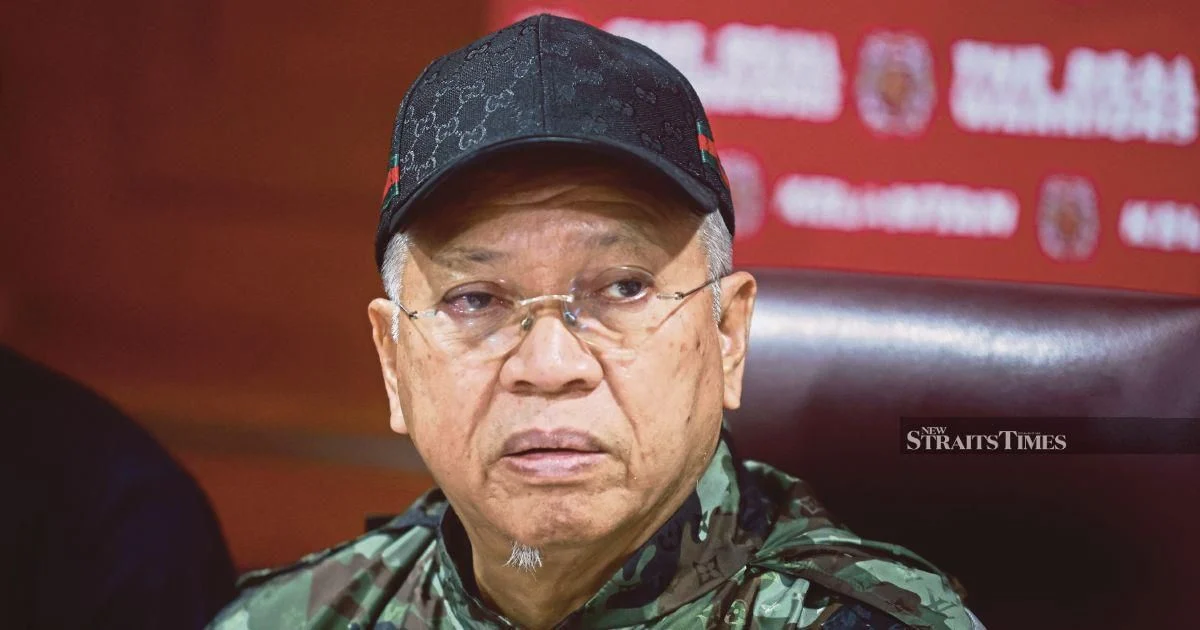
Tan Sri Annuar Musa has acknowledged that his personal mediation efforts to heal deepening divisions within Perikatan Nasional have ultimately fallen short of their objectives. Speaking in Kota Baru today, the senior coalition figure disclosed that despite undertaking multiple rounds of negotiations, he has been unable to broker a lasting settlement between PAS and the competing factions vying for control within Bersatu, Malaysia's second-largest coalition partner.
The admission represents a significant setback for a coalition that has increasingly struggled to present a unified front in recent months. Perikatan Nasional has become an increasingly fractious alliance, with ideological and organisational tensions threatening its coherence at a critical juncture in Malaysian politics. The inability of senior figures like Annuar Musa to resolve these disputes suggests that the schisms run deeper than personality conflicts or procedural disagreements, touching on fundamental questions about the coalition's direction and identity.
Annuar Musa's intervention came as Bersatu, the coalition's backbone and the party of Prime Minister Anwar Ibrahim, faced mounting internal pressure from competing leadership camps. The party has been riven by disputes over strategic positioning, resource allocation, and the influence wielded by various senior figures. PAS, the Islamist party that serves as Perikatan's ideological anchor, has grown frustrated with what it perceives as Bersatu's internal dysfunction and its impact on the broader coalition's effectiveness.
The escalation of tensions within Perikatan Nasional carries significant implications for Malaysia's political stability. As the dominant opposition force, the coalition's fragmentation weakens its ability to provide coherent legislative scrutiny or develop consistent policy alternatives. For voters seeking a credible opposition voice, the coalition's internal chaos raises questions about governance capability and organisational discipline. The situation also affects regional politics, as Perikatan's weakness potentially emboldens the ruling alliance while complicating efforts to build alternative political configurations.
Annuar Musa's failed mediation efforts underscore the limitations of elite-level diplomacy in resolving structural party divisions. Despite his considerable experience and stature within Malaysian political circles, his inability to broker consensus suggests that the relevant factions within Bersatu have become entrenched in their positions. This indicates that informal negotiation channels, which traditionally served as mechanisms for conflict resolution in Malaysian politics, may no longer prove adequate for bridging the coalition's emerging fault lines.
The PAS-Bersatu relationship has grown increasingly complicated by competing interests and divergent strategic preferences. While both parties oppose the current government, their visions for what should replace it differ fundamentally. PAS envisions a more explicitly Islamist political framework, while Bersatu leaders have pursued a more centrist positioning designed to attract urban, secular voters. These competing strategic orientations create natural friction points that transcend mere organisational disagreements or personality conflicts between individual leaders.
Bersatu's internal factions reflect deeper generational and ideological divides within the party structure. Younger figures within the party push for modernisation and reform, while veteran leaders resist changes they perceive as diluting the party's founding principles or their own influence. These disputes have spilled into public view repeatedly, with competing camps issuing contradictory statements and pursuing independent courses of action that undermine coalition coherence. The failure to resolve these disputes through closed-door negotiations suggests that the competing factions may be preparing to pursue more confrontational strategies.
The timing of Annuar Musa's acknowledgment proves significant. Malaysian politics has entered an increasingly fluid phase, with multiple power centres vying for influence and various coalitions recalibrating their positions ahead of anticipated electoral contests. In this environment, a demonstrably dysfunctional opposition coalition serves few strategic interests. For Perikatan Nasional to maintain relevance, it must resolve its internal disputes and present voters with a coherent alternative vision. Annuar Musa's admission that he has failed to achieve this reconciliation therefore signals a critical challenge facing the coalition's future viability.
The coalition's inability to repair internal divisions through mediation raises the prospect of more severe ruptures. History suggests that when elite diplomacy fails to resolve party conflicts in Malaysian politics, the outcome often involves formal split-offs or the emergence of splinter factions. Such developments would further complicate the political landscape, potentially triggering realignments that would reshape Malaysia's electoral mathematics heading toward the next general election. Other coalition leaders will likely intensify their own reconciliation efforts in response to Annuar Musa's revelations, though his failure suggests such attempts face substantial obstacles.
For Malaysian voters and observers of regional politics, Annuar Musa's acknowledgment represents a defining moment in the evolution of Perikatan Nasional. The coalition entered recent years as a potentially transformative political force, capable of fundamentally reshaping Malaysia's political landscape. However, the revelation that even senior party figures cannot mediate basic internal disagreements raises serious questions about the coalition's capacity to function as a coherent governing alternative. As Malaysia navigates its political future, the continued dysfunction within Perikatan Nasional will likely have outsized effects on broader governance, policy-making, and electoral outcomes.