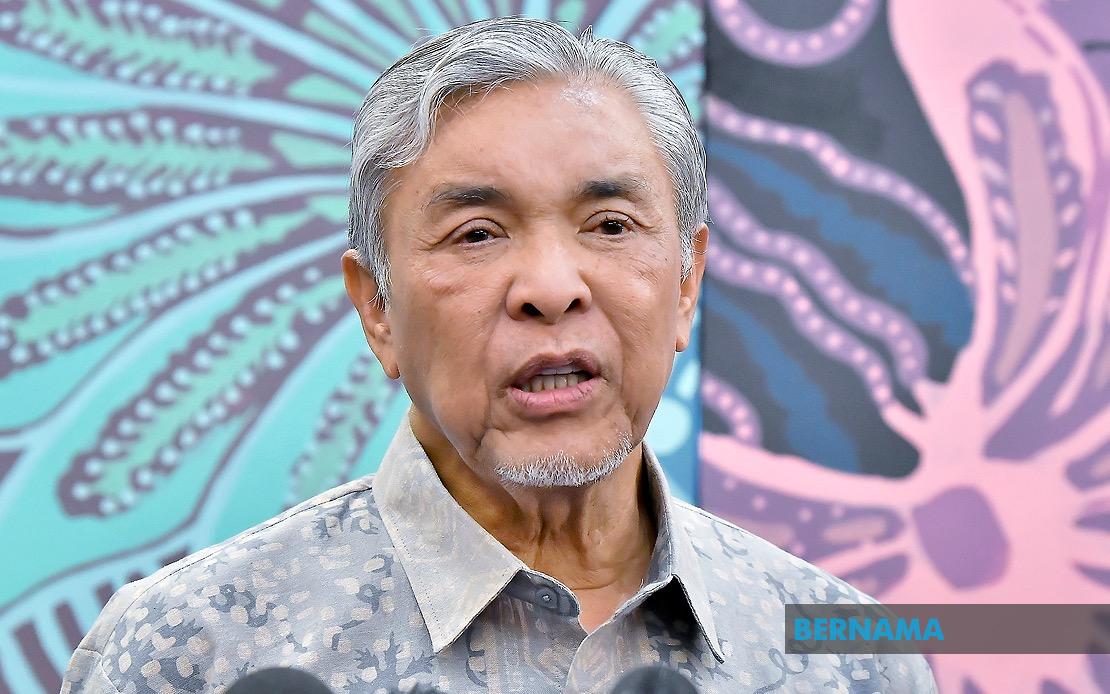
Deputy Prime Minister Datuk Seri Dr Ahmad Zahid Hamidi moved to address widespread public apprehension about the South East Johor Development Authority's proposed expansion, emphasising that the initiative centres on fostering coordinated development rather than acquiring ownership of land across the affected regions. Speaking at an awards ceremony in Kota Tinggi, Zahid, who doubles as Rural and Regional Development Minister, sought to counter misconceptions that have circulated regarding KEJORA's intentions in its push to extend its operational footprint across south-eastern Johor.
The clarification comes as KEJORA seeks to build momentum for its expansion proposal, which would allow the authority greater scope to guide and harmonise development initiatives across a wider geographic area. Zahid emphasised that the agency's track record of delivering results has justified confidence in its capacity to manage larger responsibilities. With a success rate of 98.3 per cent across its implemented projects, KEJORA has positioned itself as a competent coordinator of regional development, particularly as Johor intensifies efforts to unlock the economic potential of its south-eastern zones, including the rapidly transforming Pengerang district.
Pengerang has emerged as a focal point of growth in recent years, propelled by substantial investments in petrochemical complexes, manufacturing hubs, and tourism infrastructure. The district's trajectory reflects broader efforts within Johor to diversify its economic base beyond traditional sectors and position itself as a modern industrial and tourism destination. Within this context, KEJORA's expanded mandate would theoretically enable more seamless coordination of the multitude of development projects, investor initiatives, and infrastructure upgrades converging on the region.
Zahid highlighted the backing of public sentiment for the expansion, noting that a study commissioned by KEJORA had gathered feedback from residents across the proposed expansion area. The results indicated robust support, with 96 per cent of respondents favouring the authority's wider involvement in coordinating development. Such public endorsement strengthens the case for the proposal and suggests that communities within the affected districts perceive potential benefits in having a dedicated agency manage development planning and execution.
Yet the Deputy Prime Minister underscored that formal approval remains conditional on royal assent. Both His Majesty Sultan Ibrahim, the King of Malaysia, and Tunku Mahkota Ismail, the Regent of Johor, must grant consent before the expansion can proceed. This constitutional requirement reflects Malaysia's federal structure and the special constitutional position of the Johor sultanate, ensuring that state-level interests receive appropriate recognition in decisions affecting state development matters.
The Rural and Regional Development Ministry has signalled strong commitment to KEJORA's operations through substantial financial allocation. Approximately RM138 million has been earmarked for the authority's development projects within its operational region. To date, KEJORA has rolled out 107 programmes, with a pipeline of roughly 350 additional smaller-scale projects planned under the existing budget envelope. This financial commitment demonstrates the federal government's confidence in the authority as a vehicle for delivering tangible improvements in infrastructure, services, and economic opportunities across south-eastern Johor.
Minister in the Prime Minister's Department (Law and Institutional Reform) Datuk Seri Azalina Othman Said, who represents Pengerang in Parliament, has advanced a complementary vision for the district. She has proposed elevating Pengerang from its current municipal status to that of a full district, a move that would accord it greater administrative autonomy and reflect its growing demographic and economic significance. Alongside this administrative upgrade, Azalina has championed the construction of a modern hospital facility to serve Pengerang's expanding population, which has strained existing healthcare infrastructure. Zahid expressed public support for both proposals, signalling alignment within government on the need to strengthen institutional capacity and public services in this strategically important region.
The push to expand KEJORA's scope and simultaneously upgrade Pengerang's administrative status reflects a broader Malaysian approach to managing rapid regional development: creating dedicated agencies with clear mandates and providing them with adequate resources and institutional frameworks to coordinate multifaceted growth. For Johor, which has positioned itself as a premier investment destination within Southeast Asia, such moves are intended to reduce bureaucratic friction and enhance the state's competitive appeal to domestic and foreign investors.
The expansion proposal also carries implications for how Malaysia manages coordination between federal and state authorities in development matters. KEJORA itself operates under federal oversight while executing state-level development initiatives, and any expansion would require careful calibration of this arrangement. The emphasis on coordination rather than land acquisition suggests efforts to position KEJORA as a facilitator working alongside existing state institutions rather than a replacement for them, though the precise operational dynamics would emerge once the proposal receives formal approval.
For Malaysian readers, particularly those in Johor and the broader Southeast Asian region, the KEJORA expansion represents a test case for how Malaysia's development authorities adapt to manage increasingly complex regional economies characterised by overlapping investments, supply chains, and stakeholder interests. As globalisation and technological change accelerate, regions like Pengerang face pressure to upgrade infrastructure and coordination mechanisms to remain competitive. The success or otherwise of KEJORA's expanded role could influence how Malaysia structures development governance in other growth corridors, from the northern region to the east coast.
The public backing for the initiative, reflected in the 96 per cent support figure, suggests that communities recognise the potential benefits of coordinated development stewardship. However, the distinction between coordination and control remains important politically and practically. KEJORA's expansion will likely be observed closely by state governments and civil society organisations to ensure that coordination mechanisms enhance rather than constrain local agency in development decisions. The coming months will reveal whether the authority can translate public support and federal backing into concrete improvements in how south-eastern Johor manages its transformation into a modern economic hub.

