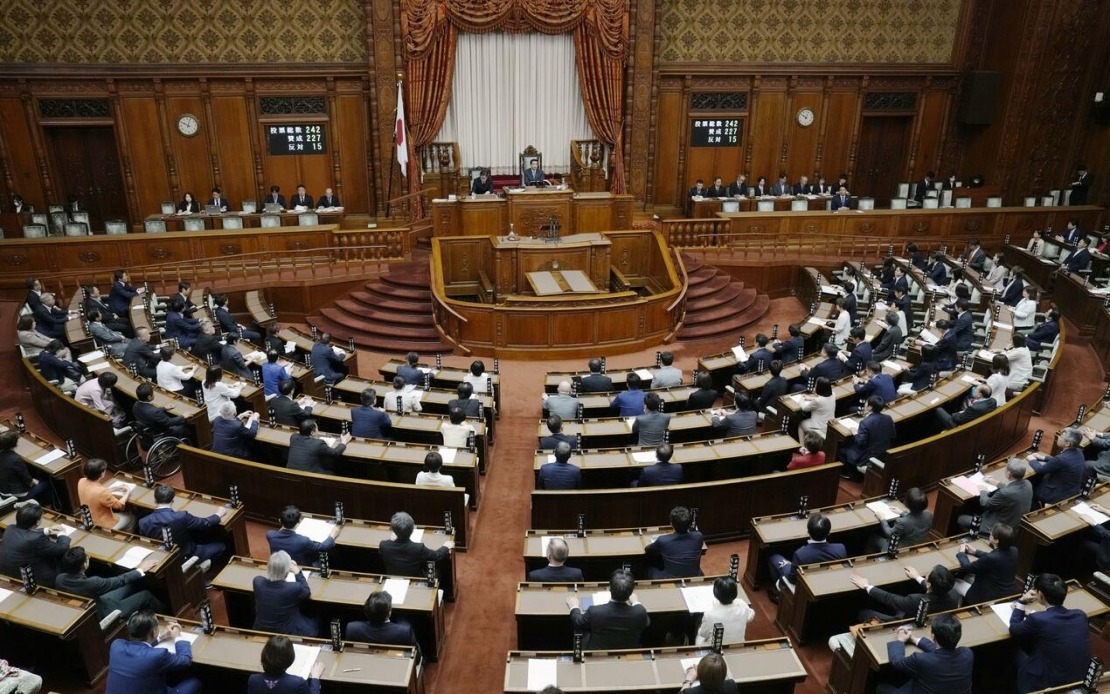
Japan has taken a significant step in modernising its defence architecture by securing parliamentary approval for sweeping reforms to its Air Self-Defence Force, fundamentally reshaping how the nation approaches security in an era where space has become critical to both civilian and military operations. The House of Councillors voted on Friday to enact legislation that will rename the service and inject considerable resources into space domain awareness, reflecting Tokyo's growing recognition that territorial security now extends far beyond traditional air and maritime boundaries into the orbital realm. The transformation underscores deepening anxiety across the Indo-Pacific about technological capabilities and the strategic competition unfolding among major powers.
Under the approved framework, Japan will establish a dedicated space operations group managed by a lieutenant general when the restructured force takes shape during the fiscal year ending March 2027. This new command structure represents a watershed moment for Japanese defence planning, as the country acknowledges that satellite systems underpinning everything from military communications to early warning networks have become vulnerability points requiring specialised protection and operational expertise. The space operations group will prioritise enhanced domain awareness—the ability to track and assess activity in orbital space—alongside expanded satellite surveillance capabilities that will sharpen Japan's intelligence gathering across vast oceanic distances where traditional radar and visual reconnaissance prove inadequate.
Defence Minister Shinjiro Koizumi articulated the rationale with striking clarity, noting that modern civilian life has become inseparable from space-based infrastructure. Navigation systems guiding civilian vehicles, mapping functions embedded in smartphones, and weather forecasting systems that inform agricultural and disaster response decisions all depend on reliable satellite access. This observation carries particular weight in Japan, where earthquakes and typhoons demand sophisticated real-time monitoring. By integrating space operations into military planning, Tokyo is essentially formalising what has long been implicit: that national resilience and defence readiness in the 21st century demand unified command over the systems that keep society functioning during crises.
The legislative package extends beyond space concerns to address persistent recruitment and retention challenges plaguing the Self-Defence Forces. Post-retirement benefits for military personnel have been enhanced, a necessary incentive given that mandatory retirement ages—which vary by rank—typically arrive earlier than equivalent civil service positions. Japan's ageing population and declining birth rate have made attracting quality recruits increasingly difficult, forcing defence planners to compete for talent with private sector employers offering superior long-term financial security. This benefit adjustment represents acknowledgment that sustaining adequate force strength requires competitive compensation structures.
Parliament has also authorised the appointment of a second senior vice defence minister, a staffing elevation designed to distribute workload more effectively during military contingencies and major natural disasters. The primary vice minister position has historically borne substantial responsibility during crises, particularly given Japan's vulnerability to seismic events and severe weather. Adding a second post creates redundancy and allows deeper engagement with security partners including the United States, where high-level defence exchanges require sustained diplomatic and bureaucratic attention. This administrative restructuring, while less visible than space force announcements, reflects the intensive coordination demands of contemporary defence relationships.
A particularly significant element involves the Ground Self-Defence Force's 15th Brigade based in Naha, Okinawa Prefecture. The legislation elevates this unit to full divisional status, a substantial organisational upgrade that carries geopolitical meaning well beyond administrative reclassification. Okinawa's southwestern islands represent Japan's frontline in confronting China's expanding maritime presence and military modernisation. By strengthening this command structure, Tokyo signals determination to maintain effective deterrence along strategic chokepoints where overlapping maritime claims and strategic competition create friction. The upgrade provides the brigade with expanded operational authority and resources essential for coordinating responses to increased maritime activity in surrounding waters.
China's assertive maritime behaviour has animated Japanese defence planning for over a decade, but recent years have witnessed intensification. Chinese military exercises, expanded coastguard operations, and technological advancement have elevated threat perceptions, particularly regarding remote island chains that Japan administers but that China disputes or views with strategic interest. The elevation of the 15th Brigade reflects Japan's commitment to maintaining credible ground-based presence across these territories, ensuring that administrative control translates into practical military capacity. For Malaysia and other Southeast Asian nations navigating similar challenges from Chinese assertiveness, Japan's approach demonstrates how smaller powers must couple deterrent capabilities with operational readiness across dispersed geography.
The timing of these reforms arrives as Japan balances multiple strategic imperatives. Deepening alliance relations with the United States remain foundational, yet Japan increasingly recognises the need for autonomous capabilities and independent assessment of regional security dynamics. The space defence dimension particularly reflects this reality—satellite surveillance and space operations represent areas where Japan possesses genuine technological sophistication and where operational independence carries strategic value. Unlike air superiority or naval power projection, space capabilities offer Japan asymmetric advantages that can multiply the effectiveness of other military elements.
Implementation will unfold across several years, with the space operations structure materialising by March 2027 and the additional vice minister appointment anticipated within months. This graduated timeline reflects the complexity of reorganising an established service while maintaining operational continuity. Defence Minister Koizumi's statement that the government will "steadily build the institutional framework needed" suggests awareness that lasting military transformation requires careful institution-building rather than sudden upheaval. The Self-Defence Forces must absorb new responsibilities, develop appropriate doctrines and training regimens, and integrate space operations with existing air force capabilities in ways that enhance rather than fragment command coherence.
For regional observers, these Japanese reforms carry indirect implications. A more capable and space-aware Japan contributes to regional stability insofar as deterrence backed by credible capabilities reduces incentives for miscalculation. Simultaneously, Japan's institutional innovations and technological investments will influence how regional powers conceptualise 21st-century defence challenges. Malaysia, Singapore, and other maritime economies increasingly recognise that security extends into domains beyond surface visibility, and Japan's explicit integration of space operations into military command structures offers a template for how smaller nations might approach similar modernisation pressures within their respective contexts and resources.

