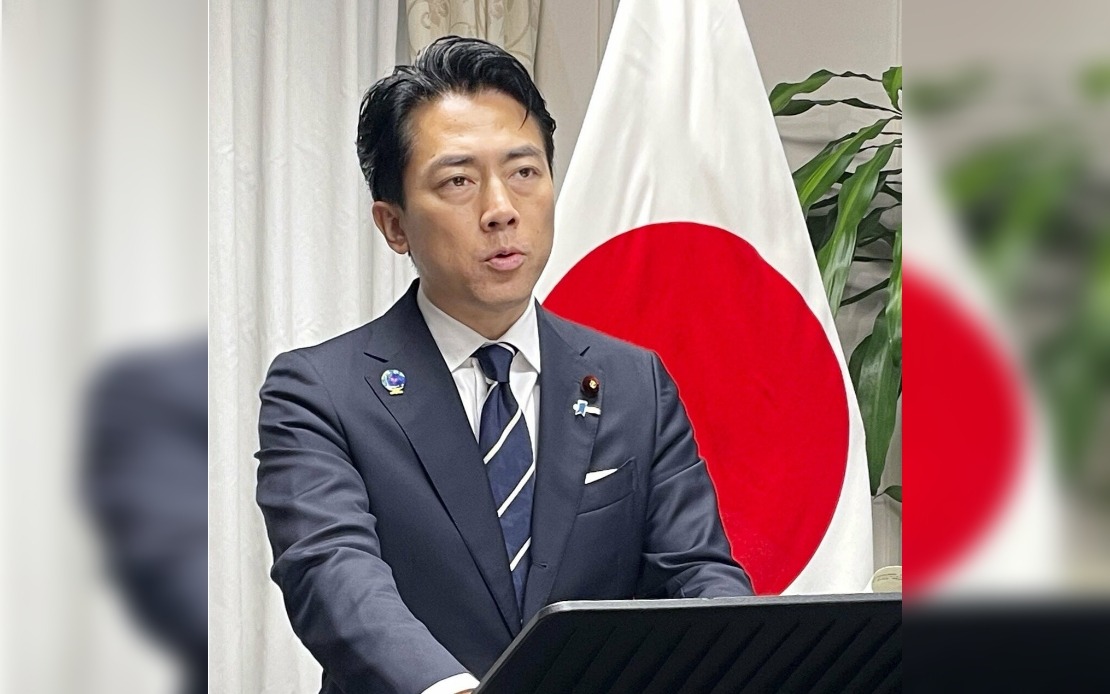
Japan's Defence Minister Shinjiro Koizumi has opened the door to a contentious policy discussion by urging the nation to debate its stance on nuclear weapons, a move that signals shifting thinking within Tokyo's security establishment. Speaking through an online programme released on Friday, Koizumi pointed to changing global circumstances, particularly the hardening security environment in the Indo-Pacific region and renewed European emphasis on nuclear deterrence, as reasons why Japan can no longer sidestep this traditionally taboo conversation.
The timing of Koizumi's remarks carries particular significance as Prime Minister Sanae Takaichi's government prepares to revise three foundational national security documents by year's end. These policy papers form the backbone of Japan's strategic outlook and will likely shape the nation's defence posture for the coming decade. By raising the nuclear question now, the Defence Minister is essentially signalling that no aspect of Japan's security architecture should be considered beyond scrutiny as this comprehensive review proceeds.
Koizumi specifically cited France and Finland as examples of countries reassessing their nuclear strategies in response to contemporary threats. Finland's parliament took a landmark step in June when it approved legislation permitting nuclear weapons to be transported into Finnish territory, reversing decades of non-aligned policy. French President Emmanuel Macron went further in March, announcing plans to expand France's nuclear warhead stockpile. These developments underscore how traditionally cautious European nations are now prioritising nuclear deterrence as a hedge against evolving security risks, particularly Russia's military assertiveness.
Japan's current position stands in stark contrast to these European movements. As the only nation to experience nuclear weapons use in warfare, Japan adopted and has maintained three fundamental principles: it does not produce nuclear weapons, does not possess them, and does not permit their presence on its soil. These principles have become woven into the national identity and political consensus over the past seven decades. Yet Koizumi's framing suggests that this inherited policy may require reconsideration given the substantially different strategic context Japan faces today compared to the post-war era when these principles were established.
The deterioration of Japan's security environment provides the backdrop for this emerging debate. North Korea's advancing missile and nuclear capabilities pose a direct threat to Japanese territory, while China's military modernisation and increasing assertiveness in the East China Sea create persistent regional tension. Russia's invasion of Ukraine demonstrated the inadequacy of international law and institutions in preventing major power conflicts. These developments have convinced segments of Japan's security elite that the nation's existing reliance on the American nuclear umbrella may require supplementation through either enhanced conventional capabilities or, more radically, indigenous nuclear weapons development.
Yet Koizumi's call for debate should not be mischaracterised as a call for immediate policy change. Rather, the Defence Minister appears to be advocating for the removal of psychological and political barriers that currently prevent serious discussion of nuclear options within Japanese society. He explicitly argued that Japan must move beyond a situation where certain security topics are considered beyond the pale of acceptable discourse. This framing positions the debate itself as necessary for rational policy-making, separate from the ultimate decision about whether Japan should acquire nuclear weapons.
The political sensitivity of this issue became apparent when a government security policy adviser suggested in December last year that Japan should develop nuclear weapons. That proposal immediately drew fierce criticism from opposition parties, neighbouring countries including South Korea, and civil society groups with memories of nuclear devastation. Even within the ruling Liberal Democratic Party, such proposals generate intense internal disagreement. Former Defence Minister Itsunori Onodera has also ventured into this terrain, arguing that Japan needs to engage seriously with questions about the future of its non-nuclear principles, though stopping short of endorsing nuclear acquisition.
For Malaysia and other Southeast Asian nations, Japan's evolving security discourse carries significant implications. A nuclear-armed Japan would reshape the regional strategic balance, potentially triggering arms races or reassurance-seeking behaviour among neighbours. It could complicate ASEAN's efforts to maintain the region as a zone of relative strategic stability. Additionally, such a move would test the resilience of international non-proliferation norms at a moment when these principles are already under strain from several directions.
The broader context involves America's evolving commitment to extended nuclear deterrence in Asia. As US-China strategic competition intensifies and some American policymakers question the sustainability of forward-deployed defence commitments, allied nations including Japan increasingly worry about the credibility of American security guarantees. Some Japanese strategists argue that visible Japanese nuclear capability might actually strengthen deterrence by removing any ambiguity about Japanese resolve to defend itself. This logic, though controversial, reflects genuine strategic anxieties rather than militaristic adventurism.
Koizumi's intervention also reflects generational change within Japan's leadership. Younger defence officials and politicians who did not directly experience Japan's post-war pacifism movement may view security policy through a different lens. They see nuclear weapons as legitimate policy tools rather than inherently illegitimate relics of twentieth-century warfare. This generational shift, combined with structural security pressures, creates conditions where sustained debate on nuclear options becomes plausible in a way unthinkable a decade ago.
The outcome of this emerging debate remains uncertain. Japanese public opinion continues to strongly oppose nuclear weapons, shaped by memories of Hiroshima and Nagasaki and decades of peace advocacy. Japan's pacifist constitution, though militarily obsolete in several respects, still embodies strong anti-nuclear sentiment. Yet public opinion can shift when security circumstances change, and if threats to Japanese territory materially intensify, support for nuclear deterrence might grow beyond current marginal levels.
As Tokyo proceeds with revising its national security documents, the nuclear question will likely feature prominently in internal government discussions even if overt policy advocacy remains circumspect. The international community, particularly Southeast Asian nations with stakes in regional stability, should monitor this Japanese security debate carefully. The outcome will substantially shape Asia's strategic architecture for decades ahead.

