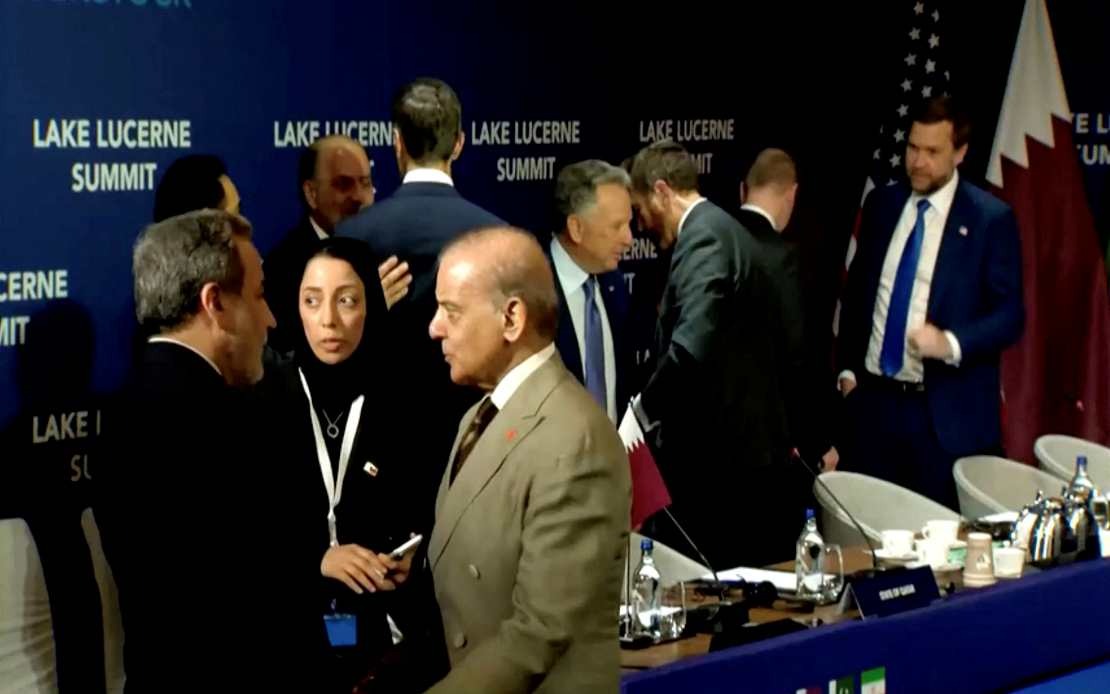
Negotiators from Iran and the United States have reached agreement on a draft provision that would temporarily ease sanctions affecting Iranian oil exports, according to statements from Tehran's delegation following technical discussions held at the Burgenstock resort in Switzerland. The development signals tangible progress in implementing a framework agreement signed earlier this month by Iranian President Masoud Pezeshkian and US President Donald Trump, though significant hurdles remain before the arrangement becomes fully operational.
Hossein Ghorbanzadeh, a member of Iran's negotiating team, disclosed that the technical talks in Switzerland had successfully produced language addressing the mechanics of temporary sanctions relief on crude oil shipments. The completion of this specific draft represents one of several moving parts within a broader 14-point understanding announced on June 14 through Pakistani mediation, which seeks to address longstanding hostilities between the two nations and their respective regional allies.
The formal Islamabad Memorandum of Understanding, which provides the overarching framework for these negotiations, officially took effect on June 18 following electronic signature by both presidents. The agreement establishes multiple interconnected objectives that extend well beyond oil trade considerations, touching upon security arrangements across the Middle East and broader geopolitical restructuring that would reshape regional power dynamics.
According to Iranian officials, the temporary nature of any sanctions relief on oil exports carries an explicit condition that has significant implications for the region's stability. Ghorbanzadeh emphasised that the remaining provisions within the memorandum "will not enter into force" unless negotiating parties first achieve a final settlement intended to terminate the war in Lebanon. This conditionality demonstrates that oil sanctions relief serves as a component within a more complex arrangement rather than a standalone concession, linking energy economics directly to armed conflict resolution.
Beyond the oil sanctions question, the Switzerland discussions encompassed separate technical working meetings that addressed numerous implementation challenges. These parallel sessions highlighted the administrative complexity involved in translating high-level political agreements into operational mechanisms that can actually be executed across multiple jurisdictions and enforcement systems. The expansion of talks beyond main negotiating sessions to encompass dedicated technical forums suggests both parties recognise the substantial logistical requirements necessary to reverse decades of sanctions architecture.
Another significant element discussed by Iranian delegates involved the treatment of frozen Iranian assets held in foreign accounts. During meetings with the Qatari delegation, Iran's negotiators raised the question of releasing these sequestered funds, which have accumulated over years of international financial restrictions. Qatar's participation in these discussions underscores the role of Gulf mediation in facilitating communication and problem-solving between Washington and Tehran, reflecting broader regional interest in de-escalation.
The broader memorandum itself addresses multiple layers of regional conflict, encompassing not merely oil trade but fundamental questions about military presence and strategic access in vital maritime areas. Provisions explicitly include cessation of hostilities across all active conflict zones, reopening of the Strait of Hormuz—a waterway through which approximately one-third of global seaborne traded oil passes—and lifting of the US naval blockade maintained against Iran. For Malaysia and other Southeast Asian energy importers, the implications of normalising passage through this critical chokepoint carry significant weight, as disruptions there directly affect global energy prices and supply reliability.
The framework also fundamentally rests upon achieving comprehensive peace arrangements rather than incremental bilateral concessions. This approach means that individual achievements like the oil sanctions draft cannot be isolated from the broader negotiating structure. The emphasis on a Lebanese settlement as a prerequisite for implementing other provisions indicates that regional conflicts remain inextricably linked within the negotiating calculus, a reality that complicates any simple bilateral solution.
For observers in Southeast Asia, the significance of these developments extends beyond immediate energy market considerations. Any sustainable reduction in US-Iran tensions could reshape investment flows, insurance arrangements, and shipping patterns throughout maritime Asia, given the region's substantial dependence on stable Gulf energy supplies and open sea lanes. The precedent of using conditional phasing to implement complex political agreements may also hold lessons for regional dispute resolution frameworks throughout Asia.
The involvement of Pakistan as the formal mediator, reflected in the agreement's designation as the Islamabad Memorandum, highlights how South Asian diplomatic infrastructure has become integral to Middle Eastern peace processes. This involvement creates potential spillover effects for broader regional cooperation architectures and demonstrates how traditional bilateral conflicts increasingly require multilateral frameworks to achieve durable resolution.
Pending finalisation of the Lebanon settlement and other outstanding provisions, the temporary oil sanctions relief arrangement remains in draft form rather than implemented policy. This circumstance underscores that despite visible progress in technical discussions, fundamental political obstacles to comprehensive peace remain. The negotiations appear to have established clear pathways for addressing technical implementation while diplomatic discussions on core political issues continue separately.
The timeframe for achieving the Lebanese settlement and triggering full implementation of the memorandum remains publicly unspecified, creating uncertainty about when these sanctions adjustments might actually take effect. This ambiguity reflects the unpredictable nature of regional peace processes and the countless variables that could either accelerate or derail progress toward the arrangement's complete realisation.
%22%2F%3E%3C%2Fpattern%3E%3C%2Fdefs%3E%3Crect%20width%3D%22100%25%22%20height%3D%22100%25%22%20fill%3D%22url(%23ph13aufg)%22%2F%3E%3Crect%20width%3D%22100%25%22%20height%3D%22100%25%22%20fill%3D%22url(%23ph13aufp)%22%2F%3E%3Ctext%20x%3D%2250%25%22%20y%3D%2250%25%22%20text-anchor%3D%22middle%22%20dominant-baseline%3D%22central%22%20fill%3D%22rgba(255%2C255%2C255%2C0.95)%22%20font-family%3D%22Georgia%2C%20'Times%20New%20Roman'%2C%20serif%22%20font-weight%3D%22700%22%20font-size%3D%22170%22%20letter-spacing%3D%22-0.02em%22%3ESelangor%3C%2Ftext%3E%3C%2Fsvg%3E)