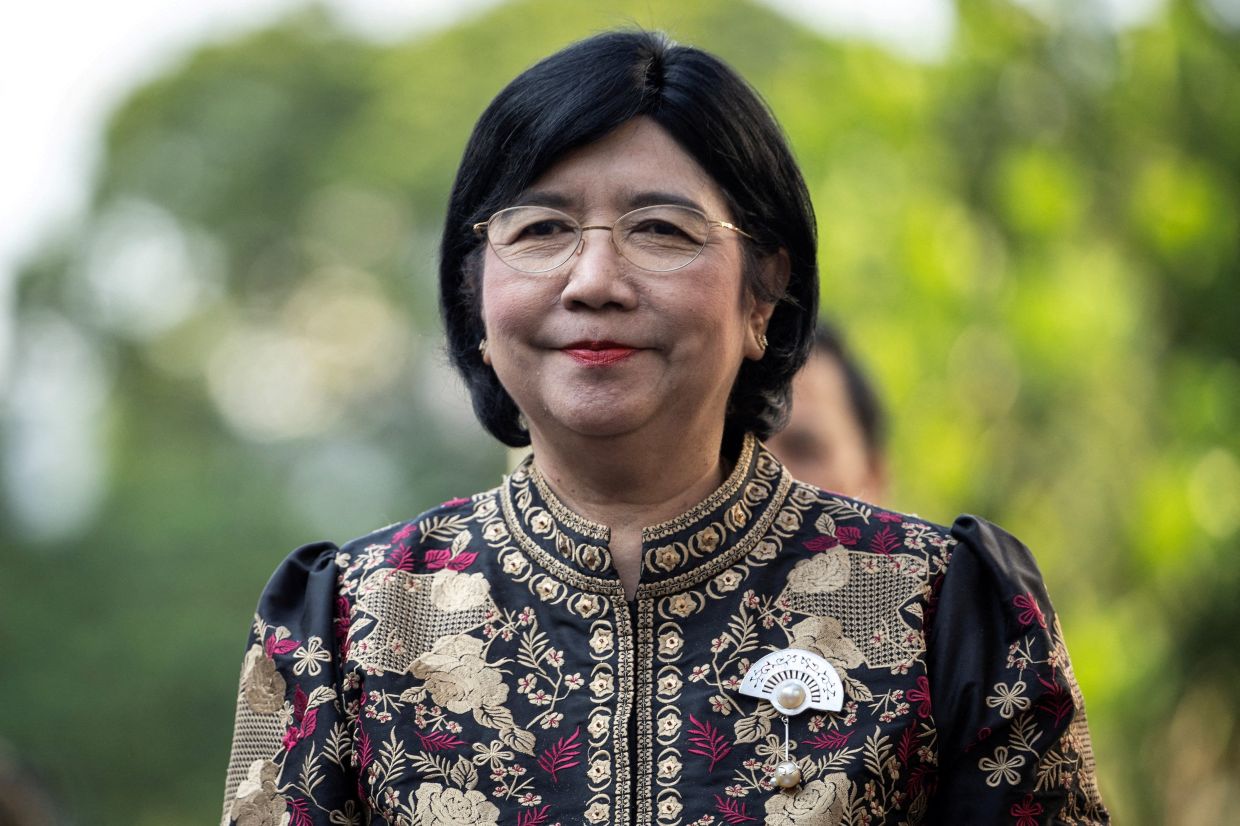
President Prabowo Subianto has formally nominated Destry Damayanti as the single candidate to take over as governor of Bank Indonesia, the country's central bank, according to an announcement from the presidential office on Monday. The move comes as Indonesia seeks to restore investor confidence following the unexpected departure of the previous governor, Perry Warjiyo, who stepped down late last month citing personal reasons. Damayanti, who currently holds the position of senior deputy governor at the institution, has been serving in an acting capacity since Warjiyo's exit, positioning her as the frontrunner for the permanent role.
The nomination of Damayanti has already triggered a positive market response, with the Indonesian rupiah strengthening considerably following the announcement. The currency climbed to its highest point against the United States dollar since mid-June, reflecting what appears to be investor relief at the clarity provided by the presidency's decisive nomination strategy. This market reaction underscores how closely the investment community has been watching developments at the central bank, given the critical role it plays in managing monetary policy and currency stability in Southeast Asia's largest economy.
Damayanti brings substantial experience to the role, having served as Bank Indonesia's second-in-command and senior deputy governor since 2019. Her appointment would represent a continuation of institutional knowledge and continuity within the central bank's leadership structure during what has been a turbulent period for the organisation. Her familiarity with the bank's operations, policies, and strategic priorities positions her to step seamlessly into the top position without requiring an extensive learning curve, a factor that likely reassured financial markets of a smooth transition.
The parliamentary process for confirming the nomination is expected to move relatively swiftly, with lawmakers having up to one month to either approve or reject Damayanti's candidacy. Given that Prabowo's political coalition commands a comfortable majority in parliament, the likelihood of rejection appears minimal. Indeed, parliament has not rejected a sitting president's nominee for the central bank governor position since 2008, suggesting strong institutional deference to executive judgment on such appointments. This historical precedent implies that Damayanti's confirmation is virtually assured, barring any unexpected developments.
Warjiyo's resignation had sparked fresh concerns among investors about economic management and policy continuity in Indonesia. The timing of his departure coincided with a broader loss of confidence in the country's economic trajectory among international market participants. Several factors have contributed to this erosion of investor sentiment, including worries about government spending habits, questions regarding the independence and operational autonomy of the central bank, concerns over transparency in equity market operations, and anxieties stemming from geopolitical tensions in the Middle East that could affect global economic conditions and commodity prices.
The central bank has found itself in an increasingly complex position as policymakers seek to balance multiple competing objectives. On one hand, there are political pressures to support President Prabowo's ambitious economic programme and to accelerate growth from its current level of around five percent to an aspired eight percent. On the other hand, Bank Indonesia must maintain focus on its traditional mandates of controlling inflation and stabilising the rupiah in foreign exchange markets—responsibilities that can sometimes run counter to aggressive growth targets.
Under Warjiyo's tenure, the central bank pursued several measures aimed at defending the rupiah and attracting capital inflows. These included raising benchmark interest rates by one hundred basis points throughout the year, introducing hedging incentives specifically designed to encourage rupiah holdings, and deploying high-yielding short-term securities issued by the bank to entice foreign investors to channel funds into Indonesia. These interventions reflected the delicate balancing act required when managing a currency under pressure while simultaneously trying to support economic activity.
The question of central bank independence has become increasingly salient for international observers assessing Indonesia's institutional framework. Investors are naturally concerned about whether the monetary authority will have sufficient autonomy to make decisions based purely on technical economic considerations or whether it might be pressured to subordinate these judgments to broader political objectives. Damayanti's appointment will be closely watched to gauge whether she signals a commitment to preserving the bank's institutional integrity or whether she might be seen as more accommodating to government priorities.
For Malaysia and other regional economies, the developments at Bank Indonesia carry broader implications. Any deterioration in Indonesia's economic management or currency stability can have spillover effects throughout Southeast Asia, given Indonesia's size and importance to regional trade and financial flows. Malaysian investors with exposure to Indonesian assets or businesses will be particularly attentive to how the new leadership navigates the complex terrain ahead. Furthermore, the regional financial system benefits from having credible and independent central banks across member economies, so the question of Bank Indonesia's operational autonomy matters beyond Indonesia's borders.
The appointment also signals how the Prabowo administration intends to manage key institutional positions and the extent to which it will respect professional expertise versus political considerations. Choosing an experienced insider like Damayanti suggests a preference for continuity and technical competence, though observers will assess whether this represents genuine deference to institutional norms or merely a pragmatic choice given her interim status. The coming months will reveal whether the new governor can successfully execute her mandate while maintaining the delicate equilibrium between supporting growth ambitions and fulfilling core monetary policy objectives that have eluded her predecessors.

