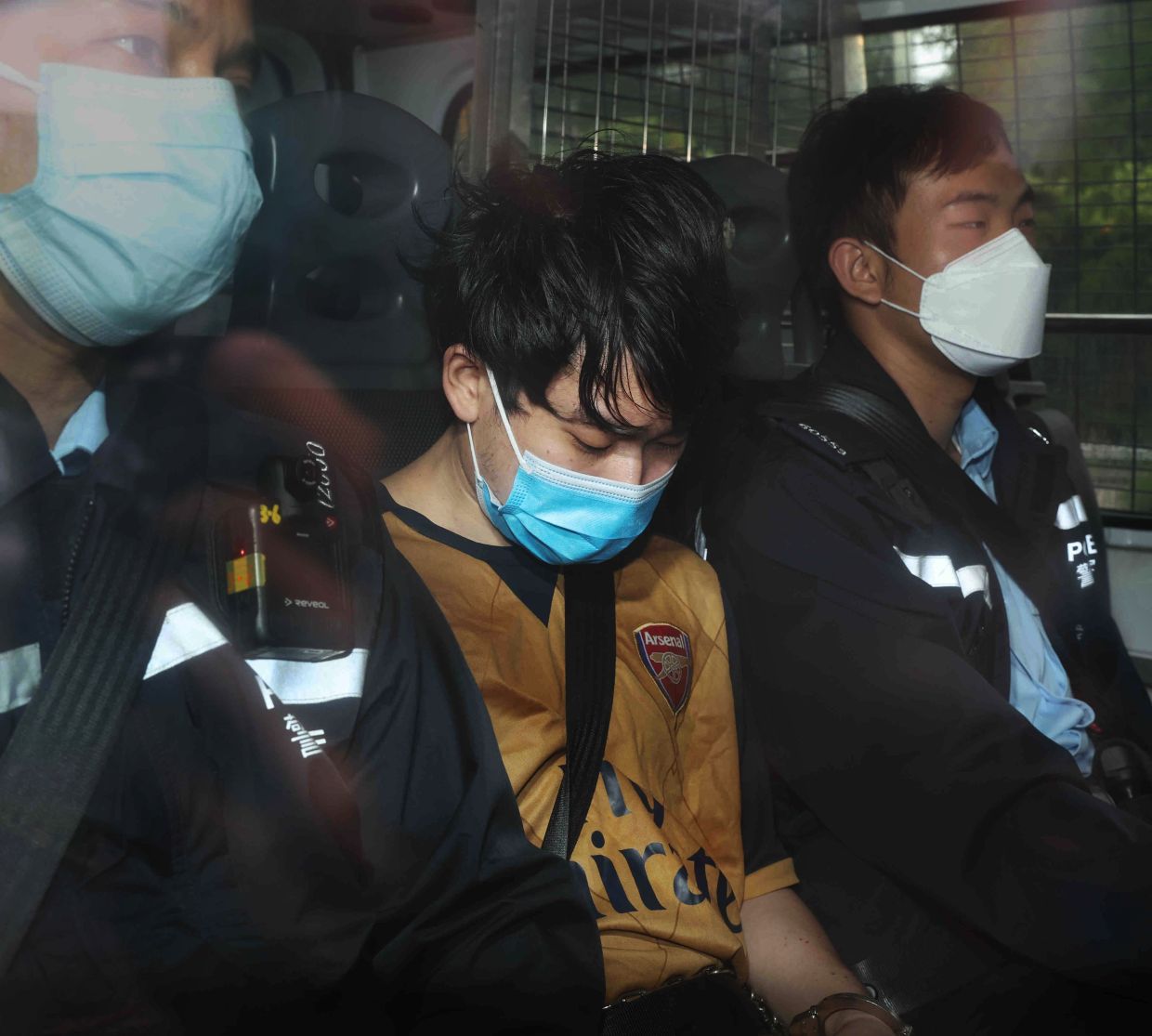
Ng Ka-sing, a 29-year-old jobless resident of Hong Kong, faces murder charges in connection with the death of his 30-year-old partner Yip Tsz-ching, whose body was discovered wrapped in plastic and transported on a wheelboard through the streets of Hung Shui Kiu four years ago. The case has drawn attention for both its brutality and the defendant's unconventional explanation for what he claims was an accidental killing, raising questions about domestic violence, culpability, and the limits of reasonable doubt in Hong Kong's legal system.
The alleged killing occurred between 28 and 29 April 2022 at the couple's 700 square foot flat in Galore Garden. According to Ng's account provided during police questioning, he repeatedly struck his girlfriend with a rod over several hours, beginning late on 27 April and continuing intermittently through the early morning of 28 April. His stated motivation was to keep her awake throughout the night, believing that sleep deprivation would facilitate weight loss. When he questioned whether to stop the assaults, his sworn sister, who lived in the shared accommodation, allegedly encouraged him to persist. Between 10pm on 27 April and 1.30am the next day, and again from 3am to 5.30am on 28 April, Ng maintained this pattern of intermittent violence.
The prosecution, represented by Senior Public Prosecutor Audrey Parwani, has characterised Ng's various explanations to police as inconsistent and fundamentally unreliable. Parwani explicitly told the seven-member jury during her opening statement that the prosecution does not accept that Ng has provided a complete or truthful account of events. This skepticism is rooted in the nature and extent of Yip's injuries, which included extensive corrosive burns covering 55 percent of her body surface. Ng has claimed that Yip applied drain cleaner to herself, while he splashed the liquid on the floor with the intention of stimulating her feet. He also suggested she caused additional injuries by striking herself against a wall seven to eight times after slipping on the wet floor.
The medical evidence presents a stark counterpoint to Ng's narrative of accidental harm. Government pathologist Dr Foo Ka-chung determined that Yip died from suffocation following head trauma and the severe chemical burns. Her body bore multiple bruises, abrasions, and lacerations consistent with blunt force trauma including punching and kicking. By the time her remains were discovered, Dr Foo estimated she had been dead for between 12 and 24 hours. The cause of death classification as suffocation is particularly significant, as it suggests an active intervention beyond the initial beating. Forensic evidence specialist Lo Man-hung documented that Yip's head was tightly wrapped in multiple layers of cling film and adhesive tape, and her body was secured to an overturned wooden chair with black rubbish bags before being placed in a rolled quilt.
The discovery of Yip's body occurred when early morning joggers spotted a human leg protruding from the rolled quilt on Ng's wheelboard around 6am on 29 April. Witness Lau Kwok-yan, who reported the scene to police, noted that Ng remained stationary on the street, displaying no apparent panic while awaiting police arrival. Street cleaner Wong Ah-sum testified that when he questioned Ng about the bundle, the accused matter-of-factly identified it as a corpse and stated his intention to transport it to a police station. Upon arrest at 6.36am, Ng provided a spontaneous admission: "This was my girlfriend. I hit her to death with a rod by mistake."
Ng initially offered to plead guilty to the lesser charge of manslaughter rather than murder, suggesting he was willing to acknowledge culpability for the death while contesting the element of intention required for a murder conviction. Prosecutors rejected this plea, forcing the case to full trial and obligating Ng to defend his account before a jury. This decision reflects the prosecution's confidence in their evidence and their assessment that Ng's explanations, even if partially accepted, do not meet the threshold for manslaughter rather than the more serious crime.
The trial before Mrs Justice Judianna Barnes and seven jurors is scheduled to last 18 days, indicating the complexity and volume of evidence involved. The case raises broader questions about domestic violence dynamics in Hong Kong, the credibility assessments juries must make when confronted with implausible explanations for violence, and how courts weigh admissions of fact that contradict broader narratives of innocence. The stated motivation of weight loss assistance is particularly problematic legally, as it suggests a pattern of deliberate, repetitive harm inflicted over multiple hours across separate time periods, each instance representing a conscious choice to continue rather than a momentary lapse of judgment.
For Malaysian observers, the case illustrates procedural similarities and differences in Commonwealth legal systems while highlighting the prevalence of domestic violence across Asian jurisdictions. The Post-mortem examination findings, witness testimony regarding Ng's calm demeanour during discovery, and the careful wrapping and transport of the body all suggest premeditation inconsistent with genuine accident. The jury will ultimately determine whether Ng's account of attempting to help his girlfriend lose weight through forced wakefulness and physical punishment represents a credible explanation or merely an implausible cover story for intentional killing.
%22%2F%3E%3C%2Fpattern%3E%3C%2Fdefs%3E%3Crect%20width%3D%22100%25%22%20height%3D%22100%25%22%20fill%3D%22url(%23ph40xibg)%22%2F%3E%3Crect%20width%3D%22100%25%22%20height%3D%22100%25%22%20fill%3D%22url(%23ph40xibp)%22%2F%3E%3Ctext%20x%3D%2250%25%22%20y%3D%2250%25%22%20text-anchor%3D%22middle%22%20dominant-baseline%3D%22central%22%20fill%3D%22rgba(255%2C255%2C255%2C0.95)%22%20font-family%3D%22Georgia%2C%20'Times%20New%20Roman'%2C%20serif%22%20font-weight%3D%22700%22%20font-size%3D%22272%22%20letter-spacing%3D%22-0.02em%22%3EMITRA%3C%2Ftext%3E%3C%2Fsvg%3E)