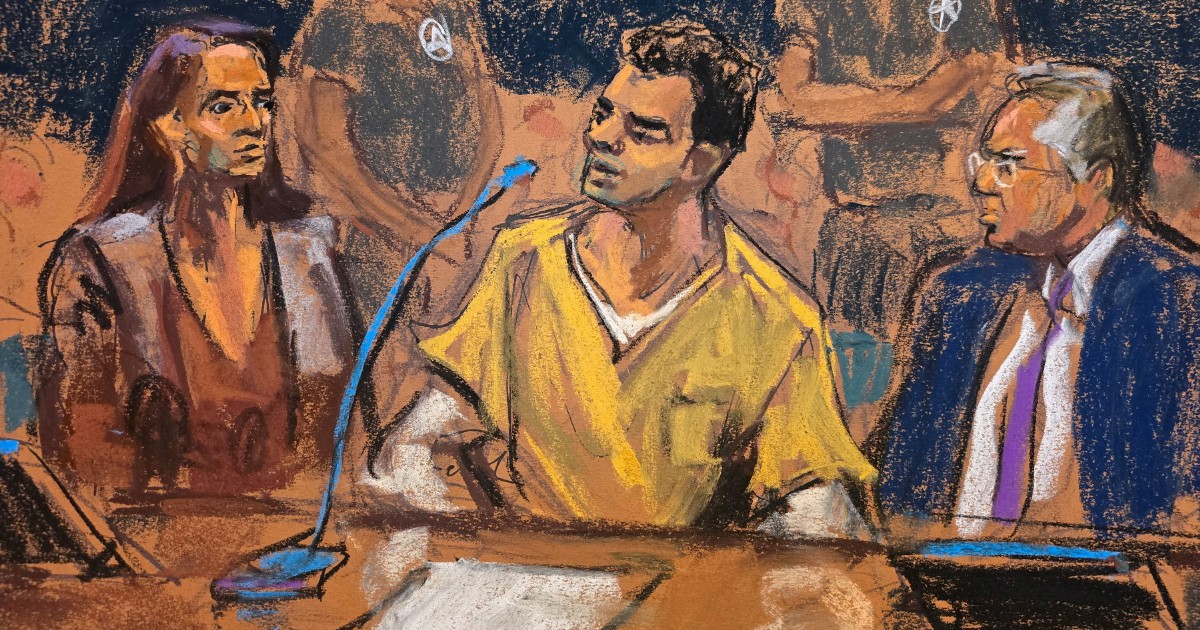
A US man facing trial for the fatal shooting of a prominent health insurance executive used his appearance in court to articulate a grievance that extends far beyond the crime itself, asserting that chronic pain from a back injury had driven him toward violence and that his actions were designed to draw attention to systemic failings in American healthcare provision. The accused described himself as an ordinary person pushed to extremes by personal suffering and institutional callousness, framing the homicide not as mere criminality but as a desperate attempt to spark national conversation about insurance industry practices.
The defendant's narrative reveals the dangerous intersection of chronic illness, social alienation, and deep mistrust of large institutions—a combination that raises uncomfortable questions about how vulnerable individuals interact with a healthcare system widely perceived as unresponsive to their needs. His claim that back pain precipitated the killing reflects the documented connection between untreated chronic conditions and mental health deterioration, though authorities have not confirmed whether medical records support his assertions about the severity or treatment of his injury.
The case resonates particularly in Southeast Asia, where healthcare systems operate under different regulatory frameworks and financing models. Malaysia's hybrid public-private system, while facing its own pressures, contrasts sharply with the United States' insurance-driven approach, which leaves millions underinsured or seeking care through problematic channels. The accused's apparent rage toward profit-driven insurance mechanisms highlights why many countries, including Malaysia, have maintained stronger government involvement in healthcare provision despite its own efficiency challenges.
Psychological analysis of such cases typically reveals that chronic pain patients often experience profound isolation, as medical providers frequently struggle to address persistent conditions that resist conventional treatment. The defendant's progression from suffering individual to violent actor suggests possible untreated depression or other mental health complications, a pathway documented in criminology literature but often overlooked in public discourse that prefers simpler narratives of individual moral failure.
The insurance industry's role in the American healthcare crisis cannot be understated. Major insurers have faced mounting criticism for denying coverage, imposing prior authorization requirements that delay essential treatments, and implementing cost-containment strategies that sometimes contradict medical necessity. This structural reality creates fertile ground for the kind of grievance the accused articulated, though courts will ultimately judge whether personal suffering justifies lethal action.
For Malaysian observers, the case underscores advantages of the domestic healthcare structure, particularly the existence of government facilities and subsidized treatments that prevent the complete denial of care based on inability to pay. However, Malaysia faces parallel challenges in mental health coverage and pain management, areas where both public and private sectors struggle with resource constraints and stigma that discourage individuals from seeking support.
The defendant's statement that he wished to make healthcare work better for everyone suggests a belief that his violence would expose institutional problems and catalyze reform. This instrumental justification for homicide reflects a dangerous conflation of political activism with terrorism, a distinction courts must carefully navigate. Regardless of the validity of his healthcare critique, accountability for taking another's life remains the foundational legal question.
Community and mental health professionals note that individuals experiencing chronic pain are at elevated risk of suicidal and violent ideation if adequate psychological support remains inaccessible. The accused appears to have radicalized his suffering into a platform, transforming personal anguish into claimed social purpose—a psychological defense mechanism that may reveal more about his deteriorating mental state than about genuine political conviction.
The broader implications for US healthcare policy remain uncertain, though advocacy groups have seized on the case to reiterate demands for insurance reform, pharmaceutical pricing controls, and expanded coverage. Whether legislative response follows, the incident demonstrates that healthcare systems perceived as fundamentally unjust can generate desperate individuals willing to resort to violence to expose their dysfunction.
For Malaysia, the case serves as a reminder that even countries with more equitable healthcare access must remain vigilant about mental health integration, chronic pain management, and ensuring that no population feels so abandoned by institutions that radicalization becomes psychologically plausible. The defendant's evolution from ordinary person to accused killer illustrates how systemic healthcare failures intersect with individual vulnerability in ways that demand comprehensive rather than purely punitive solutions, even as criminal accountability for violence remains non-negotiable.

