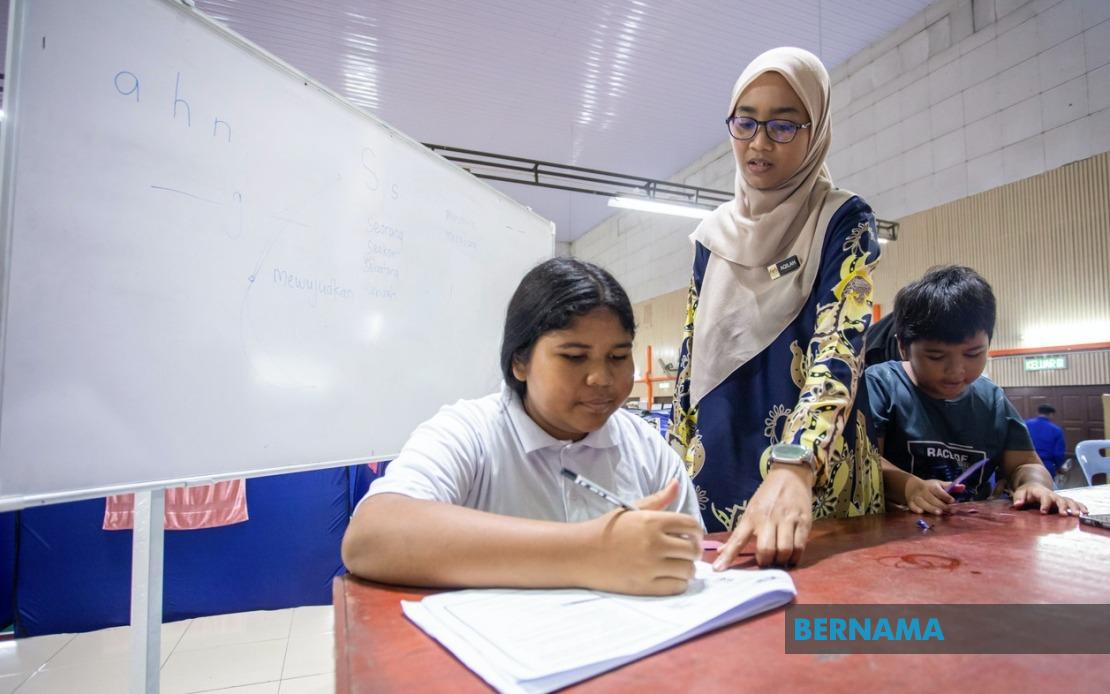
The Education Ministry has committed to reinforcing mental health and psychosocial support systems across Malaysia's schools in response to the tragic death of a teacher in Hulu Selangor on August 1. Education Minister Fadhlina Sidek made the announcement on Tuesday, emphasising that the incident has prompted urgent action to address gaps in pastoral care and wellbeing provision within the education sector.
Fadhlina, whose political background is rooted in mental health advocacy, described the situation as deeply personal and aligned with her long-standing commitment to psychological wellness in public institutions. Her positioning of the ministry's response within this context signals that enhanced support mechanisms will be treated not as an afterthought but as a core policy priority moving forward.
The ministry's approach will rely on a multi-stakeholder framework that brings together non-governmental organisations, the Health Ministry, and qualified school counsellors to create a comprehensive network of care. This collaborative model recognises that mental health challenges in the education community cannot be addressed by any single institution alone and require coordinated expertise across different sectors. Such partnerships have proven effective in other Southeast Asian nations where integrated support systems have shown measurable improvements in educator wellbeing.
Fadhlina's public message to teachers carried particular significance, with her direct assertion that educators are not facing their challenges in isolation. This acknowledgment reflects broader international recognition that the teaching profession faces mounting psychological pressures stemming from workload, social media scrutiny, student behavioural issues, and the ongoing impacts of educational disruptions. By explicitly addressing teachers as a constituency deserving of direct ministerial support, Fadhlina has elevated mental health from an administrative concern to a matter of occupational dignity.
The minister also appealed to the broader education community to prioritise peer support and mutual care among colleagues. Her suggestion that simple, sincere inquiries among staff members can provide meaningful psychological strength underscores a recognition that formal counselling services, while necessary, must be complemented by fostering a workplace culture of empathy and attentiveness. This grassroots dimension of mental health support reflects evidence-based practices that emphasise the role of social connection in preventing psychological crises.
Parallel to announcing enhanced support measures, Fadhlina made an explicit call for respect toward the deceased teacher's family and restraint from public speculation about the circumstances surrounding the death. This boundary-setting is significant in the Malaysian context, where social media discussions of sensitive incidents can quickly become sensationalised or intrusive. By channelling public attention toward systemic improvements rather than individual tragedy, the minister has attempted to redirect the narrative toward constructive action.
The timing of this announcement reflects a broader pattern of heightened awareness around educator wellbeing in the post-pandemic education landscape. Malaysia, like many countries, has witnessed increased reports of teacher stress, burnout, and mental health concerns as schools navigated recovery from disruptions and adapted to evolving educational demands. The death in Selangor appears to have served as a catalyst for the ministry to accelerate commitments that may have been in development stages.
For Malaysian schools, the practical implications of the ministry's commitment remain to be detailed through policy implementation. Questions about funding allocation for counselling services, training requirements for personnel, accessibility of mental health resources across rural and urban schools, and measurable outcomes will determine whether the announcement translates into meaningful change. The involvement of NGOs suggests that the ministry recognises the value of specialist organisations that have developed expertise in school-based mental health interventions.
The minister's emphasis on allowing police the space to conduct a thorough investigation signals the government's commitment to understanding the incident fully before drawing conclusions. This measured approach, while respecting due process, also acknowledges that preventive action in mental health need not await the completion of any investigation. The two processes—investigation and systemic reform—can proceed in parallel.
Regionally, Malaysia's response aligns with increasing attention to mental health in educational systems across Southeast Asia. Countries including Singapore, Thailand, and the Philippines have similarly invested in strengthening psychosocial support frameworks, often prompted by specific incidents that galvanised political will. The education sector's mental health needs have moved from the periphery to centre stage in policy discussions across the region.
Fadhlina's background as a mental health advocate positions her to champion this agenda with credibility and sustained commitment. Her framing of the issue as a collective responsibility rather than a crisis to be managed in isolation suggests that the ministry's response may extend beyond immediate damage control to include longer-term cultural and structural changes in how Malaysian schools approach educator wellbeing.
Looking forward, the education community will observe whether the ministry's pledge translates into concrete budget allocations, new personnel appointments, expanded counselling capacity, and measurable improvements in accessibility to mental health services. For teachers themselves, the assurance of non-isolation combined with commitments to peer support and professional counselling offers a foundation for rebuilding confidence in institutional support systems.

