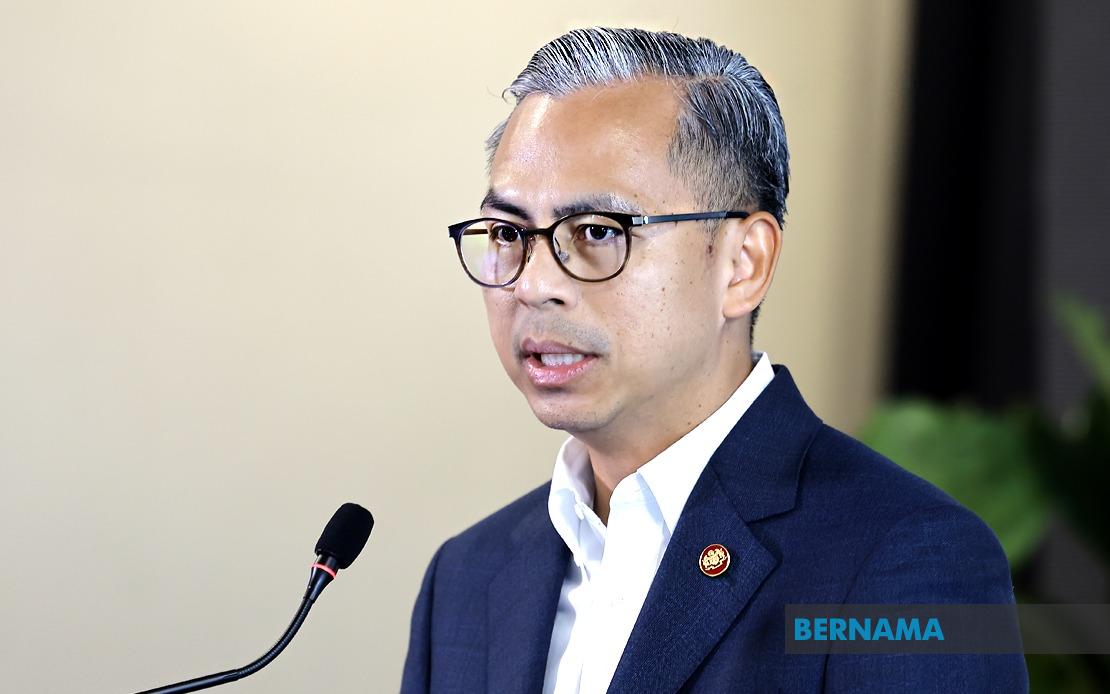
Communications Minister Datuk Fahmi Fadzil, who also serves as spokesman for the Unity Government, leads a substantial group of 1,221 recipients receiving state honours, awards and medals in Penang this week. The conferment ceremony takes place in conjunction with celebrating the 85th birthday of Penang Governor Tun Ramli Ngah Talib, with the festivities unfolding across four consecutive days beginning tomorrow through July 15.
Fahmi stands alone in receiving the Darjah Panglima Pangkuan Negeri (DPPN), the highest honour being conferred this year, which carries the prestigious Datuk Seri title. His elevation reflects his prominence in Malaysia's federal political hierarchy and signals recognition for his role in steering government communications strategy during a period when coalition politics has required careful coordination across multiple parties. The timing of his recognition aligns with his expanding responsibilities in managing public discourse around the Unity Government's policy agenda.
The ceremony encompasses a carefully tiered structure of recognition reflecting varying levels of contribution to Penang and the nation. Nineteen individuals will receive the Darjah Gemilang Pangkuan Negeri (DGPN), also carrying the Datuk Seri distinction. This cohort includes Chief Judge of Malaya Datuk Seri Hashim Hamzah, whose judicial leadership shapes the Malaysian legal landscape, alongside corporate and institutional leaders such as MARA Incorporated Sdn Bhd chairman Datuk Abdul Halim Mohammad and Invest Penang chief executive officer Datuk Loo Lee Lian, who drive economic development initiatives.
Additional DGPN recipients span the commercial and manufacturing sectors, underscoring the breadth of recognition across Malaysia's economy. Pelita Samudra Pertama (M) Sdn Bhd managing director Tan Sri D. Murugan, Menara Rezeki Sdn Bhd managing director Datuk Saiful Nizam Mohd Yusoff and M Summit Group chairman Datuk Moh See Eng represent the entrepreneurial class that contributes substantially to employment and economic activity. This composition demonstrates how Penang's honours system acknowledges contributions beyond government, extending recognition to business leaders who shape the state's development trajectory.
Below this tier, nine individuals will receive the Darjah Yang Mulia Pangkuan Negeri (DMPN) carrying the Datuk title, while 72 others receive the Darjah Setia Pangkuan Negeri (DSPN), also conferring the Datuk designation. The DMPN recipients include former Penang police chief Datuk Azizee Ismail and UEM Group Bhd managing director Datuk Amran Hafiz Affifudin, recognising contributions from law enforcement and infrastructure sectors. Among the larger DSPN cohort are figures such as Bank Rakyat chairman Datuk Mohd Irwan Mohd Mubarak and Penang Development Corporation CEO Abdul Latiff Abd Aziz, alongside senior civil servants including the Deputy State Secretary for Development Mohamed Abdul Rahman.
Notably, the DSPN list also honours the late Nordin Ahmad, the renowned film actor, director and scriptwriter associated with Cathay-Keris Film Productions, acknowledging Malaysian cinema's cultural significance. Similarly, Datuk Meor Ismail Meor Akim, director-general of the National Disaster Management Agency (NADMA), represents recognition of those managing critical national infrastructure and emergency response systems. This inclusivity across cultural, economic and administrative sectors reflects how honours ceremonies serve to validate multiple spheres of national contribution.
The broader honour categories extend recognition to 92 individuals receiving the Darjah Johan Negeri, with 31 recipients of the Bintang Cemerlang Negeri award. Lower-tier medals reach substantial numbers, including 194 recipients of the Pingat Kelakuan Terpuji, 328 recipients of the Pingat Jasa Kebaktian, 463 recipients of the Pingat Jasa Masyarakat and 12 recipients of the Pingat Bakti Setia. These cascading categories accommodate thousands of citizens, allowing recognition to permeate more widely across communities.
According to Penang State Legislative Assembly Speaker Datuk Seri Law Choo Kiang, who chairs the State Government Official Ceremonies Committee, the investiture proceedings will split between 101 individuals receiving formal state honours and 1,120 others receiving awards and medals of merit. The distribution across the four-day event allows ceremonial proceedings to maintain dignity and allow each recipient meaningful acknowledgement. Such structured scheduling prevents the event becoming merely ceremonial formality, instead enabling genuine celebration of individual achievements.
The recipient pool demonstrates deliberate inclusion of Malaysia's diverse institutional landscape. Civil servants from state and federal governments stand alongside politicians, corporate executives, non-governmental organisation members, entrepreneurs and volunteers. This composition reflects Penang's position as one of Malaysia's most developed and socially active states, where governance extends beyond traditional bureaucratic channels to encompass civil society participation. The breadth signals how modern Malaysian honours recognise that state advancement depends upon coordination across institutional boundaries.
For Malaysian political observers, Fahmi's conferment as Datuk Seri carries significance beyond ceremonial honour. As Communications Minister and Unity Government spokesperson, his elevated status in Penang aligns with the federal coalition's efforts to strengthen relationships within constituent state governments. While Penang operates under a state government led by the Democratic Action Party, federal recognition of Fahmi demonstrates how Malaysia's honours system can facilitate inter-party cooperation despite differing political affiliations. His positioning acknowledges that effective national governance requires institutional respect across political divides.
The Penang honours ceremony also illuminates the state's ongoing economic development narrative. The prevalence of corporate figures, development agency leaders and infrastructure project directors among recipients underscores Penang's continued positioning as a commercial and manufacturing hub. Recognition of individuals leading transit infrastructure projects, financial institutions and manufacturing enterprises reflects how the honours system validates economic contributions during a period when Southeast Asia increasingly competes for foreign investment and skilled workforce attraction.
For Malaysian and regional readers, these ceremonies represent more than ceremonial tradition. They reflect how nations construct hierarchies of public recognition and signal priorities regarding which contributions society values. The inclusion of civil service members, cultural figures and voluntary workers alongside corporate leaders suggests a national ethos where honour encompasses multiple forms of merit rather than concentrating exclusively on wealth accumulation or political proximity. Understanding these honour structures provides insight into how Malaysia's leadership conceptualises national identity and institutional legitimacy.

