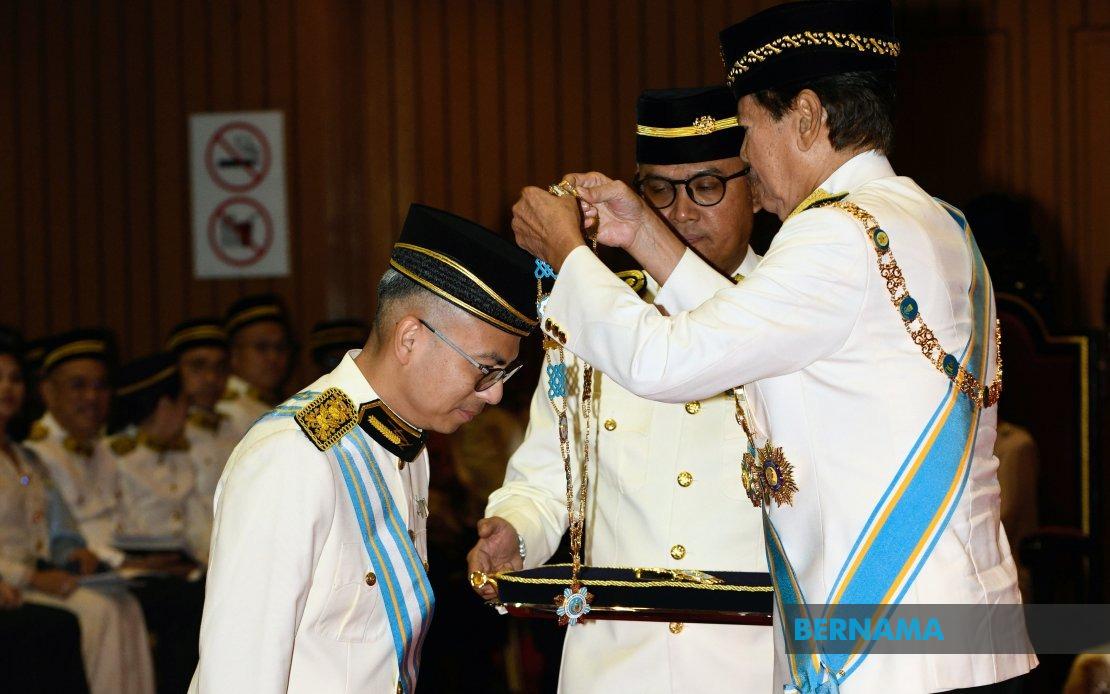
Communications Minister Datuk Fahmi Fadzil has received the Darjah Panglima Pangkuan Negeri (DPPN) award, which carries the prestigious Datuk Seri title, at a four-day Penang State Investiture Ceremony that began here in George Town on July 11. The honour was part of celebrations marking the 85th birthday of Penang Governor Tun Ramli Ngah Talib, with Fahmi standing as the sole recipient of the DPPN award this year. As the government's principal spokesperson, Fahmi's recognition underscores his prominence within the MADANI administration's communications framework and his contributions to national governance.
The investiture ceremony represents one of Penang's most significant honours-awarding events, with a total of 230 individuals recognised across various categories of state orders, decorations, and medals. Running through July 15, the ceremony encompasses a tiered system of awards that reflects Malaysia's honours structure, recognising contributions from different sectors of society. The breadth of recipients demonstrates how Penang's honours system acknowledges service across government, commerce, security, culture, and civil society, reinforcing the state's commitment to recognising excellence in diverse fields.
Beyond Fahmi's DPPN honour, nineteen individuals were elevated to the Datuk Seri rank through the Darjah Gemilang Pangkuan Negeri (DGPN) award. This cohort includes significant figures from Malaysia's business and investment ecosystem, notably MARA Incorporated Sdn Bhd chairman Datuk Abdul Halim Mohammad, who oversees a key institution involved in indigenous economic empowerment, and Invest Penang's chief executive officer Datuk Loo Lee Lian, whose role in driving foreign and domestic investment to the state merits particular attention given Penang's position as an economic hub in northern Malaysia.
The recognition of investment and trade leaders within this honours category reflects broader policy priorities in Malaysia and Southeast Asia regarding economic development and foreign direct investment. Invest Penang's leadership being recognised at the state honours level signals the importance the state places on facilitating business activity and attracting capital flows during a period when regional competition for investment intensifies. The inclusion of such figures suggests that Penang's honours system actively acknowledges those advancing the state's economic agenda, not merely ceremonial or historical achievements.
Nine individuals received the Darjah Yang Mulia Pangkuan Negeri (DMPN), a category that includes Datuk Azizee Ismail, the former chief of the Penang police force. His posthumous and lifetime recognition reflects the long-standing Malaysian practice of honouring security sector leaders for maintaining public order and advancing law enforcement professionalism. The security establishment's presence within state honours ceremonies underscores how such events serve to reinforce institutional legitimacy and recognise the personnel whose work sustains governmental authority.
A substantially larger cohort of seventy-two individuals received the Darjah Setia Pangkuan Negeri (DSPN), which confers the Datuk title. This category encompasses diverse recipients, ranging from cultural figures to public servants and business leaders. Among the DSPN recipients was the late Nordin Ahmad, receiving a posthumous award in recognition of his significant contributions as a film actor, director, and scriptwriter with Cathay-Keris Film Productions. His honour reflects Malaysia's broader commitment to recognising excellence in the creative and film industries, sectors that contribute to national cultural soft power within Southeast Asia and globally.
Other DSPN recipients included Meor Ismail Meor Akim, the director-general of the National Disaster Management Agency (NADMA), and Datuk Mohd Irwan Mohd Mubarak, chairman of Bank Rakyat. These appointments demonstrate how the honours system spans humanitarian and financial sectors. Meor Ismail's recognition carries particular relevance given Malaysia's exposure to natural disasters and the critical role disaster management infrastructure plays in safeguarding communities across the country. Bank Rakyat's inclusion in the honours roster similarly acknowledges the institution's role in delivering financial services to underserved populations, aligning with broader development objectives.
The investiture ceremony was formally opened by Tun Ramli Ngah Talib and his wife, Toh Puan Raja Noora Ashikin Raja Abdullah, who arrived at 8:45 am to preside over the proceedings. The participation of both the Governor and his spouse in opening the ceremony reflects the ceremonial importance attached to the event and the symbolic role that state governors occupy in Malaysian federalism as custodians of royal prerogatives delegated at the state level. The Governor's personal involvement lends weight to the honours being conferred and reinforces their legitimacy within Penang's institutional hierarchy.
Beyond the 230 individuals receiving formal state orders and decorations, the broader four-day investiture programme encompasses 101 recipients of state honours and a further 1,120 awardees of medals and honorary decorations. This tiered structure means that over 1,200 people will be formally recognised during the ceremony, illustrating how Penang's honours system reaches beyond elite figures and governmental circles to acknowledge contributions from wider society. The expansion of recognition to medal and decoration recipients suggests an inclusive approach to honouring public service and community contributions.
For Malaysian observers, the Penang State Investiture Ceremony exemplifies how state governments utilise honours systems to reinforce institutional legitimacy, recognise meritorious service, and signal policy priorities. The prominence given to communications ministry leadership, investment and trade figures, disaster management officials, and financial sector representatives reveals the interconnected nature of modern governance priorities. The ceremony also demonstrates the continued relevance of honours and titles within Malaysian political culture, where such recognitions carry practical significance for career advancement and social standing.
The timing of these honours, coinciding with Governor Tun Ramli Ngah Talib's 85th birthday celebration, adds a commemorative dimension to the proceedings. Birthday celebrations of senior state officials often serve as occasions for broader reflections on their tenure and contributions to state development. For Tun Ramli, the investiture ceremony provides a platform for reaffirming the state's commitment to recognising excellence during his period as constitutional head of state, blending personal commemoration with institutional renewal.
Regionally, Penang's honours ceremony reflects broader Southeast Asian patterns in how state and national governments utilise formal recognition systems to strengthen governance legitimacy and acknowledge sectoral contributions. The integration of economic, security, cultural, and public service sectors within the honours structure provides a comprehensive snapshot of state priorities and demonstrates how Malaysia's federal structure allows states autonomy in recognising distinguished service. As Malaysia continues navigating economic transitions and governance challenges, such ceremonies serve as visible affirmations of institutional continuity and meritocratic principles, even as the practical implications of honours within competitive bureaucratic and business environments remain subject to ongoing scrutiny.

