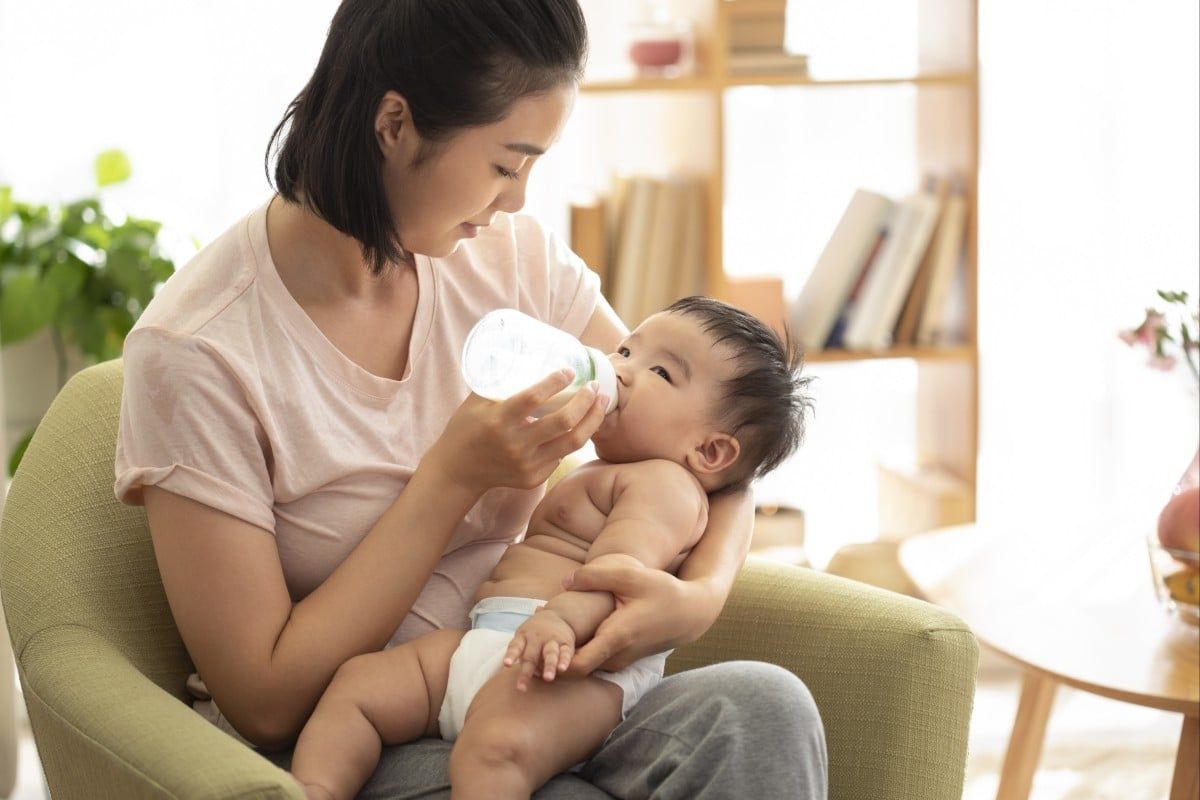
A three-month-old boy in Guangdong province faced a life-threatening health crisis after his parents prepared his infant formula milk using vegetable juice rather than plain water, leading to his emergency admission to intensive care at Zhongshan Women and Children's Hospital. The incident underscores a growing problem across East Asia where well-intentioned parents introduce unsuitable ingredients into infant feeds, sometimes with catastrophic consequences.
The baby's condition deteriorated rapidly following consumption of the formula. His skin and mouth took on a distinctive purplish-blue discolouration, and he experienced severe respiratory distress that necessitated immediate hospital intervention in mid-June. Medical staff at the facility quickly identified the culprit: nitrite poisoning, a condition that develops when vegetable juices—particularly those prepared through prolonged boiling—accumulate dangerous concentrations of nitrites and nitrates.
The parents' reasoning behind their decision reveals a common misconception about infant nutrition. They believed that vegetable juice possessed superior nutritional value compared to ordinary water and would therefore benefit their developing child. This assumption, while superficially logical to untrained observers, fundamentally misunderstands the delicate biochemical requirements and limitations of newborn physiology. The hospital's medical team used the case as an opportunity to educate parents about why such substitutions carry severe risks.
Infants at three months of age possess digestive and kidney systems that remain substantially underdeveloped. These organs cannot effectively process or eliminate high levels of nitrates and nitrites from the bloodstream. When these compounds accumulate, they interfere with the blood's capacity to transport oxygen throughout the body—a phenomenon that explains the characteristic purple discolouration observed in this case. The child's lips, skin and fingernails all reflected this fundamental disruption in oxygen circulation, serving as visual warning signs of internal toxicity.
The preparation method matters critically in this context. When vegetables undergo extended boiling—a common practice in Asian households seeking to create nutrient-rich broths for infants—the process actually concentrates nitrite compounds rather than eliminating them. This counterintuitive consequence means that homemade vegetable juices intended as health supplements become vectors for poisoning. The longer the cooking process, the greater the nitrite accumulation, making this a particularly insidious hazard for parents relying on traditional food preparation methods.
After two days of intensive medical care, the infant recovered sufficiently for discharge, though the experience highlighted how narrowly the situation avoided permanent injury or fatality. Cao Qi, a paediatrician at Nanning No 1 People's Hospital in Guangxi Zhuang autonomous region, emphasized the critical importance of recognizing nitrite toxicity symptoms and seeking emergency care immediately. His stark warning—that delays of mere minutes could prove fatal—reflects the rapid progression of this poisoning and its potential for sudden deterioration.
Cao's intervention extended beyond clinical treatment to public education, with the physician using social media platforms to reach broader parental audiences. His message directly challenged the tendency among some Chinese families to experiment with traditional feeding practices or to assume that "natural" foods automatically suit infants. This cautionary stance addresses a troubling pattern wherein parents substitute personal judgment or cultural preferences for evidence-based medical guidance on infant nutrition.
The incident fits within a broader pattern of unusual infant feeding incidents that regularly surface in Chinese media and social platforms. These cases generate substantial public attention and discussion, partly because they involve medical crises that could theoretically affect any family. The previous year had witnessed another alarming case in Henan province, where a 52-day-old infant developed botulism after the child's grandmother added honey to the baby's drinking water—another well-intentioned but medically dangerous practice.
Medical authorities consistently recommend a single approach: infant formula should be prepared exclusively with warm water. The guidance explicitly proscribes substituting vegetable juice, rice water, fruit juice, herbal broths or any other liquid. This uniform recommendation exists because of rigorous evidence demonstrating that any such substitution creates genuine health hazards for developing infants whose metabolic systems cannot tolerate compounds present in these alternative liquids.
For Malaysian and Southeast Asian readers, this incident carries particular relevance given the region's strong tradition of herbal medicines, traditional broths and home remedies in infant care. Many families across Malaysia, Singapore and other neighbouring countries maintain similar practices of preparing specialized foods and broths for young children, reflecting comparable cultural approaches to nutrition and wellbeing. The case serves as a reminder that cultural wisdom and modern pediatric science sometimes diverge significantly when applied to the most vulnerable populations.
The recovery of this particular infant should not encourage complacency. Medical professionals emphasize that every moment during nitrite poisoning represents a window where treatment effectiveness diminishes. The hospital's successful outcome depended partly on rapid recognition and intervention—advantages that might not be available in all settings or to all families. Healthcare providers across Asia continue working to disseminate these critical safety messages, recognizing that preventing such incidents entirely remains vastly preferable to treating them after the fact.