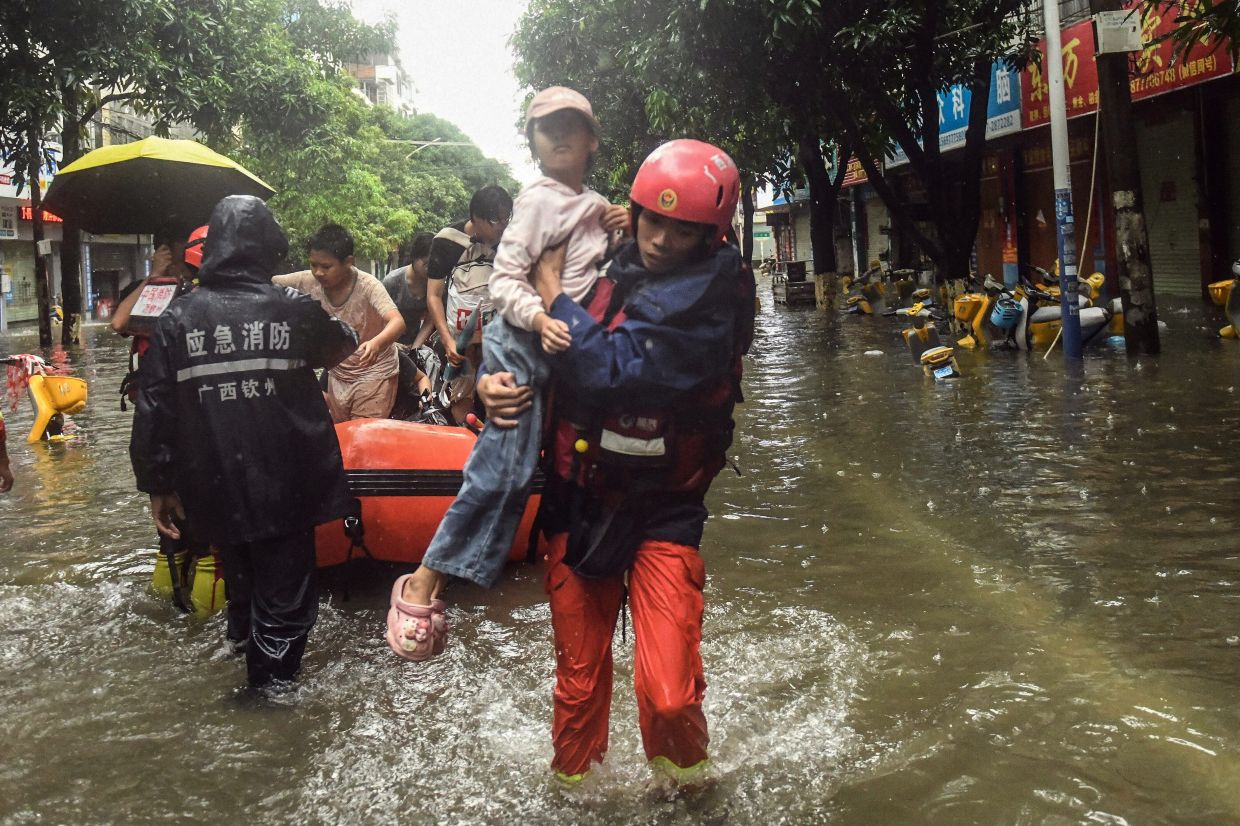
Rescue operations are intensifying across multiple Chinese provinces as the aftermath of severe weather and geological disasters unfolds, with emergency teams working to locate missing persons and provide humanitarian relief to displaced populations. The period from July 7-8, 2020, witnessed a cascade of natural calamities that exposed vulnerabilities in flood management and disaster preparedness across the nation, prompting a high-level government response and raising broader questions about climate resilience in the region.
In the southern province of Guangxi, the situation remains particularly critical following the passage of Typhoon Maysak. Regional authorities confirmed six deaths in the immediate aftermath, with the evacuation figure reaching at least 130,000 residents as torrential rainfall continued to drench the territory. The scale of displacement underscores the rapid escalation of weather-related hazards, as roads became impassable and residential areas became threatened by surging waters. State media documented the dramatic rupture of a reservoir dam, with footage showing concrete structures collapsing under the weight of accumulated water and rescue personnel navigating swollen waterways on inflatable craft.
The hydrological impact across Guangxi has been staggering. Forty distinct rivers and waterways breached their banks, inundating agricultural zones and threatening communities downstream. Official assessments placed crop damage at approximately 13,000 acres, a figure that will ripple through regional food security and rural livelihoods. The China State Flood Control and Drought Relief Headquarters maintained its second-highest emergency alert level, signalling officials' expectations of continued dangers. Water Resources Minister Li Guoying warned that flood peaks at the Wuzhou Hydrological Station were forecast to exceed safe thresholds by more than six metres, creating unprecedented stress on embankment structures and reservoir integrity throughout the affected territories.
Elsewhere in central China, Hubei province experienced a distinct but equally destructive weather system. Thunderstorms coupled with gale-force winds claimed eleven lives and left 331 people injured. Property damage was substantial, with nearly 4,800 structures sustaining harm and 22 buildings completely destroyed. Search and rescue teams remain active in locating one missing person, while authorities continue assessing the full extent of economic losses across the province.
Compounding the disaster burden is a catastrophic landslide that struck Gansu province in China's northwest. The geological event, which occurred early Tuesday morning at Rencang village in Dangchang County, initially buried 33 residents beneath tonnes of earth and debris. Updated death tolls released Wednesday confirmed 21 fatalities, with search operations concluding as rescue personnel recovered bodies from the debris field. Investigators are still examining the underlying geological factors and triggering mechanisms, though authorities have already mobilised significant financial resources—allocating 30 million yuan (approximately US$4.4 million) toward reconstruction and victim support.
The cumulative toll across these three separate disaster zones—Guangxi, Hubei, and Gansu—now exceeds 39 confirmed deaths, with additional missing persons still being sought. The simultaneous occurrence of typhoon impacts, severe convective weather, and geological instability highlights the complex interplay of meteorological and terrestrial hazards that characterise China's summer season. President Xi Jinping issued directives for rescue personnel to maximise their operational efforts, reflecting governmental awareness of the unprecedented scope of simultaneous crises requiring coordination across provincial boundaries.
Governmental response mechanisms have mobilised to meet immediate humanitarian needs. Disaster relief supplies including emergency food rations, protective clothing, and rescue equipment are being transported to affected areas. The scale of evacuation—exceeding 100,000 people in Guangxi alone—represents a logistical undertaking requiring inter-provincial coordination and substantial resource allocation. Shelters, medical facilities, and supply chains must accommodate populations displaced from inundated communities, presenting challenges for local administrators already stretched by immediate rescue priorities.
For Malaysian and Southeast Asian observers, these events underscore the shared vulnerability of the region to extreme weather systems that traverse monsoon zones and tropical latitudes. Typhoon Maysak's impacts on Guangxi demonstrate how rapidly weather systems can escalate from meteorological phenomena into infrastructure-threatening disasters. The reservoir dam failure illustrates critical gaps that may exist in flood management infrastructure, particularly aging structures that require reinforcement or replacement to withstand intensifying extreme rainfall events.
The landslide in Gansu, meanwhile, reflects geological hazards that can be exacerbated by heavy precipitation saturating hillslopes and destabilising soil structures. Southeast Asian nations with similarly mountainous terrain and heavy rainfall regimes—including Malaysia, the Philippines, and Indonesia—share comparable risks. The Chinese authorities' decision to establish substantial reconstruction funds suggests recognition that disaster recovery demands sustained financial commitment beyond immediate relief operations.
China's experience with compounded natural disasters occurring simultaneously across disparate regions offers cautionary lessons. The coordination challenges of managing multiple crisis zones, resource allocation decisions during stretched emergency responses, and the secondary impacts on agricultural production and infrastructure warrant attention from regional planners. Climate scientists increasingly project intensification of extreme weather events, suggesting that this pattern of severe concurrent disasters may become more frequent rather than exceptional.
The warning issued by Water Resources Minister Li Guoying regarding the prolonged duration of elevated water levels across multiple waterways points to another dimension of flood risk often underestimated in disaster preparedness discussions. Extended periods of saturated conditions in embankments and dam structures create cumulative stress that extends beyond the initial flood peak, potentially triggering secondary failures days after the primary rainfall event concludes. This temporal dimension complicates evacuation planning and recovery timelines.

