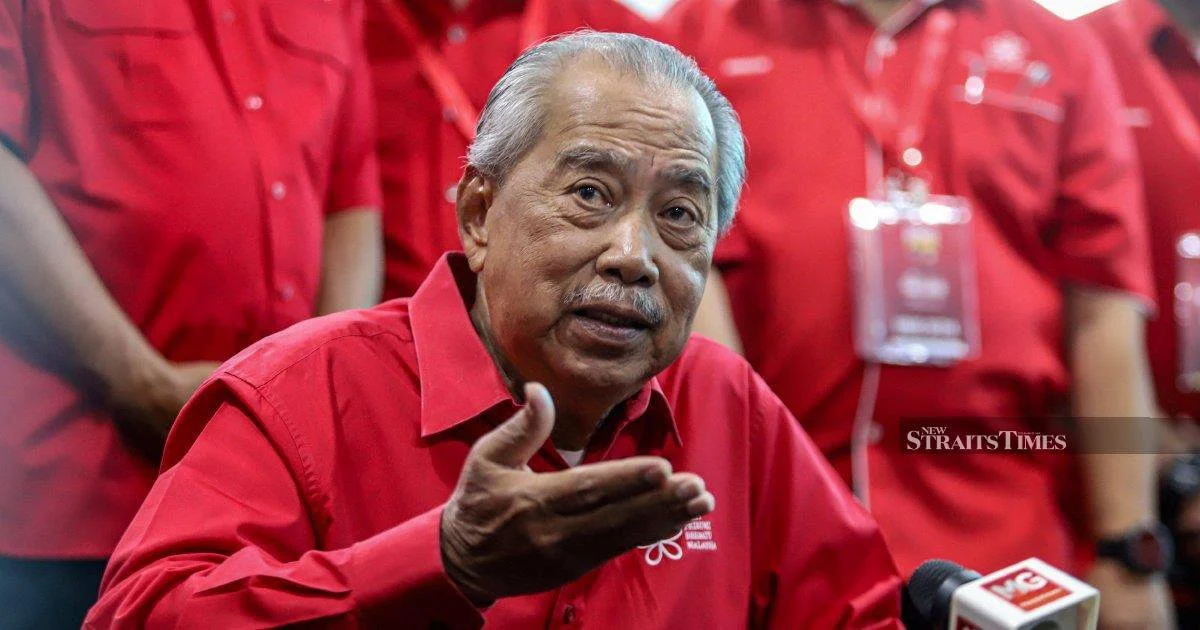
Bersatu will maintain its commitment to Perikatan Nasional on a permanent basis, according to party president Tan Sri Muhyiddin Yassin, who has sought to quash persistent gossip about the coalition's stability and direction. Speaking in Kuala Lumpur, Muhyiddin underscored that speculation regarding Bersatu's future within PN amounts to unfounded conjecture that does not reflect the party's actual position or intentions.
The declaration comes at a time when Malaysia's political landscape remains fluid, with various coalitions and blocs jockeying for influence and electoral advantage. PN itself has undergone significant restructuring since its formation, and the involvement of multiple parties with sometimes competing interests has naturally invited analysis and commentary from political observers. However, Muhyiddin's unambiguous statement seeks to anchor Bersatu's role within the coalition as unwavering and indefinite, eliminating space for alternative interpretations.
Bersatu's position within PN carries considerable weight in the broader Malaysian political system. The party commands a substantial parliamentary presence and has historically served as a significant component of any coalition seeking to form or maintain government. Muhyiddin, who previously held the office of Prime Minister, remains an influential figure in national politics, and his pronouncements regarding party strategy typically carry substantial credibility among Bersatu members and supporters.
The ongoing nature of speculation about PN's composition reflects deeper structural questions about how Malaysia's multi-party democracy continues to evolve. Coalition-building in the country has become increasingly complex, with parties sometimes finding themselves in unexpected alliances or facing pressure to shift allegiances based on electoral calculations or internal party dynamics. PN itself represents one such arrangement, bringing together parties that might not naturally align on all policy matters but share certain strategic objectives.
For Bersatu specifically, maintaining stability within PN provides several advantages. The coalition offers a platform through which the party can exercise influence over national policy, particularly on matters important to its core constituencies. Remaining within the broader grouping also allows Bersatu to consolidate its position without the risks and costs associated with operating as an independent entity in Malaysia's competitive political environment. This pragmatic alignment suggests that Muhyiddin's commitment reflects not merely rhetorical positioning but substantive party strategy.
The implications of Bersatu's permanence within PN extend beyond the two organisations themselves. Voters, particularly those in constituencies where PN commands influence, can anticipate a degree of predictability regarding the coalition's composition at future elections. Political analysts and observers can likewise plan their assessments around a more stable framework, rather than constantly accounting for the possibility of major reorganisations. This clarity may benefit all PN-aligned parties by enabling more coherent campaign messaging and resource allocation.
At the same time, Muhyiddin's declaration does not necessarily foreclose tactical flexibility or internal coalition adjustments. Coalitions by their nature involve ongoing negotiation among member parties regarding seat allocations, policy emphasis, and leadership roles. Within this natural jostling for position, individual parties sometimes gain or lose prominence, and their specific demands within coalition agreements may evolve. Bersatu's permanent commitment to PN as an overarching framework can coexist with dynamic engagement on these operational matters.
The Malaysian context makes coalition stability particularly consequential. Unlike systems where single parties can typically secure legislative majorities, Malaysia's electoral mathematics usually requires combinations of parties to form government. The composition and resilience of these coalitions therefore shapes which governments come to power and how effectively they can govern. PN's tenure as the leading government formation following the 2022 elections made visible the importance of coalition coherence and the practical challenges when member parties pursue competing interests.
Bersatu's continued membership in PN also affects regional considerations. Perikatan Nasional has emerged as a significant pole in Malaysian politics, representing an alternative to other major coalition groupings. Its role in national politics influences not merely electoral competition but also the tenor of policy debate around various issues, from governance and anti-corruption efforts to economic priorities and social concerns. The stability of constituent parties like Bersatu therefore carries implications for how these broader conversations develop.
Muhyiddin's remarks should be understood in the context of recent political developments and speculative reporting. Malaysian political commentary regularly features analyses of possible party movements, coalition shifts, and leadership transitions, reflecting the genuine dynamism of the country's democratic environment. These discussions, while sometimes grounded in substantive developments, occasionally veer toward speculation that outpaces actual party intentions. By explicitly reaffirming Bersatu's position, Muhyiddin seeks to inject clarity into these discussions and establish the definitive baseline from which further analysis should proceed.
Moving forward, Bersatu's continued engagement with PN may influence how the coalition adapts to evolving electoral pressures and voter preferences. The Malaysian political system continues to shift in response to changing demographics, economic conditions, and public sentiment on governance issues. PN-affiliated parties will need to remain responsive to these currents while maintaining the internal cohesion that Muhyiddin's statement seeks to emphasise. The tension between stability and adaptation will likely define PN's trajectory in the coming years, with Bersatu playing a pivotal role in navigating this balance.


%22%2F%3E%3C%2Fpattern%3E%3C%2Fdefs%3E%3Crect%20width%3D%22100%25%22%20height%3D%22100%25%22%20fill%3D%22url(%23phpazog)%22%2F%3E%3Crect%20width%3D%22100%25%22%20height%3D%22100%25%22%20fill%3D%22url(%23phpazop)%22%2F%3E%3Ctext%20x%3D%2250%25%22%20y%3D%2250%25%22%20text-anchor%3D%22middle%22%20dominant-baseline%3D%22central%22%20fill%3D%22rgba(255%2C255%2C255%2C0.95)%22%20font-family%3D%22Georgia%2C%20'Times%20New%20Roman'%2C%20serif%22%20font-weight%3D%22700%22%20font-size%3D%22320%22%20letter-spacing%3D%22-0.02em%22%3E32%3C%2Ftext%3E%3C%2Fsvg%3E)