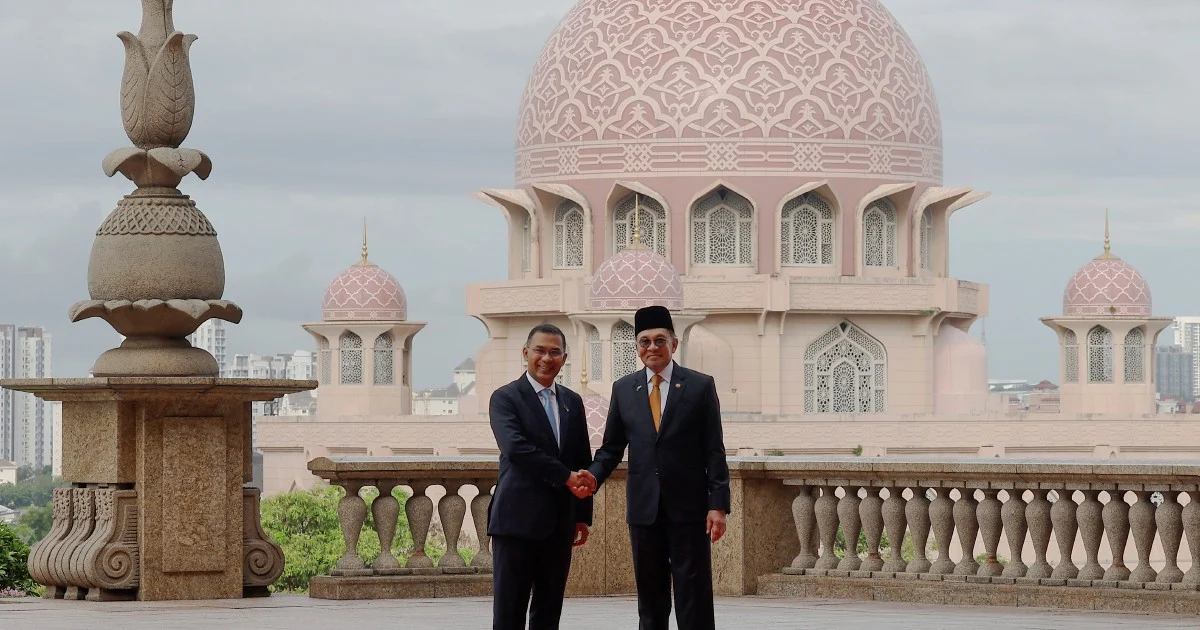
Prime Minister Anwar Ibrahim received Bangladesh Prime Minister Tarique Rahman at Perdana Putra Complex in Putrajaya today, extending full official welcome protocols to mark the opening of a two-day state visit that underscores strengthening ties between the two Muslim-majority nations. The ceremonial reception reflects Malaysia's commitment to deepening engagement with key South Asian partners at a critical moment when regional cooperation remains essential for addressing shared economic and security challenges.
Rahman's visit to Malaysia carries significance beyond routine diplomatic courtesy. Bangladesh, as the world's eighth most populous nation and home to over 170 million people, represents a substantial market and strategic partner in South Asia. For Malaysia, which has long maintained active diplomatic presence across the region, the visit offers opportunity to explore expanded cooperation in sectors ranging from trade and investment to technology and cultural exchange. The timing also reflects a broader pattern of high-level visits between the two countries aimed at reinforcing bilateral relationships at the leadership level.
The official welcome at Perdana Putra, the seat of Malaysia's executive government, indicates the Malaysian administration's prioritisation of this engagement. Such ceremonies typically involve formal presentations, bilateral talks, and discussion of a wide-ranging agenda covering economic cooperation, security matters, and regional issues affecting both nations. Both countries share interests in maritime security, counterterrorism cooperation, and addressing transnational challenges in the Indian Ocean and Southeast Asian regions.
Trade relations between Malaysia and Bangladesh have demonstrated consistent growth, with Malaysian firms investing in Bangladesh's manufacturing and garment sectors whilst Bangladeshi workers constitute a significant expatriate community in Malaysia. The bilateral relationship encompasses labour mobility agreements, investment frameworks, and regulatory cooperation that facilitate people-to-people connections alongside official diplomatic channels. This visit provides opportunity to review existing arrangements and potentially expand trade volumes that benefit both economies.
Bangladesh's location at the intersection of South Asia, Southeast Asia, and the Indian Ocean positions it as a crucial nodal point in regional geopolitics. For Malaysia, engaging with Bangladeshi leadership reflects awareness that stability and prosperity in South Asia directly influence regional dynamics affecting Southeast Asian interests. The two nations share stakes in maritime navigation rights, cyclone disaster management, and climate resilience—issues increasingly central to regional development agendas.
The visit also carries implications for Malaysia's broader foreign policy orientation under Anwar's administration. The government has prioritised diversified international engagement, moving beyond traditional partnerships to strengthen ties with emerging economies and developing nations. Bangladesh, with its growing economic potential and strategic location, fits this framework whilst demonstrating Malaysia's commitment to South-South cooperation and voices from the Global South.
Cultural and religious ties between Malaysia and Bangladesh extend deep historical roots, with shared Islamic heritage and Muslim populations creating natural affinity. Student exchange programmes, religious scholarly interactions, and diaspora communities maintain ongoing connections at grassroots levels. High-level visits complement these people-to-people linkages by creating political will for institutional cooperation and policy harmonisation.
Rahman's position as Prime Minister following recent political transitions in Bangladesh adds weight to this visit. His administration represents renewed governance structures in Dhaka following significant domestic political changes. Malaysia's formal reception signals recognition of Bangladesh's current leadership and willingness to work constructively with the new administration—important messaging in establishing confidence and forward momentum in bilateral relations.
The two-day format suggests comprehensive agenda items beyond ceremonial functions. Such visits typically include separate bilateral meetings between leaders, delegation-level discussions on specific sectors, and signing of potential memoranda of understanding addressing areas of mutual interest. Malaysian and Bangladeshi officials likely intend to discuss trade promotion, investment opportunities, technical cooperation, and regional security matters affecting both nations' interests.
Southeast Asia's engagement with South Asia has intensified in recent years as regional organisations and individual nations recognise interdependencies across the Indian Ocean. Malaysia, as active ASEAN member and Indian Ocean-adjacent nation, plays bridging role between these regions. Bangladesh visits by Malaysian leadership or reciprocal high-level engagements contribute to building architecture supporting regional stability and prosperity.
For Malaysian business communities, such visits often create momentum for commercial exploration. Government-to-government meetings frequently translate into contractual opportunities, joint ventures, and expanded market access. Bangladesh's large population, developing manufacturing base, and infrastructure development needs present relevant opportunities for Malaysian companies operating across multiple sectors.
The official welcome extended to PM Rahman reflects diplomatic norms whilst demonstrating Malaysia's assessment of Bangladesh's importance to its regional strategy. As both nations navigate complex geopolitical environments shaped by great power competition and shifting economic orders, maintaining strong bilateral relationships becomes increasingly valuable. This visit represents investment in relationship continuity and expansion of cooperation frameworks supporting long-term mutual benefit.

%22%2F%3E%3C%2Fpattern%3E%3C%2Fdefs%3E%3Crect%20width%3D%22100%25%22%20height%3D%22100%25%22%20fill%3D%22url(%23ph55nedg)%22%2F%3E%3Crect%20width%3D%22100%25%22%20height%3D%22100%25%22%20fill%3D%22url(%23ph55nedp)%22%2F%3E%3Ctext%20x%3D%2250%25%22%20y%3D%2250%25%22%20text-anchor%3D%22middle%22%20dominant-baseline%3D%22central%22%20fill%3D%22rgba(255%2C255%2C255%2C0.95)%22%20font-family%3D%22Georgia%2C%20'Times%20New%20Roman'%2C%20serif%22%20font-weight%3D%22700%22%20font-size%3D%22170%22%20letter-spacing%3D%22-0.02em%22%3EMalaysia%3C%2Ftext%3E%3C%2Fsvg%3E)
%22%2F%3E%3C%2Fpattern%3E%3C%2Fdefs%3E%3Crect%20width%3D%22100%25%22%20height%3D%22100%25%22%20fill%3D%22url(%23ph41529g)%22%2F%3E%3Crect%20width%3D%22100%25%22%20height%3D%22100%25%22%20fill%3D%22url(%23ph41529p)%22%2F%3E%3Ctext%20x%3D%2250%25%22%20y%3D%2250%25%22%20text-anchor%3D%22middle%22%20dominant-baseline%3D%22central%22%20fill%3D%22rgba(255%2C255%2C255%2C0.95)%22%20font-family%3D%22Georgia%2C%20'Times%20New%20Roman'%2C%20serif%22%20font-weight%3D%22700%22%20font-size%3D%22170%22%20letter-spacing%3D%22-0.02em%22%3EMalaysia%3C%2Ftext%3E%3C%2Fsvg%3E)