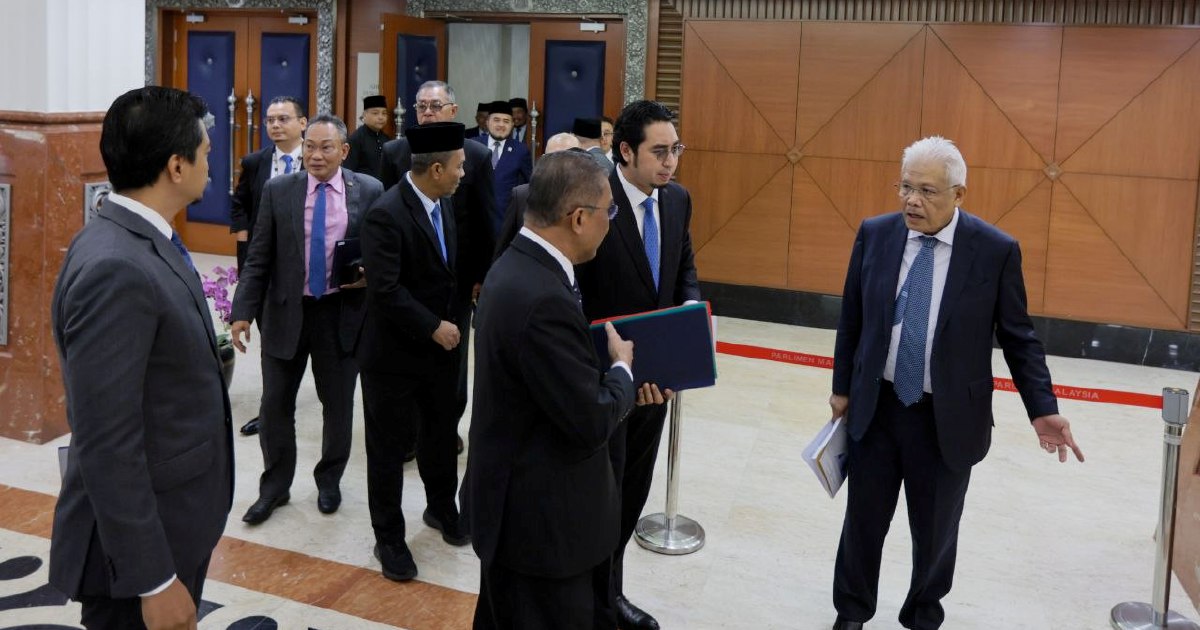
Minister in the Prime Minister's Department (Religious Affairs) Dr Zulkifli Hasan has extended an invitation to opposition members of Parliament to return to the Dewan Rakyat and engage in substantive debate over the Royal Commission of Inquiry findings concerning Tabung Haji. The call represents an effort to restore parliamentary proceedings on a matter of significant concern to Malaysian pilgrims and their families.
Tabung Haji, the statutory savings scheme that facilitates and finances pilgrimages to Mecca, has faced scrutiny in recent years over the management of its vast pool of deposits contributed by Muslim Malaysians preparing for the hajj. The establishment of the RCI signalled official acknowledgment that the institution required independent examination of its operations and governance structures. The resulting report, upon completion, carries implications not only for the millions of account holders but also for the credibility of religious institutions tasked with safeguarding public funds.
Dr Zulkifli's appeal underscores the government's intent to frame the RCI discussion as a matter warranting cross-party engagement rather than partisan confrontation. Parliamentary debate on such inquiries traditionally allows lawmakers to scrutinise findings, question administrative accountability, and propose remedial measures. Opposition participation amplifies the legitimacy of any subsequent reforms and signals democratic scrutiny of institutional governance.
The Dewan Rakyat serves as the primary platform where complex policy matters reach national attention through recorded debate. When opposition members abstain from such proceedings, critics contend that the deliberative process becomes imbalanced, depriving lawmakers of diverse perspectives and reducing the parliamentary function to ceremonial ratification rather than genuine examination. The call for opposition return thus reflects concern that the Tabung Haji discussion requires the breadth of parliamentary input to achieve public confidence.
For Malaysian Muslims with deposits in Tabung Haji, the RCI report represents a critical opportunity to understand what transpired within the institution's management and what corrective measures will be implemented. Opposition engagement in parliamentary debate would ensure that questions around investment decisions, administrative expenditure, and operational transparency receive thorough airing across the political spectrum. This transparency proves especially important given the sacred nature of hajj savings and the cultural significance of the pilgrimage within Muslim communities.
The broader context of Tabung Haji's challenges includes previous concerns about fund performance, administrative restructuring, and governance issues that prompted the RCI establishment. A comprehensive parliamentary discussion affords lawmakers the chance to evaluate whether proposed reforms adequately address identified shortcomings and whether adequate mechanisms exist to prevent recurrence. Opposition participation enhances the credibility of such evaluation in the eyes of the public and stakeholders.
Dr Zulkifli's invitation also carries diplomatic implications for parliamentary functioning. In recent years, Malaysian legislative proceedings have occasionally been marked by absences or boycotts by opposition members over various procedural or substantive disputes. While legitimate grievances may sometimes warrant such action, selective parliamentary absence on specific matters can fragment the legislative process. The minister's call implicitly encourages opposition to prioritise engagement on issues affecting broad segments of the electorate.
The Tabung Haji matter resonates across Malaysian society beyond the halls of Parliament. The institution manages finances that represent decades of accumulated savings by ordinary Muslim families. For retirees awaiting hajj, middle-class savers, and younger contributors building their pilgrimage funds, the RCI findings carry direct personal and financial significance. Parliamentary debate conducted without opposition input potentially misses critical questions that affected communities might wish addressed through their elected representatives.
From a governance perspective, the RCI process itself represents institutional maturity—the willingness to commission independent inquiry into potential administrative shortcomings. However, the value of such inquiries depends substantially on whether their findings receive thorough parliamentary examination and whether corrective measures command broad political consensus. Opposition engagement strengthens the legitimacy of any reforms that subsequently flow from RCI recommendations.
The invitation extended by Dr Zulkifli reflects a pragmatic recognition that parliamentary democracy functions optimally when multiple stakeholder voices contribute to deliberation on matters affecting the public interest. The Tabung Haji RCI report touches on questions of religious institution governance, public fund management, and fiduciary responsibility—domains where legitimate disagreement exists across the political spectrum and where comprehensive debate serves national interest.
Moving forward, the reception to Dr Zulkifli's call will signal whether opposition parties view the Tabung Haji discussion as sufficiently important to warrant their full parliamentary engagement. The response will likely influence not only the quality of debate on this specific matter but also the broader pattern of opposition participation in legislative proceedings on substantive policy questions affecting Malaysian communities.

