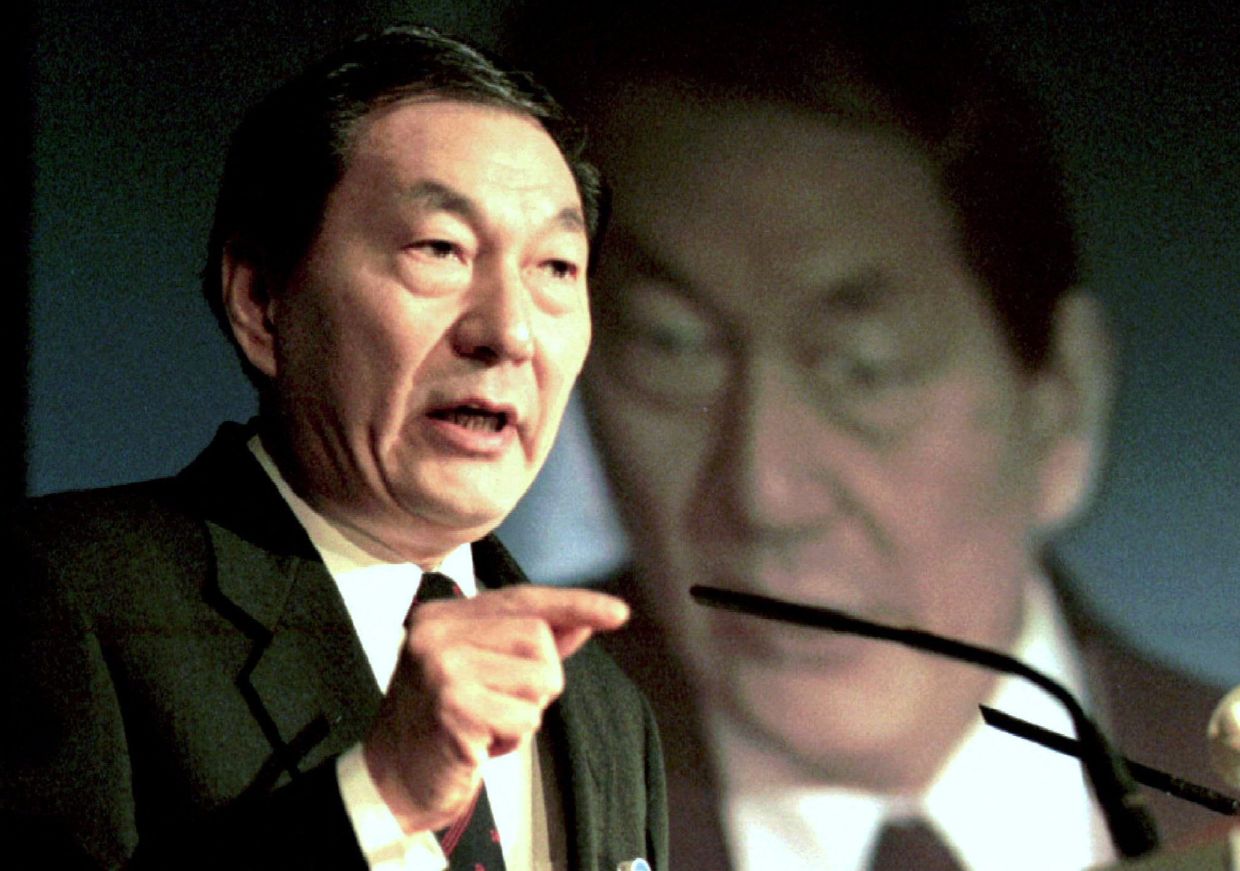
Zhu Rongji, the pragmatic architect of China's late-20th century economic transformation who championed market-oriented reforms and shepherded the nation into the World Trade Organization, passed away in Beijing on Wednesday, August 12, following treatment for an unspecified illness. He was 98 years old. His death marks the end of an era defined by bold structural changes that fundamentally altered China's economy, though his legacy remains debated among policymakers worldwide.
During his tenure as China's premier from 1998 to 2003, Zhu implemented radical restructuring of state-owned enterprises that reshaped the nation's industrial landscape. Recognising that overcapacity and mounting debts threatened macroeconomic stability, he orchestrated the closure or consolidation of tens of thousands of underperforming entities across telecommunications, banking, petroleum, and manufacturing sectors. This consolidation programme, while economically necessary by many assessments, displaced tens of millions of workers and created profound social dislocation that reverberated through Chinese society for years afterward. The painful transition from an inefficient planned economy toward market competition became the defining characteristic of Zhu's administration.
Before ascending to the premiership, Zhu served as governor of the People's Bank of China from 1993 to 1995, where he pioneered the opening of China's financial sector to foreign participation. He established experimental programmes allowing international financial institutions to operate within Chinese borders and orchestrated the nation's inaugural international bond offerings, actions that positioned China as an increasingly attractive destination for global capital. These initiatives represented a significant departure from the isolationist approaches of earlier decades and signalled Beijing's commitment to integration with international financial systems.
Zhu's most consequential economic intervention came in 1999 when he established asset-management companies tasked with purchasing 1.4 trillion yuan (approximately USD 220 billion) in non-performing loans from China's four largest state banks. These financial institutions had accumulated dangerous levels of bad debt through mandated lending to unprofitable state enterprises, a structural problem that threatened systemic stability. By absorbing these toxic assets, Zhu enabled the banks to clean their balance sheets and eventually transition to publicly listed companies beginning in 2005, transforming them into increasingly market-disciplined entities. This restructuring proved essential for modernising China's financial architecture and attracting international investors.
Zhu's role in securing China's accession to the World Trade Organization in 2001 cemented his reputation as a strategic economic operator on the global stage. Working alongside then-European Union Trade Commissioner Pascal Lamy in 2000, Zhu helped break deadlocked negotiations that had stalled China's membership bid. This achievement opened vast new markets to Chinese exporters while theoretically binding Beijing to international commercial rules and standards. The subsequent expansion has been extraordinary—China's gross domestic product has grown more than elevenfold since WTO entry, elevating the nation to the world's second-largest economy. However, this growth has occurred amid persistent complaints from trading partners regarding Beijing's alleged circumvention of WTO obligations through state subsidies, informal import barriers, and intellectual property violations.
Zhu's administrative approach emphasised streamlining government bureaucracy and combating corruption, efforts that earned him the colloquial nickname "one-chop Zhu," referencing the official seals required for document authorisation in Chinese administration. His reputation for decisive action and intolerance of inefficiency impressed both domestic colleagues and international counterparts. John Thornton, former co-president of Goldman Sachs, recalled meeting Zhu during the 1997 initial public offering of China Mobile on the Hong Kong stock exchange. Thornton noted that Zhu's engagement with operational details—asking sophisticated questions about corporate finance and departmental structures—demonstrated an unusual level of personal involvement for a premier. When Goldman Sachs convened China Mobile executives and Deutsche Telekom consultants on Hainan island to discuss establishing modern corporate functions, Zhu maintained close oversight, revealing his conviction that economic reform required hands-on leadership.
Deng Xiaoping, the paramount leader who initiated China's economic opening, reportedly characterised Zhu as a "rare talent" possessing both economic expertise and the fortitude to implement unpopular decisions. This assessment reflected Zhu's willingness to challenge entrenched interests and embrace competitive pressures that benefited consumers and efficient enterprises while devastating protected industries and their workers. The trade-offs inherent in his approach—growth and efficiency gains offset by employment losses and regional inequality—have become increasingly relevant as China's current leadership under Xi Jinping has reversed course, advocating for a "stronger, better, and bigger" state-controlled economy. This ideological shift represents a fundamental rejection of Zhu's market-oriented paradigm, suggesting that his reforms, while economically transformative, did not establish an irreversible institutional trajectory.
Zhu cultivated a public persona marked by fluency in English and demonstrated wit, characteristics that aided his effectiveness in international negotiations and public diplomacy. During a 1999 joint press conference with US President Bill Clinton addressing allegations that China had funnelled political contributions to the Democratic Party, Zhu responded with wry humour. He noted that if political contributions were genuinely effective, China's foreign exchange reserves of USD 146 billion would justify investing USD 10 billion for such purposes, rather than the alleged USD 300,000. "That would be too foolish!" he declared, generating laughter from observers. This capacity to communicate across cultural boundaries and defuse tensions through intelligent repartee distinguished him among Chinese officials of that era.
Zhu's early career shaped his subsequent approach to governance. Born in Hunan province in October 1928, he attended Tsinghua University from 1947 to 1951, majoring in electrical engineering before joining the Communist Party. During the Hundred Flowers Campaign, when Mao Zedong briefly encouraged public criticism, Zhu voiced concerns that Mao's economic policies produced irrationally rapid growth without sustainable foundations. This candour resulted in his classification as a "rightist," leading to demotion and assignment to agricultural labour during the Cultural Revolution, where he spent five years raising pigs and cultivating rice. Following his rehabilitation in 1978 after Deng's ascendancy, Zhu's career accelerated, progressing through administrative positions until his appointment as Shanghai's mayor in 1987 and elevation to vice premier in 1991.
After relinquishing the premiership to Wen Jiabao in 2003, Zhu dedicated himself to enhancing the international standing of Tsinghua University, his alma mater, and directing book royalties toward rural school development. This philanthropic engagement reflected his conviction that education constituted a foundation for sustainable prosperity. During a 2000 national legislature session, Zhu articulated his aspirations for historical judgment, stating that he hoped posterity would regard him as an honest administrator rather than a corrupt one. Should the public prove "more generous," he continued, and acknowledge that "Zhu Rongji got some real things done," he would "thank heaven and Earth." This reflective comment encapsulated the pragmatic ambition that animated his career—not ideological purity, but tangible accomplishment in service of national development.
Zhu's family maintained prominence in China's financial sector. His son, Levin Zhu, headed China International Capital Corp, a Beijing-based investment bank, through the early 2000s until 2014, while his daughter, Zhu Yanlai, occupied senior management positions at Bank of China (Hong Kong). These connections illustrated how elite political families in contemporary China often transition between government service and financial sector leadership. As China's economic model evolves under Xi Jinping's leadership, reassessing Zhu's legacy becomes increasingly relevant for policymakers throughout Southeast Asia and globally who contemplate the relationship between market liberalisation, state capacity, and long-term development.

