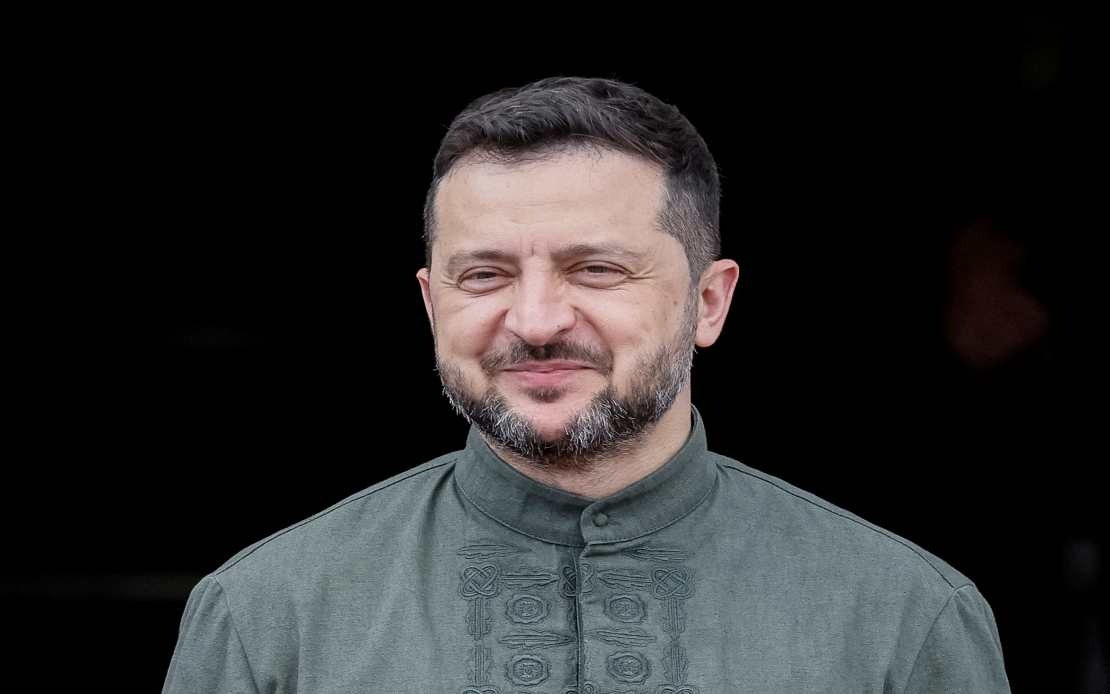
Ukrainian President Volodymyr Zelensky has formally signed legislation establishing a state memorial pantheon dedicated to Ukrainian historical heroes, according to an announcement from the Ukrainian parliament. The decision marks a significant move on contentious historical ground, as the law specifically contemplates honouring members of the Ukrainian Insurgent Army (UPA), the nationalist underground movement that operated during German occupation in World War II. The move has drawn sharp criticism from Poland, a key Western supporter of Ukraine in its ongoing conflict with Russia, raising fresh concerns about the bilateral relationship.
The pantheon project carries profound historical weight and unresolved trauma. The UPA, regarded by modern Ukraine as independence fighters resisting foreign occupation, committed what Poland and historical documentation describe as mass atrocities against Polish and Jewish populations, particularly in the Volyn region of what is now western Ukraine. Tens of thousands perished in these violence, creating a deep historical wound that continues to shape Polish national consciousness and political discourse. For Warsaw, the glorification of figures associated with these killings represents an affront to historical memory and a troubling sanitisation of war crimes.
Zelensky appeared determined to press forward with the initiative despite international sensitivities. Addressing war veterans on Saturday, he declared that Ukraine would independently determine its national heroes without external constraint, stating that the pantheon would definitively be constructed. His remarks underscore Kyiv's desire to exercise sovereign authority over historical narratives and national commemoration, even as such choices create diplomatic friction with neighbouring states who experienced the alleged crimes firsthand.
The memorial is envisioned as a substantial undertaking anchored in the nation's capital. The structure will house the remains of historical figures spanning Ukraine's long past, extending back to the medieval Kyivan Rus empire. Beyond serving as a repository for controversial nationalist figures, the pantheon is also designed to function as a burial site for deceased Ukrainian presidents, integrating contemporary political leadership into the broader arc of national historical memory. This dual purpose reflects an attempt to embed the memorial within Ukraine's foundational national identity.
Poland's response has been measured in official channels but pointed in substance. While the Warsaw government initially refrained from public comment following Zelensky's signature, the Polish presidential office issued a sharp statement after parliament passed the legislation in July. Officials indicated that, from Poland's perspective, commemorating individuals convicted or associated with genocide contradicted the principles underlying Western democratic values and integration. The statement presented the issue not merely as historical disagreement but as a question of whether Ukraine aligned itself with Western norms regarding accountability for atrocities.
The deterioration of relations between the two nations reflects a cascade of recent incidents highlighting differing narratives about shared history. In June, tensions escalated sharply when Zelensky conferred the honour of "Heroes of the UPA" upon a Ukrainian military unit. In response, Poland withdrew the Order of the White Eagle it had previously bestowed upon the Ukrainian president, a highly symbolic gesture indicating substantial displeasure. The reciprocal exchange of honour withdrawals extended to individual politicians from both countries who had earlier received decorations from their neighbours, transforming the dispute from an official-to-official disagreement into a broader symbolic rupture.
The timing and context of this memorial project carries particular weight given Ukraine's precarious strategic position. Poland remains among Ukraine's most crucial Western allies, providing military support, logistical assistance, and consistent diplomatic backing within the European Union and NATO. The country shares a lengthy border with Ukraine and has invested significantly in supporting Kyiv's defence against Russian aggression. Consequently, actions that alienate Warsaw risk complicating the unified Western coalition that has sustained Ukrainian resistance and economic support throughout the ongoing conflict.
For Malaysian and Southeast Asian observers, this dispute illuminates enduring tensions between national commemoration and regional stability. The case demonstrates how efforts to honour nationalist histories can unintentionally damage contemporary strategic partnerships essential to national security. The memorial question reflects a broader regional pattern across Central and Eastern Europe, where World War II legacies and Cold War experiences continue shaping interstate relations decades later. Countries in Southeast Asia with their own contested historical narratives and neighbouring states with different interpretations of shared past events may find instructive parallels in how these tensions develop and persist.
The controversy also highlights the complexities facing Ukraine as it simultaneously fights for survival against Russian invasion and attempts to construct national narratives that unite its diverse population. Incorporating figures viewed as independence fighters by some Ukrainians yet perpetrators of atrocities by others into a state-sanctioned pantheon represents a choice with obvious diplomatic consequences. Zelensky's insistence on Ukrainian autonomy in making these determinations, while understandable from a sovereignty perspective, may ultimately impose costs on international relationships that Ukraine requires for its continued viability.
Historical memory remains a contested terrain across the post-Soviet space, where different national communities experienced World War II and its aftermath through fundamentally different lenses. Poland's position stems from direct victimisation of its population; Ukraine's position emphasises resistance against occupying powers. Neither perspective is simply erased by acknowledging the other, yet institutional memorialisation forces a kind of public ranking of historical priorities. The establishment of this pantheon represents not merely a cultural decision but a political choice with implications for how two neighbouring states navigate their shared difficult history moving forward.
Moving ahead, observers will watch whether this dispute reflects a temporary flare-up in Polish-Ukrainian relations or signals deeper fissures in their strategic alliance. The success or failure of damage control efforts may depend on whether Ukraine's leadership can articulate compelling alternative narratives about national heroes that do not necessitate honouring figures whose atrocities remain contested and unreconciled. For Ukraine and Poland alike, their shared interest in countering Russian aggression must ultimately outweigh historical grievances, yet such calculations rarely prove sufficient when questions of national memory and dignity intersect with political decision-making.

