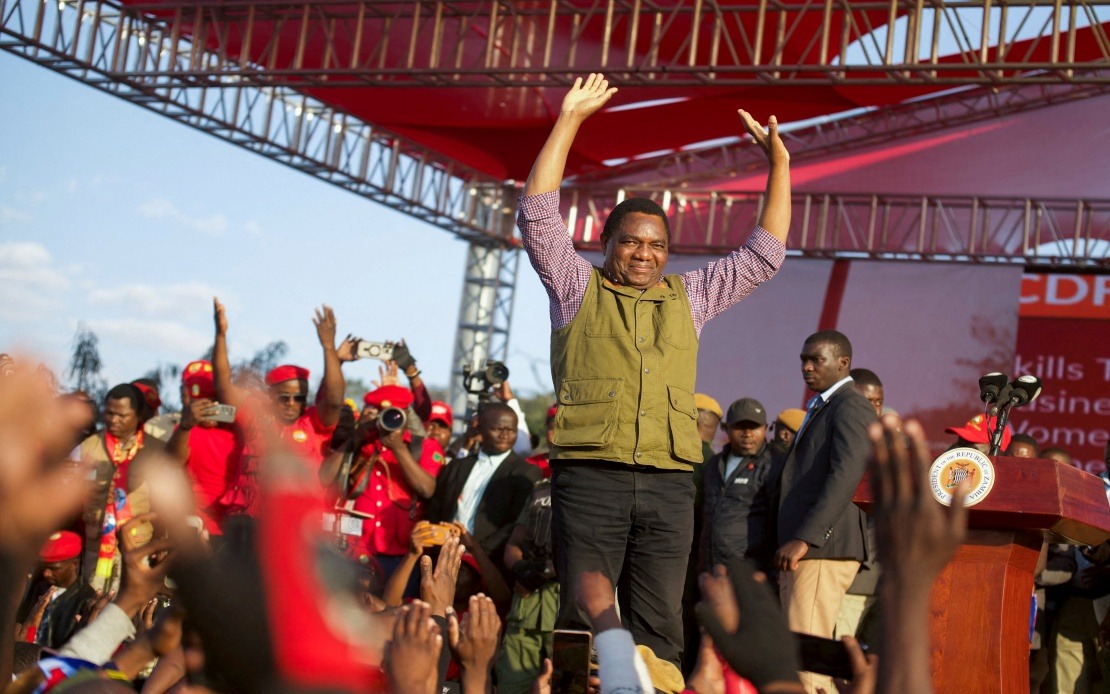
Zambian President Hakainde Hichilema has decisively retained his position following the country's presidential election, with the Electoral Commission of Zambia announcing early Tuesday that the 64-year-old leader had captured more than 2.9 million votes. The victory margin proved so commanding that election officials determined the outcome was mathematically certain despite outstanding tallies from select polling stations across multiple constituencies.
Hichilema's commanding performance reflects sustained public confidence in his leadership since the United Party for National Development assumed power in 2021. The constitutional requirement stipulates that any winning presidential candidate must secure more than 50 per cent plus one vote, a threshold the incumbent cleared with substantial room to spare. This emphatic mandate underscores the extent to which Zambian voters have endorsed his administration's direction and policy agenda for the nation's near-term future.
The main opposition challenge came from Brian Mundubile of the National Restoration Party for Unity and Progress, who garnered 1.8 million votes. Whilst a respectable showing, this result placed him considerably behind Hichilema and reflected the incumbent's broader appeal across Zambia's diverse regions and demographic groups. The scale of separation between the leading candidates indicates that the presidential race was not closely contested at the national level.
Electoral Commission of Zambia chairperson Mwanagala Zaloumis made the official declaration at the national election centre in Lusaka, confirming that outstanding results from selected polling stations across five of the country's 226 constituencies held no realistic prospect of materially altering the final outcome. This assessment by the electoral body allowed authorities to project the winner with confidence whilst remaining administratively thorough in their procedures.
Hichilema responded to his victory through a Facebook post expressing gratitude to Zambian voters and pledging continued service to the nation. His message struck a humble tone, acknowledging the trust placed in him to serve as the country's chief executive during his second term. The president's measured response suggested an administration preparing for continuity rather than dramatic policy shifts.
The announcement sparked widespread celebrations in Lusaka's streets, where residents from across socioeconomic backgrounds converged to express their joy despite the early morning hour and cool weather conditions. The scenes of spontaneous public rejoicing reflected the palpable relief many Zambians felt at the swift and uncontested nature of the electoral process, avoiding prolonged uncertainty or disputed outcomes that have occasionally plagued African elections.
Collins Maoma, national chairperson of the ruling United Party for National Development, delivered remarks to journalists emphasising the electorate's renewed confidence in Hichilema's stewardship. His statement underscored party messaging that the re-election represented validation of the government's economic and social initiatives undertaken since 2021. The chairperson's optimistic framing suggested the UPND intends to leverage this fresh mandate toward its policy agenda.
For Southeast Asian observers and Malaysian policymakers, Zambia's election offers instructive lessons about democratic renewal in developing economies facing substantial macroeconomic pressures. Southern Africa's regional dynamics increasingly intersect with broader Indo-Pacific strategic considerations as Chinese infrastructure investments, particularly through Belt and Road Initiative mechanisms, reshape geopolitical alignments. Hichilema's re-election signals continuity in Zambia's engagement with regional partners and global economic institutions.
The decisive nature of Hichilema's victory stands in contrast to the more closely contested 2021 presidential election that originally brought him to power. The expanded margin suggests that voters have evaluated his administration's response to Zambia's complex challenges, including debt restructuring negotiations with international creditors, currency stability concerns, and efforts to diversify economic activity beyond copper mining. Whether this second term enables more sustained economic improvements will substantially influence regional stability across Southern Africa.
Zambia's election outcome also reflects broader patterns within Southern African democracies, where incumbent parties frequently retain power through competitive but non-contested electoral processes. The peaceful transition of declared results, combined with the incumbent's substantial margin of victory, demonstrates institutional capacity for managing presidential succession without triggering the instability that has periodically disrupted neighbouring nations. Such stability matters considerably for regional investors and for the broader Southern African Development Community framework.
Looking forward, Hichilema's second term will likely emphasise consolidation of economic reforms and deepening engagement with international financial institutions overseeing Zambia's debt restructuring programme. The president's international diplomatic credentials and relationships with global leaders position him favourably for negotiating development partnerships and attracting foreign investment essential to addressing unemployment and improving living standards across the country.

