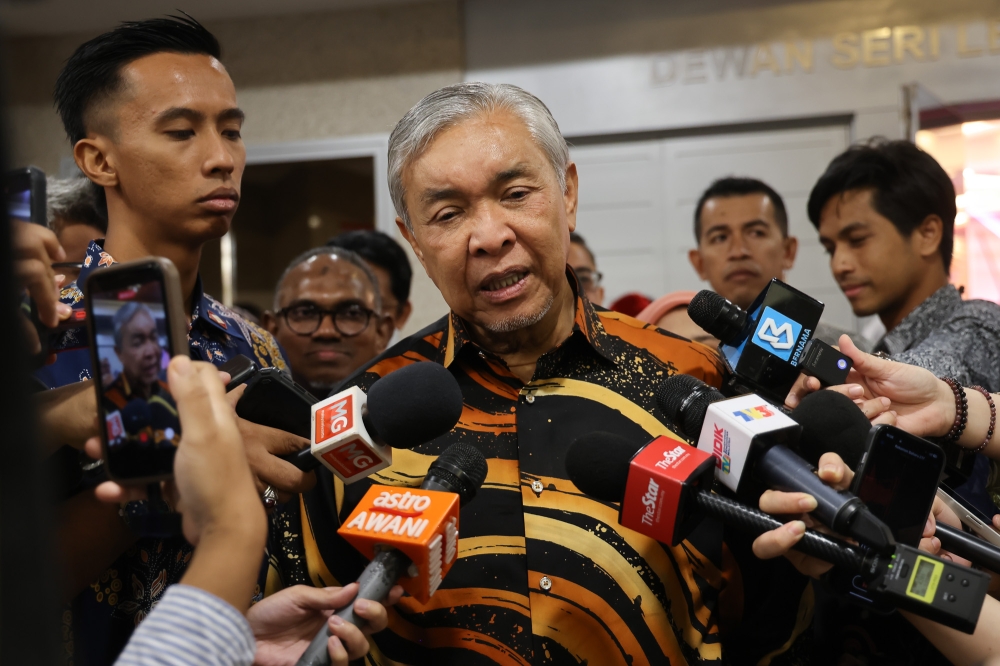
Ahmad Zahid Hamidi, president of Umno and Barisan Nasional chairman, has declared an uncompromising stance toward those responsible for mismanagement at Tabung Haji, stating that both the coalition and his party will not accept any violation of public trust. Speaking in Putrajaya on August 6, Zahid emphasised that accountability mechanisms must be activated for all individuals implicated in the pilgrimage savings fund's governance failures.
The Tabung Haji controversy has become a significant political and financial issue in Malaysia, with the fund facing considerable challenges related to its investment decisions and internal controls. The institution, which serves as a savings and investment scheme for Muslim Malaysians planning to perform the hajj pilgrimage, has accumulated difficulties that have drawn scrutiny from lawmakers, media, and civil society. Zahid's remarks reflect growing pressure within the ruling coalition to demonstrate resolve in addressing corporate governance failures that have affected hundreds of thousands of Malaysian savers.
Umno's position on the matter represents a calculated move to distance the party from past administrations during which the mismanagement allegedly occurred. By articulating a clear enforcement agenda, Zahid seeks to rebuild public confidence in the coalition's commitment to integrity and proper stewardship of national institutions. This approach acknowledges that Tabung Haji's difficulties have become emblematic of broader concerns about accountability in Malaysia's governance structures.
The investigation and subsequent accountability process will likely involve multiple government agencies, including the Malaysian Anti-Corruption Commission and the Securities Commission, depending on the nature of the wrongdoing uncovered. Zahid's statement appears designed to preempt criticism that the ruling coalition might shield individuals with political connections, a concern that has persisted in Malaysian public discourse despite previous reform efforts.
For Malaysian Muslim savers who depend on Tabung Haji for their hajj aspirations, the fund's recovery remains crucial. The mismanagement has implications extending beyond financial metrics—it affects the religious and cultural life of contributors who view hajj as a fundamental pillar of Islamic faith. The fund's difficulties thus carry symbolic weight beyond its economic impact, making political responses to its governance crisis particularly sensitive.
The coalition's demonstrated commitment to accountability at Tabung Haji may set expectations for how it handles similar governance breaches at other government-linked companies and institutions. Shareholders and stakeholders across Malaysia's corporate landscape will be monitoring whether Zahid's assurances translate into substantive action, including potential criminal charges, civil recoveries, or restitution to affected parties.
Zahid's rhetoric also addresses internal party dynamics within Umno and the broader BN framework. Some members may have connections to individuals implicated in the scandal, creating potential internal resistance to rigorous accountability. By making strong public statements, Zahid signals that party loyalty cannot supersede principles of good governance—a message intended for both internal audiences and the Malaysian electorate.
The hajj fund controversy intersects with Malaysia's ongoing struggle to strengthen institutional integrity following corruption scandals that damaged public confidence during the previous administration. Each major governance failure presents an opportunity for the current leadership to demonstrate that reform commitments are genuine rather than rhetorical. Tabung Haji, given its direct impact on ordinary Malaysians' savings and religious aspirations, offers a particularly visible stage for such demonstrations.
Southeast Asian neighbours, particularly Singapore and Brunei with their own sovereign wealth and pilgrimage-related funds, will observe how Malaysia addresses this institutional challenge. The region's development partly depends on investor confidence in the reliability and transparency of government institutions, making governance recovery efforts consequential beyond Malaysia's borders.
Looking forward, Zahid's stance suggests that whoever assumes responsibility for Tabung Haji's reform agenda will face heightened scrutiny and expectations for results. The fund's recovery will require addressing both its financial portfolio and the institutional culture that permitted mismanagement to occur. Success in this area could strengthen the coalition's credentials ahead of future elections, while failure would deepen public scepticism about whether accountability in Malaysia remains selective and politically determined.

